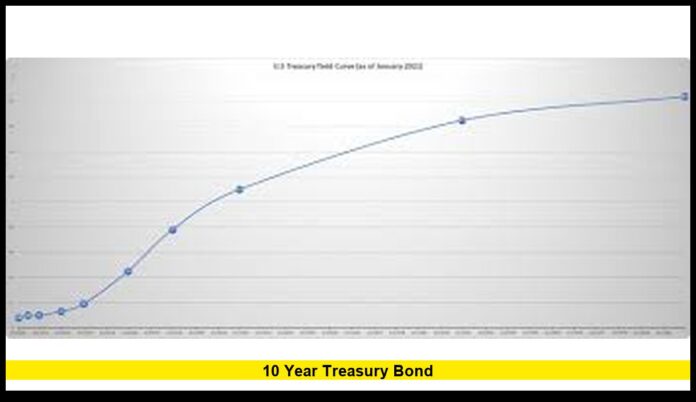
The 10 year Treasury bond is one of the most important indicators of the American economy. As of November 24, 2025, its yield stands near 4.28%, slightly lower than earlier in the year. This change shows growing confidence that inflation is easing and that the Federal Reserve may hold interest rates steady into next year.
The 10-year note remains central to understanding the U.S. financial system. It influences everything from mortgage rates to corporate loans — and serves as a guide for investors, businesses, and policymakers.
Table of Contents
Where the 10-Year Yield Stands Now
After several years of volatility, the 10-year Treasury yield has finally found some stability. In October 2023, it briefly climbed above 5%, the highest level in more than 15 years. That surge reflected fears of stubborn inflation and further rate hikes from the Federal Reserve.
Now, yields have eased back into the mid-4% range. The decline suggests that inflation has cooled and the economy is slowing — but not collapsing. This balance has reassured both investors and the central bank that the U.S. is on a path toward sustainable growth.
Demand for Treasuries remains strong. Recent auctions show healthy participation from both domestic and foreign investors, including Japan and European nations where yields are still much lower.
Why This Bond Matters
The 10-year Treasury is more than just a number. It serves as the foundation for borrowing costs across the economy.
Here’s how it impacts everyday life:
- Home loans: Mortgage rates usually follow the 10-year yield. When yields rise, mortgage rates climb too. With yields now easing, the average 30-year fixed mortgage rate has dropped slightly to about 6.7%, giving some relief to homebuyers.
- Business financing: Lower Treasury yields reduce the cost of issuing corporate bonds, making it easier for companies to borrow and invest.
- Stock valuations: Investors compare the safety of Treasuries with the potential returns of stocks. Lower yields often push more money into the stock market.
Because of these links, any movement in the 10-year bond has ripple effects across the entire financial system.
The Federal Reserve’s Influence
The Federal Reserve’s policy is the main driver of Treasury yields. After raising interest rates rapidly from 2022 to mid-2023 to fight inflation, the Fed has kept rates steady at 5.25%–5.50% through 2024 and into 2025.
Inflation has dropped from its peak of 9.1% in 2022 to around 2.3% in October 2025, very close to the Fed’s target of 2%. This progress has allowed officials to pause further hikes and wait to see how the economy adjusts.
Fed Chair Jerome Powell has indicated that rate cuts are unlikely before mid-2026. Still, investors believe the current environment — steady rates, easing inflation, and slower growth — favors stable yields around current levels.
Key Economic Data Behind the Trend
Several major data points explain why the 10-year yield has remained near 4.28% in recent weeks:
- Inflation: Prices are growing at a much slower pace than two years ago, reducing pressure on bond markets.
- Employment: The unemployment rate is 4.1%, slightly higher than last year but still healthy.
- GDP Growth: The economy expanded at a 1.8% annual rate in the third quarter of 2025, showing a gradual slowdown from earlier in the year.
- Consumer Spending: Americans are still spending, but more carefully. Rising credit card balances and higher living costs have started to cool demand.
Overall, the economy appears to be moving toward what economists call a “soft landing” — slower growth without a severe recession.
Global Factors Supporting Demand
The 10-year Treasury remains one of the safest and most liquid assets in the world. In 2025, global demand has stayed strong for several reasons:
- Lower yields abroad: Countries like Japan and Germany still have much lower interest rates, making U.S. bonds more attractive.
- Geopolitical tension: Ongoing uncertainty in parts of Eastern Europe and the Middle East has pushed investors toward safer assets like Treasuries.
- Stable dollar: The U.S. dollar’s strength adds an extra layer of security for foreign investors seeking predictable returns.
This global appetite has helped offset concerns about rising U.S. government debt and heavy bond issuance this year.
Government Borrowing and Supply Concerns
The U.S. Treasury has issued record levels of new debt in 2025 to finance federal spending. Total issuance for the year is expected to exceed $2.3 trillion, while the federal deficit stands near $1.7 trillion.
Normally, such large borrowing could push yields higher. However, steady demand from investors — both domestic and international — has kept the market balanced. Recent bond auctions have shown strong participation, indicating that investors remain confident in the U.S. government’s creditworthiness.
Still, analysts warn that continued high deficits could put upward pressure on yields over the long term if demand weakens.
Investor Sentiment in Late 2025
For investors, the current bond market feels calmer than in previous years. With inflation under control and the Fed on pause, the 10-year note is offering real returns above inflation — something investors haven’t seen in over a decade.
- Institutional investors are locking in yields near 4% for predictable income.
- Retail investors are returning to bond funds and ETFs, seeking stability after volatile stock markets in 2024.
- Pension funds and insurers are using Treasuries to match long-term liabilities with reliable returns.
The consensus among market professionals is that Treasuries now provide a balanced opportunity: moderate yield, low risk, and protection against potential economic slowdown.
The Yield Curve Shift
For much of 2023 and 2024, the U.S. yield curve — which compares short- and long-term interest rates — was inverted. That meant short-term bonds paid more than long-term ones, often seen as a warning of recession.
In recent months, that inversion has started to fade. The difference between 2-year and 10-year yields is narrowing as short-term rates edge lower. This flattening curve suggests the market expects the Fed to keep rates steady for now, but eventually begin easing them once inflation is firmly under control.
A normal, upward-sloping yield curve would signal renewed confidence in future economic growth.
Outlook for 2026
Looking ahead, most analysts expect 10-year Treasury yields to remain between 3.8% and 4.4% through next year.
The main factors to watch include:
- Inflation: If prices stay stable near 2%, yields could drift slightly lower.
- Federal Reserve policy: Any hint of rate cuts could spark a bond rally.
- Economic growth: A slowdown in job creation or spending could push investors toward safer assets, driving yields down.
However, if inflation unexpectedly picks up again, yields could rise quickly as markets price in the risk of higher rates.
For now, stability seems to be the dominant trend — a welcome shift after years of dramatic swings.
The 10-year Treasury remains the heartbeat of the U.S. financial system — reflecting the balance between risk, inflation, and opportunity. How do you think yields will move in 2026? Share your thoughts below and join the conversation.

