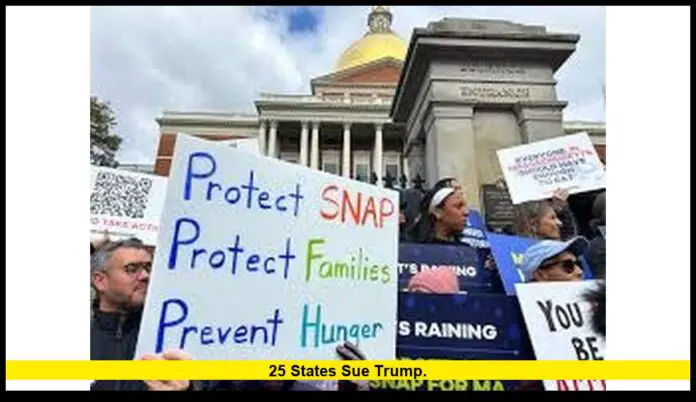
The political and legal landscape in Washington has been shaken as 25 states sue Trump over his administration’s decision to suspend Supplemental Nutrition Assistance Program (SNAP) benefits starting November 1. The multi-state lawsuit, filed just days before the suspension was set to begin, marks one of the largest coordinated legal actions against the Trump administration in 2025.
At the center of the controversy is the federal government’s decision to freeze food assistance during the ongoing shutdown, which could affect nearly 42 million Americans who depend on SNAP benefits. The states argue that the Trump administration’s move is unlawful, unnecessary, and puts millions of vulnerable citizens—especially low-income families, children, and seniors—at immediate risk.
Table of Contents
What Triggered the Lawsuit
The 25-state coalition, led by attorneys general and governors from across the country, filed the lawsuit on October 28, 2025, in a federal court in Massachusetts. The states contend that the U.S. Department of Agriculture (USDA) has sufficient emergency funds available to continue the SNAP program, even during a government shutdown.
The Trump administration, however, claims that the USDA does not have the legal authority to use contingency reserves beyond certain limits without congressional approval. This decision has effectively placed food security for millions in jeopardy as the November deadline looms.
The lawsuit seeks an immediate injunction compelling the administration to release the funds and ensure that SNAP benefits continue uninterrupted.
States Taking Legal Action
Among the 25 states participating in the lawsuit are:
- California
- New York
- Massachusetts
- Illinois
- Pennsylvania
- Michigan
- Colorado
- Washington
- Oregon
- Maryland
These states argue that the Trump administration’s policy violates the Food and Nutrition Act, which mandates that available contingency funds be used to sustain the program during funding gaps. The states also claim the administration’s refusal to use those funds is politically motivated, weaponizing hunger as leverage in the government funding standoff.
The Trump Administration’s Defense
Officials from the Trump administration maintain that the USDA cannot spend what they call “unappropriated funds” during a shutdown. According to statements from administration representatives, the USDA’s contingency account contains only a fraction of what is needed to fund the November distribution of SNAP benefits, estimated at over $9 billion nationwide.
The administration insists that Congress must act to reopen the government and restore regular funding before benefits can resume. Critics, however, accuse the administration of using the issue to pressure lawmakers into accepting its proposed budget terms.
Impact on Millions of Americans
The SNAP program, often referred to as “food stamps,” provides essential nutritional support to over 42 million Americans each month. The temporary suspension of benefits could have devastating effects, particularly for:
- Families with young children who rely on food assistance for daily meals.
- Senior citizens on fixed incomes facing rising food costs.
- Veterans and disabled individuals whose budgets are already stretched thin.
- Rural and low-income communities, where SNAP participation rates are the highest.
Without these benefits, many households may be forced to turn to food banks and local charities, which are already bracing for a massive surge in demand.
What the Lawsuit Seeks
The coalition of states is asking the court to:
- Order the USDA to release contingency funds immediately to continue SNAP payments in November.
- Declare the suspension unlawful, arguing it violates both statutory duties and established administrative precedents.
- Prohibit further benefit interruptions during any future shutdowns where reserve funds exist.
The case is being closely watched because it could set a major precedent for how federal programs are managed during shutdowns. If successful, the ruling could redefine the limits of executive power over social safety net programs.
Reactions Across the Country
The Trump administration’s decision has sparked strong reactions from both sides of the political aisle.
- State leaders and advocacy groups have condemned the move, calling it “cruel and unnecessary.” They argue that no administration should be allowed to halt basic food support programs that directly affect millions of families.
- Supporters of the administration, however, claim that the lawsuit is politically motivated, designed to undermine Trump’s negotiating power in the broader budget conflict. They argue that Congress—not the executive branch—is responsible for approving funding.
Public sentiment has also been sharply divided. Social media platforms have seen hashtags such as #SNAPShutdown and #25StatesSueTrump trend nationwide, reflecting the growing frustration among citizens who fear losing access to food benefits in the coming weeks.
Economic and Social Ramifications
Experts warn that a prolonged SNAP suspension could have far-reaching economic effects. Retailers that process SNAP transactions—particularly grocery chains and local supermarkets—could experience a significant decline in sales. This would ripple through the food supply chain, impacting farmers, distributors, and small businesses alike.
At the community level, food insecurity could spike sharply, especially in low-income neighborhoods already struggling with inflation and housing costs. Charitable organizations have begun stockpiling supplies, preparing for what some have called “a hunger crisis in the making.”
Legal Outlook: What Happens Next
The federal court in Massachusetts has fast-tracked the case given its urgency. A hearing on the temporary injunction request is expected within days. If granted, the injunction would compel the USDA to release contingency funds and prevent any lapse in benefits while the case proceeds.
If denied, millions of families could face a food assistance gap starting November 1, unless Congress intervenes. The outcome of this case will likely have national implications, influencing how federal aid programs are handled during future shutdowns.
Broader Political Implications
The legal confrontation between the states and the Trump administration underscores the deepening divide over federal authority and social welfare programs. It also comes at a politically sensitive time, with both parties blaming each other for the government shutdown’s economic fallout.
For Trump, the lawsuit represents yet another challenge amid growing criticism of how his administration handles domestic policy. For state leaders, it’s an opportunity to assert the independence of states’ rights and their obligation to protect residents from federal policy decisions they deem harmful.
Conclusion
The lawsuit in which 25 states sue Trump over SNAP benefit suspensions represents a defining moment in the 2025 government shutdown crisis. At stake are not just billions in food assistance but also fundamental questions about governance, accountability, and compassion in times of national hardship.
As the legal battle unfolds, millions of Americans are left in uncertainty, waiting to see whether their lifeline to food security will continue—or be paused indefinitely.
Do you believe states should have the power to challenge federal policies like this? Share your thoughts respectfully in the comments below.

