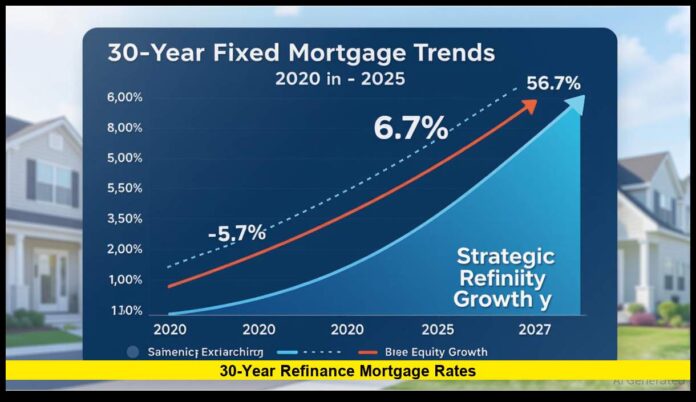
30 year refinance mortgage rates are a key consideration for homeowners looking to lower monthly payments or access home equity. As of September 17, 2025, these rates have seen fluctuations that make refinancing a valuable option for many Americans. With careful planning, homeowners can take advantage of current market conditions to improve their financial situation.
Table of Contents
Understanding 30-Year Refinance Mortgage Rates
A 30-year refinance mortgage allows homeowners to replace an existing mortgage with a new loan, typically extending over 30 years. The primary purpose is often to secure a lower interest rate, reduce monthly payments, or adjust the loan structure.
Refinancing a 30-year mortgage is appealing because it balances manageable monthly payments with a long repayment period. Unlike shorter-term loans, the 30-year term spreads out the cost, which can ease financial pressure.
Current Trends in 2025
As of September 2025, 30-year refinance mortgage rates have seen moderate declines compared to earlier months. This shift is influenced by several factors:
- Monetary Policy Adjustments: Central bank strategies have impacted borrowing costs, resulting in slightly lower mortgage rates.
- Economic Conditions: Indicators such as inflation stabilization, moderate employment growth, and consumer spending patterns have contributed to a decline in long-term mortgage rates.
- Market Expectations: Homeowners anticipate potential opportunities to lock in favorable rates before potential market changes later in the year.
The average 30-year refinance mortgage rate currently hovers around 6.6%, though individual lenders may offer rates as low as 6.3% depending on creditworthiness, loan size, and other factors.
Benefits of Refinancing a 30-Year Mortgage
Refinancing offers several advantages for homeowners:
- Lower Monthly Payments: A reduced interest rate can lead to significant savings each month.
- Debt Consolidation: Refinancing can combine higher-interest debts into a single manageable loan.
- Home Equity Access: Homeowners can leverage equity for home improvements, education, or other financial goals.
- Switching Loan Types: Moving from an adjustable-rate mortgage to a fixed-rate mortgage provides payment stability.
By understanding these benefits, homeowners can make informed decisions about whether refinancing aligns with their financial goals.
Key Considerations Before Refinancing
Before initiating a refinance, homeowners should evaluate:
- Closing Costs: Fees can range from 2% to 5% of the loan amount and should be factored into overall savings.
- Credit Score: Higher scores generally secure more favorable rates.
- Loan Term: Extending or shortening the term impacts total interest paid and monthly payments.
- Current Mortgage Rate: Comparing your current rate with potential refinancing options helps determine potential benefits.
Taking these factors into account ensures a clear understanding of the financial implications of refinancing.
Steps to Refinance a 30-Year Mortgage
Refinancing involves a structured process:
- Assess Financial Situation: Review income, debt, and credit standing.
- Compare Lenders: Evaluate multiple lenders to find the best rates and terms.
- Prepare Documentation: Include proof of income, tax returns, and details of existing debts.
- Apply for Refinancing: Submit applications to chosen lenders and await approval.
- Review Loan Terms: Carefully read the terms, interest rates, and fees before committing.
Following these steps ensures homeowners can navigate the refinancing process efficiently.
Tips for Maximizing Savings
To make the most of a 30-year refinance mortgage:
- Lock in Rates Early: Mortgage rates can fluctuate daily; securing a rate early can prevent higher costs.
- Reduce Loan Amount if Possible: Paying down principal before refinancing can lead to lower interest charges.
- Evaluate Different Loan Options: Consider both fixed and adjustable options to determine the most cost-effective choice.
- Factor in Fees: Ensure total savings outweigh closing costs to achieve genuine financial benefit.
Potential Risks of Refinancing
While refinancing can be advantageous, it carries risks:
- Extended Loan Terms: Lower monthly payments may come at the expense of paying more interest over time.
- Variable Interest Rates: Adjustable-rate options may result in higher future payments.
- Prepayment Penalties: Some original mortgages include fees for early repayment, which should be assessed before refinancing.
Homeowners should weigh these risks against potential savings to ensure refinancing is the right choice.
How Refinancing Impacts Homeowners
Refinancing affects both monthly cash flow and long-term financial planning. Benefits include immediate relief from high payments and increased financial flexibility. Homeowners can redirect savings toward investments, education, or debt reduction.
Additionally, refinancing may improve credit utilization ratios by consolidating debt, indirectly supporting long-term credit health.
Factors Influencing 30-Year Refinance Mortgage Rates
Several variables impact refinancing rates:
- Credit Score: Excellent credit typically results in lower rates.
- Loan-to-Value Ratio: Higher equity in the home can secure better rates.
- Economic Outlook: Inflation, employment data, and central bank policies influence borrowing costs.
- Property Type: Single-family homes may have different rates than condos or multi-unit properties.
Monitoring these factors can help homeowners anticipate the best time to refinance.
Case Example: Potential Savings
Consider a homeowner with a $300,000 mortgage at a 7% interest rate seeking to refinance at 6.5%.
- Current Monthly Payment: Approximately $1,996 (principal and interest)
- New Monthly Payment: Approximately $1,896 (principal and interest)
- Monthly Savings: $100
- Annual Savings: $1,200
Over time, these savings can accumulate significantly, especially when combined with strategic financial planning.
Refinancing During Changing Markets
Even when mortgage rates fluctuate, refinancing remains a viable strategy for homeowners:
- Falling Rates: Presents opportunities for lower payments.
- Stable Rates: Allows for debt consolidation and longer-term financial planning.
- Rising Rates: Homeowners with variable-rate loans may refinance to lock in fixed rates and prevent increases.
Understanding market trends empowers homeowners to make strategic decisions aligned with their financial goals.
FAQs About 30-Year Refinance Mortgage Rates
1. What is the typical range for 30-year refinance mortgage rates in 2025?
The current rates generally range from 6.3% to 6.8%, depending on credit score, lender, and loan size.
2. Can refinancing reduce total interest paid over the life of the loan?
Yes. By securing a lower interest rate or shortening the loan term, homeowners can significantly reduce total interest paid.
3. Are there penalties for refinancing early?
Some original mortgages may include prepayment penalties. Homeowners should review loan agreements before refinancing to avoid extra costs.
Disclaimer: The information in this article is for educational purposes only and does not constitute financial advice. Mortgage rates are subject to change based on lender, credit profile, and economic conditions. Homeowners should consult with a licensed mortgage professional before making refinancing decisions.

