Table of Contents
Opening Paragraph
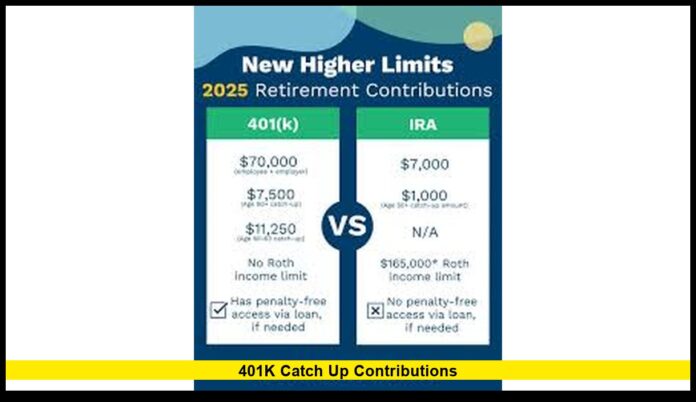
The term 401(k) catch-up contributions has taken on new significance in 2025 as Americans aged 50 and above gain access to higher contribution limits under updated federal retirement regulations. The Internal Revenue Service (IRS) increased the regular 401(k) contribution limit to $23,500 for 2025, while the catch-up contribution limit remains at $7,500 for those aged 50 and older. Additionally, a new “super” catch-up contribution of $11,250 is now available for individuals aged 60 to 63, marking one of the most significant enhancements in retirement savings opportunities in recent years.
What Are 401(k) Catch-Up Contributions?
Catch-up contributions are additional amounts that individuals aged 50 or older can contribute to their 401(k), 403(b), or similar employer-sponsored retirement plans beyond the standard annual contribution limit.
These contributions allow older employees to accelerate their retirement savings during their peak earning years, helping to make up for potential shortfalls earlier in their careers. The concept is simple but powerful: once you hit 50, you can invest more each year—tax-deferred or via Roth options—depending on your plan’s structure.
401(k) Catch-Up Contribution Limits for 2025
The IRS has updated several contribution thresholds for the 2025 tax year. Below is a summary of the latest numbers:
| Category | 2025 Limit | Details |
|---|---|---|
| Regular 401(k) contribution limit | $23,500 | Available to all eligible employees under age 50. |
| Standard catch-up contribution (age 50+) | $7,500 | Additional amount allowed for those aged 50 and older. |
| “Super” catch-up contribution (ages 60–63) | $11,250 | New limit available beginning in 2025 for savers aged 60–63. |
| Combined total possible for ages 60–63 | $34,750 | $23,500 + $11,250 = $34,750 maximum deferral if eligible. |
Key Note:
To qualify for a catch-up contribution, you must be at least age 50 by December 31 of the year and your employer’s retirement plan must permit catch-up contributions.
Why the Changes in 2025?
The 2025 updates stem primarily from the SECURE 2.0 Act, which was passed to strengthen Americans’ retirement readiness. The law introduced the “super” catch-up contribution for individuals aged 60–63 and laid the groundwork for additional changes beginning in 2026, including new Roth catch-up rules for higher earners.
These changes were designed to give older workers nearing retirement an extra opportunity to build a stronger nest egg while ensuring tax diversity through both pre-tax and Roth savings options.
The Roth Catch-Up Rule—Coming in 2026
While 2025 offers increased flexibility, it also ushers in important future requirements. Beginning January 1, 2026, employees who earned more than $145,000 in the prior year will be required to make catch-up contributions on a Roth (after-tax) basis instead of the traditional pre-tax basis.
This shift means those individuals will pay taxes on the contribution up front, but withdrawals in retirement will be tax-free (subject to Roth 401(k) rules). Workers earning less than the threshold will still have the option to choose between pre-tax or Roth contributions, depending on their plan design.
Who Benefits Most from 401(k) Catch-Up Contributions?
1. Workers over 50 looking to close retirement gaps:
Catch-up contributions are an effective way to rebuild savings if you began investing late or faced financial disruptions earlier in life.
2. High earners nearing retirement:
Those aged 60–63 can take full advantage of the new “super” limit, maximizing savings potential before retirement.
3. Employees seeking tax diversification:
As Roth and traditional 401(k) options expand, catch-up contributions can help create a balance between taxable and tax-free income sources for retirement.
4. Small business owners and self-employed individuals:
Those who participate in solo 401(k) plans can also utilize the increased catch-up limits, provided their business structure qualifies.
How to Take Advantage of 401(k) Catch-Up Contributions
If you’re eligible, here are a few practical steps to maximize your 401(k) savings:
- Verify eligibility: Confirm your age and plan’s rules for catch-up contributions with your employer or HR department.
- Adjust payroll deferrals: Ensure your payroll deductions are updated to reflect higher contribution amounts early in the year.
- Check for Roth options: If your plan offers both pre-tax and Roth 401(k) options, decide which fits best with your tax strategy.
- Monitor your limits: Exceeding IRS limits can result in penalties, so review contributions regularly.
- Plan for 2026: If you are a higher earner, prepare for the mandatory Roth catch-up contribution requirement next year.
Frequently Asked Questions (FAQ)
Q1: What is the maximum I can contribute to my 401(k) in 2025 if I am 62?
If your plan allows the new “super” catch-up provision, you can contribute up to $34,750 total ($23,500 + $11,250).
Q2: Do catch-up contributions apply automatically?
No. You must elect to make these contributions, and your employer’s plan must include a catch-up feature.
Q3: Can I make catch-up contributions to both a traditional and Roth 401(k)?
Yes, but the combined total must stay within the annual limit. You can split contributions between the two if your plan allows.
Q4: What if my employer doesn’t offer the “super” catch-up for ages 60–63?
Then the standard $7,500 catch-up limit will apply. Employers must choose to adopt the enhanced provision.
Q5: Are catch-up contributions tax-deductible?
Traditional 401(k) catch-up contributions reduce your taxable income, while Roth catch-ups do not—but Roth contributions grow tax-free.
Q6: What happens if I exceed the 401(k) limit?
Over-contributing can lead to tax penalties. You must withdraw the excess by April 15 of the following year to avoid additional taxes.
Q7: When does the Roth catch-up rule for high earners take effect?
The new rule applies starting January 1, 2026, for anyone earning more than $145,000 in the prior year.
Q8: Can self-employed individuals use the catch-up rule?
Yes. Solo 401(k) participants who meet the age requirement can also contribute additional catch-up amounts.
What Employers Should Know
Employers and plan sponsors should review plan documents to ensure compliance with 2025 regulations and upcoming 2026 Roth requirements. This includes updating payroll systems, communicating the new rules to employees, and ensuring that administrative systems can track participants’ ages and earnings accurately.
Employers are encouraged to:
- Review contribution processes and limits.
- Educate employees about new contribution opportunities.
- Update plan documents before the 2026 Roth catch-up rule takes effect.
Looking Ahead: Retirement Readiness and Future Adjustments
Catch-up contribution limits are indexed for inflation, meaning they could increase again in future years. The IRS typically reviews contribution thresholds annually, adjusting them based on cost-of-living changes.
With inflation easing but wages rising, many financial experts expect gradual adjustments in the years ahead. Savers should review their retirement strategies annually to ensure they are taking full advantage of available tax-advantaged savings opportunities.
Final Thoughts
For millions of Americans, 401(k) catch-up contributions in 2025 represent a valuable chance to strengthen their financial future—especially as retirement nears. With the new “super” catch-up option for those aged 60–63 and the upcoming Roth rule in 2026, understanding your plan’s details and acting early can help you make the most of these expanded savings opportunities.
Have questions or insights about the 2025 401(k) changes? Share your thoughts below and join the conversation about building a stronger retirement future.
Disclaimer
This article is intended for informational purposes only and does not constitute financial, legal, or tax advice. Readers should consult a qualified financial advisor or tax professional before making decisions related to retirement contributions or investments.

 catch-up contributions, new super limits for ages 60–63, and key Roth rule changes for 2026.)