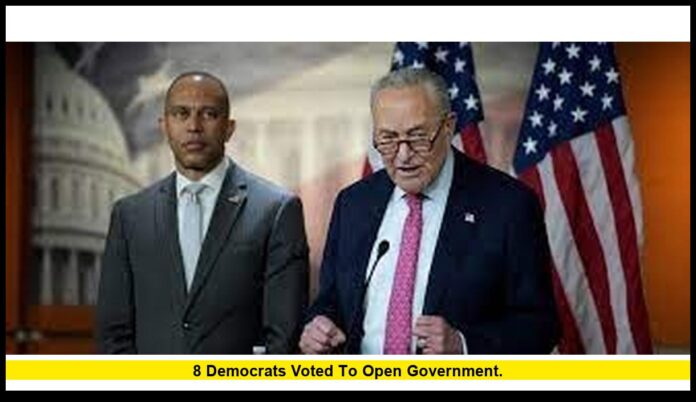
In a decisive moment for the ongoing federal funding standoff, 8 Democrats voted to open government, breaking from their party’s leadership to support a bipartisan measure aimed at ending the prolonged shutdown. As of November 10, 2025, this move has shifted the political landscape in Washington, providing momentum toward reopening federal agencies and restoring pay for thousands of workers affected by the stalemate.
The Senators Who Crossed Party Lines
The eight Democratic senators who voted in favor of advancing the government funding bill are:
- Catherine Cortez Masto (Nevada)
- Jacky Rosen (Nevada)
- Jeanne Shaheen (New Hampshire)
- Maggie Hassan (New Hampshire)
- Tim Kaine (Virginia)
- Dick Durbin (Illinois)
- John Fetterman (Pennsylvania)
- Angus King (Maine, Independent caucusing with Democrats)
These lawmakers joined Republican senators in supporting the procedural motion to move the funding package forward, marking one of the most significant bipartisan moments of the year.
Why the Vote Was Crucial
The vote came after weeks of gridlock that had shuttered parts of the federal government, delayed federal worker paychecks, and disrupted essential services. The funding measure, supported by a mix of Republicans and moderate Democrats, was designed to reopen government agencies while ensuring a future vote on key policy issues such as health-care subsidies.
The eight Democrats argued that immediate relief for federal workers and communities across the nation outweighed the political risks of appearing to break with their party. Their decision signaled growing concern within the Democratic ranks about the human and economic toll of the shutdown.
Key Issues Behind the Decision
Each of the eight senators had different motivations, but several common themes emerged:
- Economic pressure on constituents: Many of their states faced growing economic stress due to the shutdown.
- Federal worker impact: States like Virginia and Illinois have large numbers of federal employees directly affected by missed paychecks.
- Healthcare negotiations: Several senators supported the deal in exchange for a future vote on the extension of Affordable Care Act tax credits.
- Moderate influence: Many of the eight senators represent swing or purple states, where voters expect practical problem-solving over party loyalty.
Breaking Down the Vote
| Senator | State | Primary Reason for Voting Yes |
|---|---|---|
| Catherine Cortez Masto | Nevada | To end financial strain on Nevada families affected by the shutdown. |
| Jacky Rosen | Nevada | To restore pay for federal workers and reopen vital services. |
| Jeanne Shaheen | New Hampshire | To secure a future healthcare vote and reduce constituent hardship. |
| Maggie Hassan | New Hampshire | To support bipartisan cooperation amid mounting economic pressure. |
| Tim Kaine | Virginia | To prioritize the needs of federal workers in his state. |
| Dick Durbin | Illinois | As a senior leader, emphasized responsibility to govern effectively. |
| John Fetterman | Pennsylvania | To put working-class concerns ahead of political divisions. |
| Angus King | Maine | Advocated bipartisanship and practical solutions over partisanship. |
What This Means for the Shutdown
Their votes provided the crucial margin needed to move the bill forward in the Senate, creating a pathway for the government to reopen after weeks of closure. The legislation, once fully passed, is expected to fund agencies through the fiscal year and include a provision guaranteeing a future vote on extending ACA tax credits.
This development also reduces the immediate pressure on federal employees, national parks, and public services that have been hampered by the funding lapse.
Political Repercussions Within the Democratic Party
While some hailed the move as an act of leadership and pragmatism, others within the Democratic caucus viewed it as premature, arguing that the party should have held out for stronger guarantees on healthcare and social programs.
Party strategists have noted that the vote could deepen divisions between progressive and centrist Democrats, particularly as several of the eight senators face upcoming reelection campaigns. Nonetheless, their supporters argue that reopening the government demonstrates compassion and accountability to constituents.
National Reactions
The decision by these eight Democrats drew widespread attention across political and media circles. Federal employees’ unions and business organizations praised the vote, calling it a necessary step to restore stability. Meanwhile, progressive advocacy groups expressed frustration, warning that the compromise could weaken Democratic leverage in upcoming budget negotiations.
Despite the controversy, the senators maintained that their votes reflected a commitment to governance over gridlock. Many emphasized that the ongoing shutdown had become unsustainable, and reopening the government was the first step toward addressing deeper policy differences.
What Happens Next
The funding package now moves to the House for final approval before it can reach the President’s desk. Lawmakers are expected to continue negotiating the healthcare subsidy extensions and other pending fiscal priorities.
For now, this bipartisan breakthrough marks a pivotal moment in U.S. politics, highlighting the growing influence of moderate voices in both parties.
Conclusion
When 8 Democrats voted to open government, they did more than just help end a shutdown—they sent a message that cooperation and responsibility can still prevail in Congress. Their actions underscore a rare moment of bipartisanship at a time when the nation needed it most.
What’s your take on these senators’ decision—courageous leadership or political risk? Share your opinion below and stay tuned for further updates on this developing story.

