May Mailman is at the forefront of a pivotal campaign shaping higher education policy under former President Trump’s administration. As a Harvard-trained lawyer and senior policy strategist, Mailman has been instrumental in driving a strategy that has pressured top universities, including Harvard, to alter policies perceived as politically and ideologically skewed. Her role is central to a broader effort that challenges diversity initiatives, equity programs, and addresses contentious issues related to antisemitism and academic freedom.
Mailman, a 2015 graduate of Harvard Law School, serves as deputy assistant to the president and senior policy strategist. Closely aligned with Stephen Miller, a key White House official, she has led intense scrutiny and negotiations with major educational institutions. These negotiations have aimed to change how universities operate regarding admissions policies, diversity, equity, and inclusion (DEI) initiatives, amidst concerns about taxpayer funding being used to support what the administration views as discriminatory practices.
Key Points Summary:
- May Mailman leads Trump’s legal and policy strategy targeting elite universities.
- Focus areas include dismantling diversity policies and addressing antisemitism.
- Her work has spurred private negotiations with colleges trying to avoid harsh targeting.
- Mailman’s efforts have included litigation strategies and funding pressures.
- She advocates for meritocracy and curbing policies seen as fostering victimization cultures.
- Mailman recently departed the White House to return to advocacy but continues to influence policy.
Since taking on this role, Mailman has been a strategic architect behind executive initiatives that seek to impose stricter oversight on universities’ race- and gender-based policies. For example, she opposes race-based admissions preferences and supports reforms intended to uphold what she terms “academic freedom” without ideological constraints. This stance aligns with her view that some universities have strayed from their mission, promoting “glorification of victimization” rather than resilience and excellence.
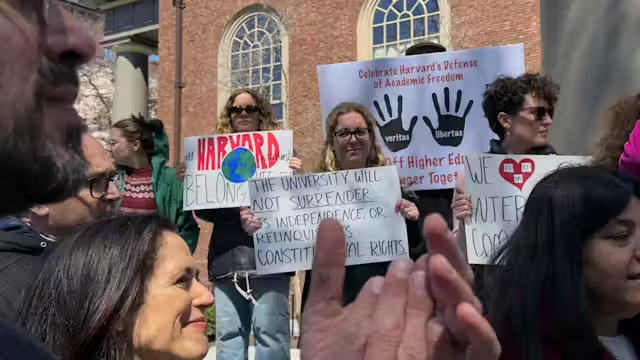
Recent negotiations with university leaders have unfolded discreetly, with institutions eager to avoid becoming the next high-profile targets after Harvard. Mailman has communicated that federal funding for research and educational programs will not proceed “as it has in the past” if universities resist these policy demands. This has created a climate where universities must carefully navigate compliance or face potential funding cuts and legal challenges.
Mailman’s influence extends beyond policy into public legal advocacy. She recently resumed leadership of the Independent Women’s Law Center, where her work includes protecting single-sex spaces and advancing legal battles questioning transgender participation in women’s sports and organizations. There, she continues to push for policies that emphasize biological realities and constitutional governance.
The controversies surrounding Mailman’s strategy have ignited intense debate. Supporters praise her legal precision and commitment to justice, while critics argue her tactics threaten academic freedom and undermine years of scientific and medical research funded by federal grants. Yet, Mailman remains a formidable force, shaping education policy as part of a larger movement to redefine cultural and societal norms.
As she phases out of her White House role, May Mailman’s impact on higher education and policy reform is poised to continue, both as a strategist and advocate. Her firm stance against current university diversity models and her emphasis on meritocratic principles mark a significant shift in how top institutions are challenged and governed.
Stay tuned for more on how May Mailman continues to influence the landscape of American higher education and shapes the future of academic policy. Feel free to share your thoughts or questions on this evolving issue below.

