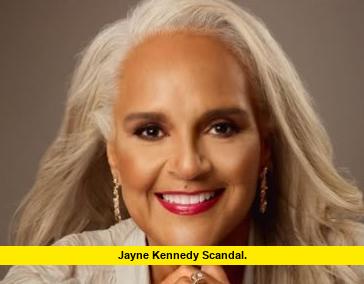
Recent revelations about the Jayne Kennedy scandal have resurfaced as the pioneering sports broadcaster releases her candid memoir “Plain Jayne.” Kennedy credits Oprah Winfrey with encouraging her to write this deeply personal account, which addresses the intimate tape controversy that nearly destroyed her career in the early 1990s.
The 73-year-old trailblazer, who broke barriers as one of the first Black female sportscasters on CBS’s “The NFL Today,” has finally decided to share her complete story. The memoir covers “all of it,” including a scandal in the early 1990s when, following her divorce from actor Leon Isaac Kennedy, a tape of their intimate moments was leaked.
Breaking Down Barriers Before the Storm
Jayne Kennedy’s path to stardom was built on a series of history-making milestones that reflected both her talent and her determination to break through racial and gender barriers. In 1970, she became the first Black woman crowned Miss Ohio, a victory that gave her national exposure and the chance to compete in the Miss USA pageant. At a time when beauty standards in America were overwhelmingly Eurocentric, Kennedy’s success signaled a broader cultural shift — one in which Black women were beginning to be recognized in spaces that had long excluded them.
Her visibility from pageants quickly opened doors in entertainment. Commercials, guest appearances on television shows, and acting opportunities followed, but Kennedy’s boldest leap came in 1978, when she was hired as a correspondent on CBS’s The NFL Today. It was a groundbreaking moment: she became one of the first Black women, and one of the first women at all, to hold a prominent role in network sports broadcasting. Sitting alongside respected broadcasters like Brent Musburger and Irv Cross, Kennedy’s presence alone challenged long-held stereotypes about who was “qualified” to discuss professional sports on national television.
Her poise, insight, and charisma set a new standard and inspired a generation. For young women and minorities, especially African Americans who rarely saw themselves represented in such high-profile media roles, Kennedy’s success was proof that the industry was beginning to open up — however slowly. Even today, sportscasters and journalists credit Kennedy as a trailblazer who helped normalize diversity in a space once considered untouchable for women, let alone women of color.
Yet, as Kennedy’s star was rising, her career faced a turning point that no amount of preparation could shield her from. In the early 1980s, her personal life was thrust into the public eye through the scandal of a leaked private tape involving her and then-husband Leon Isaac Kennedy. At the time, this was one of the earliest celebrity sex scandals to be widely reported, and the media frenzy surrounding it threatened to eclipse everything Kennedy had accomplished professionally.
What could have been remembered simply as a violation of privacy instead became a defining moment in her public life. The scandal tested her resilience, her ability to withstand scrutiny, and her determination to continue pursuing her career despite being unfairly judged through the lens of tabloid sensationalism. It was a storm that changed the trajectory of her journey — but one that ultimately could not erase her legacy as a barrier-breaker.
The Memoir’s Honest Approach
Jayne Kennedy’s recently released memoir, Plain Jayne (2025), has been praised as “compelling, inspirational, and unflinchingly honest.” In its pages, she retraces her remarkable journey from pageant stages to television screens, offering readers a front-row seat to both the triumphs and the turbulence of her career. Unlike many celebrity memoirs that focus only on the glamour, Kennedy’s book embraces the full scope of her story — her groundbreaking success, her personal challenges, and the painful scandal that threatened to overshadow it all.
What sets the memoir apart is its candor and balance. Kennedy devotes significant space to celebrating her professional milestones, such as becoming a pioneering presence on The NFL Today, starring in films, and breaking new ground for women of color in media. Yet she does not shy away from confronting her struggles head-on, including the emotional and career-altering fallout of the leaked private tape. By reclaiming her narrative in her own voice, Kennedy reframes the scandal not as the defining feature of her life but as a chapter that highlights her resilience, survival, and ability to rise again.
Her honest approach extends beyond the page. Kennedy has been actively sharing her story at high-profile events such as the National Association of Black Journalists (NABJ) conference, where she reflects on her experiences as a woman who helped open the doors of sports journalism. Her appearances are not simply nostalgic; they are purposeful acts of mentorship, aimed at inspiring young women — particularly women of color — to pursue their ambitions fearlessly, regardless of the obstacles they may face.
Perhaps most striking is Kennedy’s willingness to speak openly about the scandal that once threatened to erase her accomplishments. By addressing it directly, she takes control of a narrative that was once imposed on her by tabloids and gossip columns. Her transparency serves not only as personal healing but also as a teaching moment for a new generation navigating the blurred lines between privacy, media exploitation, and public scrutiny in the digital age.
In doing so, Jayne Kennedy reminds the world that her legacy is not defined by controversy but by the barriers she broke, the dignity she maintained under pressure, and the inspiration she continues to provide.
Read Also-Jayne Kennedy Daughters: A Proud Mom Celebrates Family Milestones
Current Impact and Legacy
The release of Jayne Kennedy’s memoir comes at a time when society is reckoning more deeply with issues of privacy, consent, and the treatment of women in media. In an era dominated by smartphones, social media, and viral leaks, the challenges Kennedy faced in the early 1980s feel strikingly relevant. Her story resonates with a new generation that understands how easily personal lives can be exposed and distorted, often at the expense of women’s dignity and careers.
By addressing the scandal head-on, Kennedy demonstrates her evolution from victim to survivor — and, ultimately, to a cultural teacher. She refuses to let a painful chapter eclipse the broader narrative of her life. Instead, she reframes it as an example of resilience, proving that even the most damaging invasions of privacy can be confronted and redefined through courage and honesty.
Kennedy’s decision to reclaim her story in Plain Jayne has also sparked important conversations about the double standards women face in scandal coverage, particularly Black women who have historically endured harsher scrutiny. By telling her story on her own terms, she not only restores her legacy as a trailblazer in sports broadcasting but also positions herself as an advocate for fairness, dignity, and accountability in media representation.
Her impact today extends beyond nostalgia. Kennedy’s openness has made her a sought-after speaker at industry conferences, universities, and events where she inspires young journalists, broadcasters, and entertainers. For those entering fields still rife with challenges around gender and racial equity, Kennedy’s journey stands as both a cautionary tale and a powerful source of motivation.
Four decades after her groundbreaking debut on The NFL Today, Jayne Kennedy’s legacy is no longer overshadowed by scandal. Instead, it is being reappraised and celebrated as the story of a pioneer who shattered barriers, endured hardship, and emerged with her integrity intact. Her courage ensures that she will be remembered not only as a television icon of the 1970s and 1980s, but also as a voice of resilience in 2025 and beyond.
Publishing Success and Reception
Plain Jayne has launched to strong reception, released simultaneously in hardcover, audiobook, and digital formats to meet the diverse ways readers now consume stories. Its wide availability through major retailers and online platforms reflects not only the demand for Kennedy’s story but also the renewed appreciation of her role in shaping American media. The fact that her memoir has been embraced across generations underscores her enduring relevance in today’s cultural conversations about representation, resilience, and reclaiming personal narratives.
Early readers and critics have described the memoir as more than just another celebrity autobiography. Instead, it has been hailed as a historical document, capturing the rise of a pioneering woman who navigated shifting landscapes in American television and sports broadcasting. Kennedy’s career intersected with transformative moments in both industries: the increased visibility of women in sports journalism, the ongoing struggles for racial equity in media, and the evolution of Hollywood’s treatment of women in the public eye. By weaving her personal journey into this larger context, the book provides insight into how far the industry has come — and how far it still has to go.
Importantly, Kennedy’s willingness to revisit the scandal that once threatened to overshadow her career demonstrates not only courage but also a deep sense of responsibility. By openly confronting the painful chapter of the leaked tape, she transforms it into a teachable moment — one about resilience, dignity, and the importance of refusing to let others dictate the story of your life. In an age when issues of privacy and exploitation remain at the forefront of public discourse, Kennedy’s reflections feel remarkably timely.
The memoir has already begun resonating with a new generation of women entering the broadcasting and entertainment fields, many of whom see Kennedy as proof that trailblazers often pay the highest price for breaking barriers. Her legacy, once clouded by controversy, is now being celebrated for what it truly is: the story of a woman who changed the face of sports journalism and refused to be defined by scandal alone.
With Plain Jayne, Jayne Kennedy not only reclaims her past but also secures her place as a symbol of perseverance and empowerment — an enduring voice whose influence continues to shape the present and inspire the future.
What aspects of Jayne Kennedy’s pioneering career and personal resilience do you find most inspiring? Share your thoughts about how her story relates to current discussions about privacy and women’s rights in media.
Disclaimer: This article is based on information available through published online resources. While accuracy has been prioritized, readers are encouraged to consult verified sources, including Jayne Kennedy’s memoir Plain Jayne, for a complete account of her life and career.

