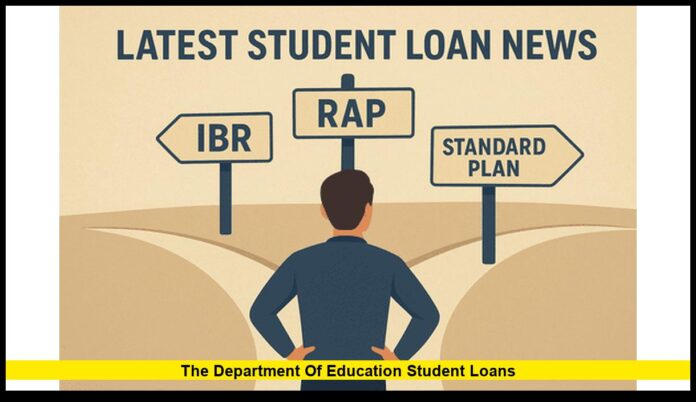
The Department of Education student loans program is at the center of major developments this fall. Millions of borrowers are affected by new policies, court rulings, and repayment changes that are reshaping how federal student loans are managed. As of September 2025, loan forgiveness programs, repayment options, and servicing practices are undergoing significant shifts, making it crucial for borrowers to stay updated.
Table of Contents
Forgiveness Programs Facing Delays and Challenges
One of the most pressing issues is the delay in forgiveness under income-driven repayment plans. The Education Department has temporarily paused forgiveness approvals for borrowers in the Income-Based Repayment (IBR) program. This pause has left around two million borrowers waiting for decisions on loan cancellation that they had expected this year.
The situation is further complicated by ongoing legal challenges to the SAVE plan, another widely used income-driven repayment option. Provisions such as counting long forbearances toward forgiveness have come under scrutiny in court. Until those rulings are resolved, many borrowers remain in limbo, uncertain about whether their progress toward cancellation will be recognized.
In addition, a class action lawsuit filed by the American Federation of Teachers argues that hundreds of thousands of eligible borrowers have been wrongly denied loan forgiveness. This legal battle could potentially impact millions if the courts side with the plaintiffs.
Changes to the SAVE Plan
The SAVE plan has been a lifeline for many borrowers by reducing payments and pausing interest accrual. However, key provisions have recently shifted.
- As of August 1, 2025, interest began accruing again for SAVE participants.
- Monthly payments remain paused until January 31, 2026, giving borrowers temporary relief despite the return of interest.
- Borrowers should understand that while payments are not due, their balances may grow because of accumulating interest.
These changes highlight the importance of monitoring repayment status closely and preparing for adjustments in 2026.
Major Policy Shifts Coming in 2026
The Department of Education has also announced structural changes that will reshape the student loan system beginning July 1, 2026. These reforms are aimed at reducing future borrowing risks and simplifying repayment.
- The Graduate PLUS Loan program will be eliminated, cutting off an unlimited borrowing option for graduate and professional students.
- New annual and lifetime borrowing limits will apply, tightening how much graduate students can take on.
- A new repayment system, the Repayment Assistance Plan (RAP), will launch for new borrowers. This program is designed to provide a simplified, income-based repayment pathway.
For students planning to pursue graduate or professional studies, these changes will require rethinking how to finance education.
Strengthening Consumer Protection
Beyond repayment and forgiveness, the Department of Education has expanded efforts to protect borrowers. The Office of the Ombudsman has been restructured into the Office of Consumer Education and Ombudsman.
This expanded office has three core goals:
- Helping borrowers understand the risks and benefits of loans before borrowing.
- Providing stronger support for dispute resolution with loan servicers.
- Increasing transparency in servicing and collection practices.
The Department is also creating a standardized “Common Manual” for the William D. Ford Direct Loan Program. This will set clearer rules for loan servicers and collectors, ensuring consistent treatment of borrowers across the system.
Public Service Loan Forgiveness Under Review
Public Service Loan Forgiveness (PSLF) remains an essential pathway for many who work in government or nonprofit jobs. However, new proposed regulations could change who qualifies.
The Department has suggested excluding employers from PSLF eligibility if they engage in activities deemed to have a “substantial illegal purpose.” Under this rule, if an employer is flagged, payments made after the designation would no longer count toward PSLF.
There will be a process for employers to regain eligibility, but the proposed rule adds uncertainty for borrowers relying on PSLF. Those working in public service should closely monitor their employer’s status to avoid setbacks.
The Numbers Behind Federal Student Loans
Recent data underscores the scale of the challenges:
- Total federal student loan debt in the Direct Loan portfolio stands at about $1.67 trillion.
- More than 6 million borrowers are delinquent on their loans, with about 4 million in late-stage delinquency and at risk of default.
- Around 5.3 million borrowers are already in default.
These figures highlight why policy changes are so impactful. Even small shifts in repayment rules can affect millions of lives.
What Borrowers Should Do Now
With so many changes in motion, borrowers must take proactive steps to protect themselves.
- Check your repayment plan: Make sure you know whether you are enrolled in IBR, SAVE, or another plan, and how current policies affect your account.
- Track your progress toward forgiveness: Keep careful records of qualifying payments and time in repayment. This is especially important given ongoing disputes about eligibility.
- Stay alert to PSLF changes: If you are pursuing PSLF, confirm that your employer qualifies and continue to document your service.
- Prepare for SAVE changes in 2026: While payments are paused, consider setting aside money for when obligations resume.
- Document communications: Keep emails, statements, and notices from loan servicers in case of disputes.
Borrowers Face Uncertainty but Hope Remains
For many borrowers, the current student loan landscape feels uncertain. The pause in forgiveness approvals, ongoing lawsuits, and upcoming regulatory shifts have created confusion. Interest accrual without required payments under SAVE adds another layer of complexity.
Still, there is cautious optimism. The launch of RAP in 2026 promises a simpler repayment option. Stronger consumer protections may also improve the borrower experience. The outcome of lawsuits and proposed rules will determine how much relief is ultimately available.
What is clear is that the Department of Education student loans system is entering a period of major transformation. Borrowers who remain engaged, informed, and proactive will be best positioned to navigate these changes successfully.
As the landscape evolves, it’s important to share experiences and questions. If you’re managing student loans, what challenges are you facing? Join the conversation below and help others stay informed.

