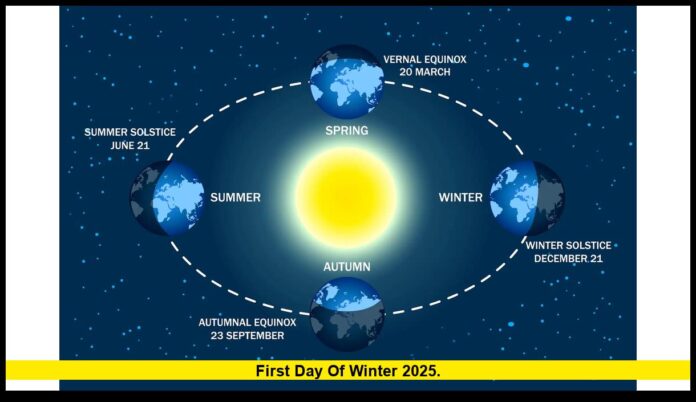
The first day of winter 2025 in the Northern Hemisphere will arrive on Sunday, December 21, 2025, when the winter solstice takes place. At that exact moment, the sun will reach its lowest point in the sky for the year, bringing the shortest day and the longest night. For centuries, this event has marked a powerful shift in the seasons, influencing culture, weather patterns, and the way communities prepare for the months ahead.
Table of Contents
What the Winter Solstice Means
The winter solstice happens because of Earth’s tilt. The planet leans at an angle of about 23.5 degrees as it orbits the sun. On December 21, the Northern Hemisphere tilts farthest away from the sun, creating a day with the least amount of daylight.
- Shortest day: Fewer hours of sunlight than any other day of the year.
- Longest night: Evening sets in early, with extended darkness.
- Astronomical winter: Begins on this date and ends with the spring equinox in March.
This astronomical event doesn’t just mark a date on the calendar—it signals a turning point. From December 22 onward, daylight gradually begins to increase, even though temperatures will still feel colder for weeks due to seasonal lag.
Local Times Around the Globe
While the solstice occurs at the same instant worldwide, the local time of the event differs depending on location. For example:
- Eastern North America: Morning solstice, with sunrise later and sunset earlier than usual.
- Western Europe: Afternoon solstice, with the sun appearing at its lowest point in the sky.
- India and South Asia: Evening solstice, aligning with some of the earliest sunsets of the year.
The angle of the sun will be the shallowest for northern latitudes. Countries closer to the Arctic Circle will see extremely short daylight, while equatorial regions notice only a slight change.
Why the First Day of Winter 2025 Matters
The date is more than a scientific milestone. It affects daily life in several ways:
- Energy use: Longer nights and shorter days increase electricity and heating demand.
- Agriculture: Farmers track daylight changes for seasonal planning.
- Health: Reduced sunlight exposure impacts mood, with many experiencing “winter blues.”
- Culture: Celebrations, festivals, and traditions across the world are tied to the solstice.
In countries like India, the UK, Canada, and the United States, this shift is keenly felt in colder climates. Families prepare for extended darkness, while communities embrace cultural activities to bring warmth and light.
Winter 2025–26: Forecasts and Expectations
The first day of winter 2025 will also signal the start of what experts predict could be a colder-than-usual season. Many meteorologists are monitoring global climate patterns that could lead to sharp drops in temperature across large parts of the Northern Hemisphere.
- India: Northern cities like Delhi, Noida, and Gurgaon are expected to face one of the coldest winters in recent years, with dense fog and low visibility during December and January.
- North America: A strong chance of colder weather for the Midwest and Northeast, with above-average snowfall in several states.
- Europe: Some forecasts suggest longer cold spells across the UK and mainland Europe due to shifting jet stream patterns.
The combination of global weather drivers and seasonal changes means that the 2025–26 winter is likely to be memorable for its intensity.
Astronomical vs Meteorological Winter
It’s important to note that the start of winter can be defined in two ways:
- Astronomical Winter: Begins on the solstice (December 21 in 2025) and ends with the spring equinox in March.
- Meteorological Winter: Defined by calendar months—December, January, and February—based on average temperatures.
For scientists, the astronomical definition aligns with Earth’s position relative to the sun. For weather forecasting and record-keeping, meteorologists prefer the simpler, fixed-month system.
Cultural and Historical Significance
The first day of winter has carried deep meaning for centuries. Ancient civilizations tracked the sun’s movement to predict this turning point. Stone monuments, temples, and rituals around the world reflect the importance of the solstice.
- Ancient Europe: Festivals celebrated the rebirth of the sun after the darkest day.
- Asia: Many communities used the solstice as a time to honor ancestors and mark seasonal change.
- Modern Traditions: Today, festivals of light, family gatherings, and holiday preparations coincide with this seasonal milestone.
Even in the modern era, the symbolism of light returning after the darkest night continues to inspire cultural practices worldwide.
How to Experience the Solstice
If you want to make the most of the first day of winter 2025, here are some simple ways to embrace it:
- Watch the sunrise or sunset: Notice how low the sun sits in the sky compared to other times of year.
- Celebrate traditions: Light candles, prepare seasonal foods, or participate in cultural festivals.
- Spend time outdoors: Even though days are short, exposure to natural light helps boost mood.
- Plan for the season: This is the ideal time to prepare homes, wardrobes, and schedules for the colder months ahead.
Looking Beyond December 21
While the first day of winter is the darkest, it is also the beginning of brighter days ahead. From late December onward, daylight gradually increases, giving a sense of renewal.
By late January, evenings will slowly stretch longer. By February, many regions will already see noticeable differences in daylight hours. The solstice reminds us that even in the coldest, darkest times, change is always on the horizon.
Final Thoughts
The first day of winter 2025 will arrive on December 21, bringing the shortest day and longest night of the year. For millions across the Northern Hemisphere, this day carries scientific, cultural, and emotional significance. It marks the start of a season filled with both challenges and beauty—whether it’s coping with the cold, celebrating traditions, or enjoying the unique calm that winter brings.
As the winter solstice approaches, how do you plan to spend the darkest day of the year? Share your thoughts and traditions below—it’s always fascinating to see how people embrace the season.

