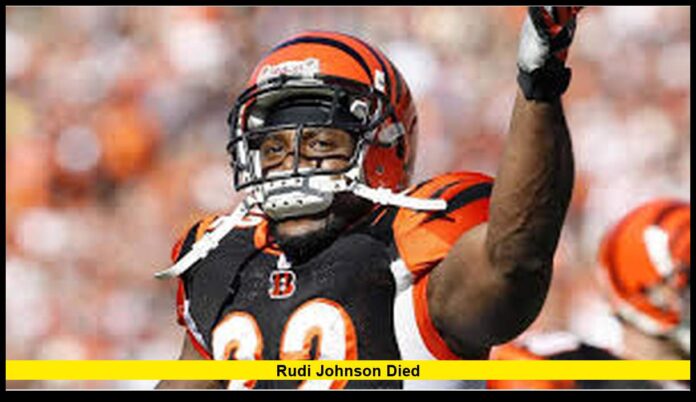
The news that Rudi Johnson died at the age of 45 has sent shockwaves through the football world. Fans, former teammates, and Auburn University supporters are mourning the loss of one of the most memorable running backs of the early 2000s. Johnson’s sudden passing has reignited conversations about player health and the challenges athletes face after their professional careers end.
Table of Contents
Early Life and College Career
Born on October 1, 1979, in Petersburg, Virginia, Burudi Ali Johnson—better known as Rudi Johnson—grew up with a love for the game. His power and toughness stood out early, eventually leading him to a standout college career.
Johnson first gained national attention at Butler Community College in Kansas, where he was a junior college star. His success earned him a transfer to Auburn University, where he played only one season but left a lasting legacy. In 2000, he rushed for more than 1,500 yards and 13 touchdowns, helping Auburn win the SEC Western Division. His dominance on the field earned him SEC Player of the Year honors and solidified his reputation as a future NFL talent.
NFL Career with the Bengals and Lions
Rudi Johnson was drafted in the fourth round of the 2001 NFL Draft by the Cincinnati Bengals. Though he spent his first two years as a backup, he emerged as the team’s starting running back in 2003.
From 2004 to 2006, Johnson became one of the league’s most productive and durable players:
- 2004: Rushed for 1,454 yards and 12 touchdowns, setting a franchise single-season rushing record.
- 2005: Followed up with 1,458 rushing yards and 12 more touchdowns, helping the Bengals win the AFC North.
- 2006: Added another 1,309 rushing yards and 12 touchdowns, proving his consistency as a workhorse back.
Johnson’s punishing running style made him a fan favorite in Cincinnati. He was selected to the Pro Bowl in 2004 and still ranks among the franchise’s top all-time rushers. In 2008, he played his final NFL season with the Detroit Lions before retiring from professional football.
Life After Football
Following his NFL career, Johnson remained connected to the game and his community. He took part in charitable work, youth programs, and mentoring efforts, often using his platform to encourage young athletes. His legacy extended beyond football statistics—he was admired for his character, work ethic, and willingness to give back.
Circumstances of His Death
The announcement that Rudi Johnson died at 45 has left fans searching for answers. His family confirmed his passing but did not immediately share the cause of death. Reports indicated that he had faced health challenges in recent years, including concerns about mental wellness and the long-term effects of physical play during his football career.
While official details about his passing remain private, the news has drawn attention to ongoing concerns about how the physical demands of football impact athletes well after they retire.
Legacy on the Field
Rudi Johnson’s career may not have lasted as long as some of his peers, but his impact was undeniable. Known for his bruising style, balance, and determination, he carried the Bengals’ offense during a critical period when the team was regaining competitiveness.
Some highlights of his NFL legacy include:
- Bengals’ all-time rushing leaders: Johnson ranks near the top in both rushing yards and touchdowns.
- Consistency: Three straight seasons with more than 1,300 rushing yards.
- Durability: Rarely missed time during his peak, despite being one of the most heavily used backs in the league.
- Pro Bowl recognition: His 2004 season remains one of the finest in Bengals history.
For Auburn fans, Johnson remains one of the best one-season wonders in college football, remembered for carrying the Tigers on his back in 2000.
Tributes from the Football Community
After news broke that Rudi Johnson died, tributes began pouring in across social media and sports networks:
- Former Bengals teammates described him as a “grinder” and “the heart of the offense” during his prime years.
- Auburn alumni and fans remembered him for his historic 2000 season and his impact on the SEC.
- Fans highlighted his toughness, recalling his ability to consistently pick up yards after contact and wear down defenses.
His death has left many reflecting not just on his athletic accomplishments, but on his influence as a teammate, role model, and community figure.
Health, Football, and the Bigger Picture
Johnson’s death also brings attention to broader issues surrounding the long-term health of professional athletes. Running backs, in particular, endure constant physical punishment, and many face health struggles after retirement.
The conversations surrounding Johnson’s passing highlight:
- Mental health awareness: Former athletes often face unique challenges transitioning out of professional sports.
- Head injuries and CTE: Concerns remain about how repeated collisions may contribute to neurological issues later in life.
- Support for retired players: Johnson’s story underscores the importance of providing resources for former athletes beyond their playing years.
Remembering Rudi Johnson’s Life and Career
At 45, Johnson’s life ended far too soon. Yet his impact continues to resonate with those who watched him play, those who knew him personally, and those who benefited from his generosity off the field.
He will be remembered for:
- His record-setting seasons with the Cincinnati Bengals.
- His unforgettable single year at Auburn that remains one of the program’s most celebrated performances.
- His toughness, determination, and ability to inspire both teammates and fans.
- His commitment to giving back through community initiatives after his NFL career ended.
Key Takeaways
- Rudi Johnson died at 45, leaving behind a legacy as a star running back at Auburn and in the NFL.
- He played seven NFL seasons, mostly with the Bengals, earning a Pro Bowl nod in 2004.
- His life after football included mentoring, community work, and family focus.
- The circumstances of his death remain private, but his story adds to ongoing discussions about athlete health.
- Fans and teammates continue to honor his contributions both on and off the field.
Final Thoughts
The news that Rudi Johnson died is a heartbreaking reminder of the fragility of life, even for those who once seemed invincible on the field. His career, though relatively brief, left an imprint on Auburn fans, Bengals supporters, and the NFL community at large.
Rudi Johnson will be remembered as more than a football player—he was a teammate, leader, and inspiration to countless fans. His legacy will live on in the memories of those who watched him run through defenders, fight for every yard, and represent his teams with pride.
How do you remember Rudi Johnson’s career? Share your memories and tributes to help honor his life and legacy.

