
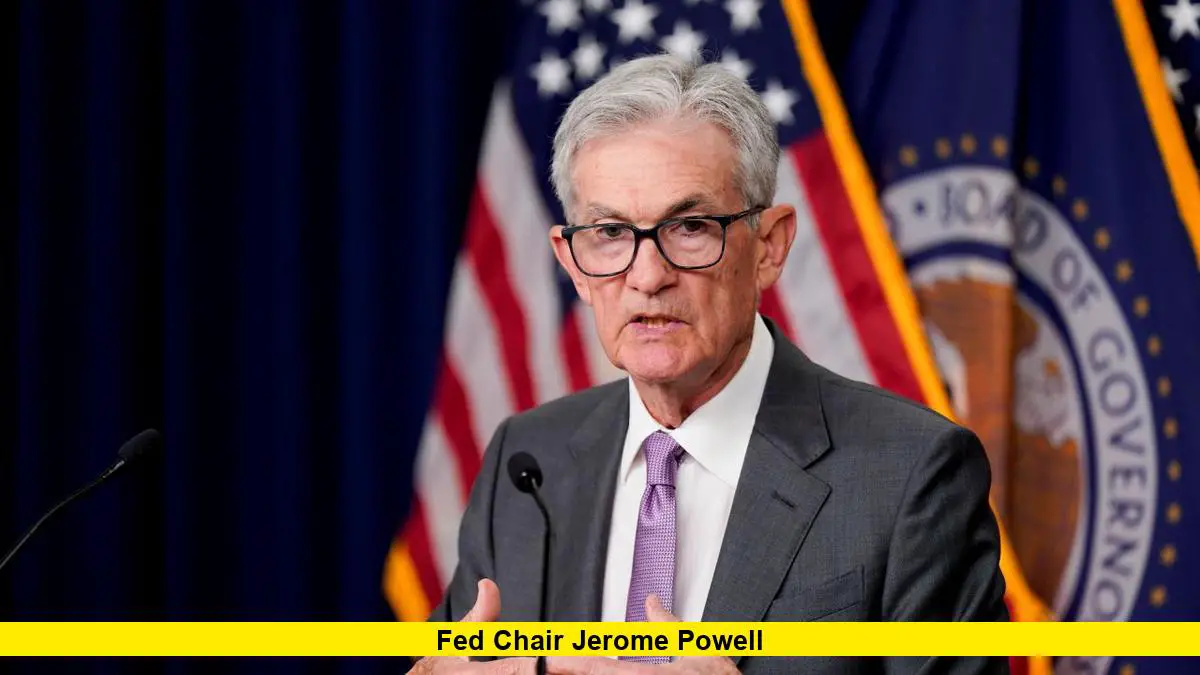
Fed Chair Jerome Powell stands at one of the most pivotal moments of his tenure as the head of the U.S. central bank. With the economy showing mixed signals — inflation stabilizing but hiring cooling sharply — Powell has begun laying out a policy path that could shape the trajectory of growth, employment, and financial markets well into 2026. His most recent remarks in mid-October made clear that the Federal Reserve is preparing for more interest rate cuts and is likely nearing a pause in its balance sheet reduction program. These decisions arrive amid increasing political scrutiny and heightened expectations from financial markets, business leaders, and ordinary Americans.
Table of Contents
A Clear Shift in Powell’s Economic Tone
Throughout much of 2023 and 2024, Powell maintained a firm stance against inflation, emphasizing the need to keep policy restrictive until price stability was restored. That narrative began to evolve in 2025. After a series of rate hikes in previous years, followed by careful adjustments in early 2025, the tone from the Fed chair has softened considerably.
In his latest address, Powell acknowledged that the labor market, long considered the strongest pillar of the U.S. economy, is showing tangible signs of slowing. Hiring has decelerated, job openings have narrowed, and companies across sectors are taking a more cautious approach to expansion. While layoffs remain limited, the appetite for new positions has waned. This evolving employment landscape has prompted Powell to refocus the Fed’s attention on its dual mandate — not just keeping inflation near target, but also safeguarding jobs.
Powell’s comments mark a strategic pivot: from a singular emphasis on inflation control to a more balanced view that accounts for growing labor market vulnerabilities.
Why the Labor Market Is at the Center of Powell’s Focus
The labor market slowdown is not happening in isolation. It reflects a combination of factors: waning post-pandemic momentum, higher borrowing costs, global trade frictions, and cautious consumer spending. Powell described the situation as “low hiring, low firing,” signaling that businesses are not panicking but are choosing to slow down expansion plans until the economic outlook becomes clearer.
This kind of environment can quickly become self-reinforcing. When companies hesitate to hire, household income growth slows, consumer spending weakens, and businesses receive fewer signals to invest — creating a feedback loop that can dampen growth. Powell has shown a clear awareness of these risks. He emphasized that monetary policy must be flexible and responsive to real-time data, rather than rigidly tied to one objective.
For Powell, keeping the labor market healthy is not just a short-term concern; it’s essential to sustaining overall economic momentum. A prolonged hiring freeze could push the economy toward stagnation, even if inflation remains contained.
Anticipating More Interest Rate Cuts
The clearest takeaway from Powell’s recent remarks is that more rate cuts are likely. After lowering the federal funds rate by 25 basis points in September, Powell indicated that similar moves could follow at the October and December policy meetings. Markets now broadly expect two more quarter-point reductions by the end of 2025.
Lowering rates serves several purposes: it reduces borrowing costs for businesses and consumers, encourages investment, and can help sustain job creation. However, Powell was careful to stress that these cuts are not automatic. The Fed will assess upcoming labor market and inflation data to determine the appropriate pace. If hiring deteriorates faster than expected, the Fed could act more aggressively. If inflation picks up again, it may adjust accordingly.
This data-dependent approach reflects Powell’s hallmark style: methodical, measured, and aimed at avoiding both complacency and overreaction.
The Fed’s Balance Sheet Reduction Could Soon Pause
In addition to interest rate policy, Powell addressed the Fed’s ongoing balance sheet reduction, known as quantitative tightening. Since mid-2022, the central bank has been steadily shrinking its securities holdings, which ballooned during the pandemic stimulus years. The balance sheet has fallen from nearly nine trillion dollars at its peak to roughly 6.6 trillion dollars today.
Powell signaled that this process may be approaching its natural conclusion. He pointed to signs of tightening liquidity in short-term funding markets, including upward pressure on overnight lending rates. To maintain smooth market functioning, Powell suggested that the Fed may soon halt or slow the runoff of assets.
Pausing quantitative tightening would mark a significant shift. It would signal that the Fed is prioritizing stability in financial markets alongside its broader economic goals. By maintaining a sufficiently large balance sheet, the Fed ensures that banks have adequate reserves, money markets remain stable, and it can effectively manage short-term interest rates.
Inflation: Stable but Still on the Radar
Inflation remains a core consideration for Powell. While it has come down considerably from its peak, it remains slightly above the Fed’s 2 percent target, with core inflation running near 2.9 percent on a yearly basis. Much of the recent upward pressure has come from goods prices affected by tariffs and supply frictions rather than broad-based price acceleration.
Powell noted that longer-term inflation expectations remain anchored, giving the Fed room to focus more on employment risks. Nevertheless, some policymakers have warned that inflation could rise above 3 percent again by year’s end, urging caution. Powell’s stance reflects a nuanced balance: he is not ignoring inflation, but he is willing to accept moderate price pressures if it means avoiding a sharp economic downturn.
This pragmatic approach aligns with the Fed’s dual mandate. Rather than rigidly sticking to one goal, Powell is emphasizing flexibility in the face of complex, evolving data.
Political Tensions Around Powell’s Leadership
The economic stakes for fed chair Jerome Powell are intertwined with growing political pressures. The White House has intensified its scrutiny of the Fed’s actions in recent months, questioning aspects of Powell’s rate strategy and oversight of large projects. Public criticism from political leaders has also increased, raising questions about the central bank’s independence.
Powell has remained resolute. He has consistently stated that he intends to serve his full term and that the Federal Reserve must make decisions based on data, not politics. His defense of institutional independence has become a defining feature of his tenure.
This dynamic is not new — Fed chairs have often faced political pressure during periods of economic uncertainty. However, Powell’s ability to navigate these tensions while maintaining market confidence will be a key test of his leadership in the months ahead.
Upcoming Economic Milestones to Watch
The next several weeks and months will be critical for shaping Powell’s policy trajectory and the broader economic outlook:
| Date | Event | Significance |
|---|---|---|
| October 24 | Inflation data release | Provides clues on price trends before the next policy meeting |
| October 28–29 | Federal Open Market Committee (FOMC) meeting | Likely setting for another 25-basis-point rate cut |
| December 10 | Final 2025 FOMC meeting | Potential for additional easing before year-end |
| Early 2026 | Expected end of balance sheet runoff | Marks a shift toward steady-state monetary operations |
Each of these milestones will influence how markets, businesses, and households adjust expectations. Powell’s communications strategy — clear, cautious, and data-driven — will continue to play a central role in managing these expectations.
The Economic and Market Impact
Markets have responded positively to Powell’s recent shift. Bond yields have moved lower, signaling confidence that the Fed will act to support growth. Stock markets have shown modest gains as investors anticipate easier financial conditions heading into 2026.
Businesses, particularly in rate-sensitive sectors like housing, autos, and manufacturing, have welcomed the prospect of lower borrowing costs. For households, lower rates could translate into cheaper mortgages, reduced credit card interest rates, and improved access to financing.
However, Powell has warned against complacency. Monetary policy can support economic conditions, but it cannot solve structural challenges such as workforce participation, productivity growth, or global trade disruptions. His goal is to create a stable backdrop in which other economic forces can operate more smoothly.
Powell’s Legacy at a Turning Point
As 2025 moves toward its final quarter, Powell’s leadership is entering a defining phase. The decisions he makes now — on rates, balance sheet policy, and communications — will shape not only the economic outlook for the next year but also his broader legacy as fed chair Jerome Powell.
His approach remains rooted in caution, flexibility, and institutional credibility. Whether that proves sufficient to navigate a slowing labor market without reigniting inflation will be closely watched by economists, investors, and political leaders alike.
The months ahead promise critical decisions and real economic consequences. What do you think about Powell’s strategy — is the Fed striking the right balance, or should it move faster? Share your thoughts and stay engaged as this story continues to unfold.