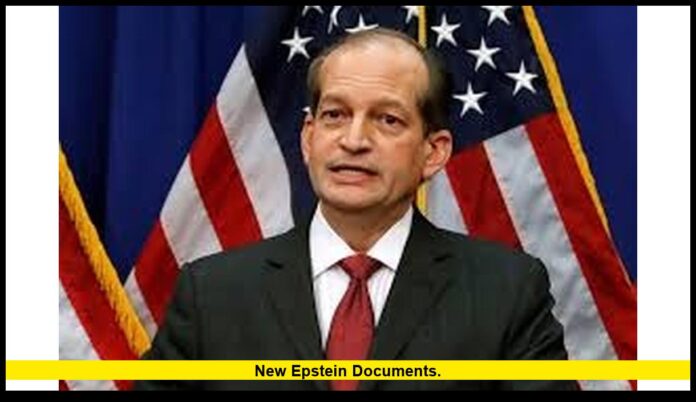
The release of new Epstein documents by the U.S. House Oversight Committee has reignited national attention on the Jeffrey Epstein case, shedding light on previously undisclosed evidence, interviews, and government correspondence. The newly unsealed materials include a transcript of former Labor Secretary Alex Acosta’s interview, internal communications, flight logs, and detailed notes that expose how Epstein’s network operated and how influential figures became entangled in one of America’s most disturbing scandals.
Table of Contents
The House Committee’s Release Sparks New Questions
The House Oversight Committee made the documents public earlier this week as part of its ongoing review of Epstein’s criminal cases and his wide-ranging network of associates. The release includes thousands of pages of evidence spanning over a decade, from financial transactions and flight records to private calendars and handwritten notes.
At the center of this release is the full transcript of Alex Acosta’s testimony, where the former Labor Secretary defended his controversial role in Epstein’s 2008 plea deal. The documents also reveal renewed efforts by Congress to identify possible failures within federal and local law enforcement agencies that allowed Epstein’s crimes to go unchecked for so long.
Committee members emphasized that this release was not about speculation but about accountability and transparency — a theme that has defined much of the public’s interest in Epstein’s case since his death in 2019.
What the New Epstein Documents Contain
The newly released Epstein files consist of thousands of pages of previously confidential records. Some of the key materials include:
- Alex Acosta Interview Transcript: Acosta details why the federal government agreed to a non-prosecution deal with Epstein in 2008, claiming the decision was based on “limited evidence” and concerns about witness safety.
- Flight Logs and Calendars: Updated manifests reveal names of individuals who flew on Epstein’s private jets, alongside timestamps and destination details.
- Financial Records: Dozens of wire transfers and account statements showing the flow of money between Epstein’s companies and offshore entities.
- Contact Lists and Journals: Personal notes documenting meetings with business executives, politicians, and celebrities across the U.S. and abroad.
- Internal DOJ Communications: Memos and emails between federal prosecutors and investigators discussing the handling of Epstein’s earlier cases.
While some information remains redacted for privacy and security reasons, the sheer volume of detail gives investigators — and the public — a clearer picture of how deeply connected Epstein’s web of influence was.
Alex Acosta’s Testimony at the Center of Attention
One of the most significant components of the new Epstein documents is the release of Alex Acosta’s full interview transcript. Acosta, who served as U.S. Attorney in Florida at the time of Epstein’s original plea deal, defended the controversial decision, arguing that a trial in 2008 would have been “risky” given the age of victims and limited corroborating evidence.
During questioning, Acosta claimed that:
- The 2008 plea deal was intended to secure some form of accountability rather than risk a complete acquittal.
- He was unaware of the full scope of Epstein’s activities and influence outside Florida.
- He never received direction or communication from then-President Donald Trump regarding Epstein.
- With today’s expanded evidence and testimonies, he admitted, “The decision would likely be very different.”
Acosta’s testimony has drawn mixed reactions — some viewing his statements as an attempt at justification, while others see them as evidence of a larger systemic failure in how the justice system handled Epstein’s crimes.
Key Revelations from the Newly Released Records
The latest batch of documents paints a disturbing picture of Epstein’s extensive reach and his ability to maintain relationships across political and business circles. Among the major takeaways:
- Extensive Contact Network: Epstein’s personal address books and calendars include names from the fields of finance, entertainment, science, and politics.
- Ongoing Federal Oversight: The House Committee confirmed that additional materials remain under review and may be released in future phases.
- Inconsistencies in Early Investigations: Emails and DOJ notes suggest discrepancies between local and federal authorities in how they documented witness statements.
- Victim Correspondence: A handful of letters written by victims to prosecutors highlight their frustration over Epstein’s lenient plea deal and lack of communication from law enforcement.
Public and Political Reactions to the Epstein Files
The release of these new materials has drawn sharp reactions across the political spectrum. Members of both parties have demanded greater transparency, arguing that the American public deserves to know who benefited from Epstein’s influence and how his crimes went unchecked for so long.
Several lawmakers are calling for further public hearings, with potential testimony from individuals linked to Epstein through financial records or travel logs. Others have urged the Department of Justice to open a new review of the 2008 plea agreement to determine whether corruption or political pressure influenced the outcome.
Public reaction has been equally intense. Online discussions and trending hashtags are calling for “full accountability” and “unredacted truth,” underscoring the frustration that has persisted since Epstein’s death under federal custody in 2019.
Why the New Epstein Documents Matter
The Epstein case continues to be one of the most complex and haunting criminal sagas in modern American history. The release of these new documents represents not only a legal update but also a moral reckoning — an effort to uncover the systemic failures that allowed a convicted sex offender to operate freely among the world’s elite.
Key reasons this release matters include:
- Accountability for public officials: The files may help determine whether government officials acted ethically and within the law during Epstein’s prosecution.
- Justice for victims: Each disclosure provides additional recognition and transparency for survivors whose voices were long ignored.
- Public transparency: These releases reaffirm the right of citizens to see how the justice system operates — especially when power and privilege intersect.
- Historical record: The documentation ensures future generations can learn how and why Epstein’s crimes persisted for decades.
What Happens Next
With the new Epstein documents now public, the House Oversight Committee is expected to hold additional hearings to examine whether any individuals or agencies failed to act responsibly. Future steps may include:
- Further document releases as redactions are reviewed and cleared.
- New witness testimonies, including additional former federal prosecutors and investigators.
- Legislative recommendations to prevent similar cases of leniency or cover-ups in high-profile prosecutions.
Investigators have hinted that this is “not the final release,” suggesting that more information from Epstein’s personal archives and government communications could become public in the coming weeks.
Final Thoughts
The new Epstein documents shine a glaring spotlight on the failures of the justice system, the influence of power, and the importance of transparency. The revelations about how Epstein operated — and who may have protected him — are not just historical curiosities; they are lessons about accountability in modern America.
As more details emerge, one thing is clear: the fight for full truth and justice in the Epstein case is far from over. Share your thoughts below and stay tuned for ongoing updates as this story continues to unfold.

