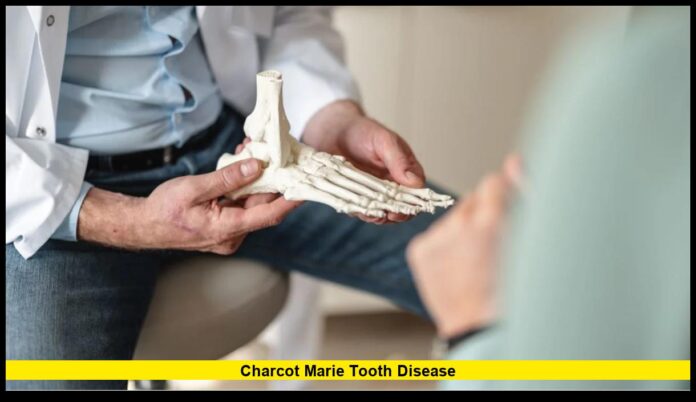
In 2025, doctors and researchers across the United States are making major progress in understanding Charcot Marie Tooth disease — one of the most common inherited neurological disorders in the world. This condition affects nearly 150,000 Americans, causing muscle weakness, loss of balance, and nerve damage in the arms and legs.
While there is still no cure, new studies and treatment developments are offering fresh hope to patients and families. With gene therapy trials, improved diagnosis, and smarter rehabilitation options, living with CMT today looks more manageable than ever before.
Table of Contents
What Is Charcot Marie Tooth Disease?
Charcot Marie Tooth disease (CMT) is a genetic condition that damages the peripheral nerves — the nerves that connect the brain and spinal cord to the rest of the body. These nerves control movement and sensation in the arms, legs, hands, and feet.
When these nerves stop working properly, signals from the brain become weaker or distorted. Over time, this leads to muscle weakness, loss of coordination, and difficulty walking.
CMT is named after the three doctors — Jean-Martin Charcot, Pierre Marie, and Howard Henry Tooth — who discovered the disease in 1886. Today, researchers know that there are more than 130 types of CMT, each linked to different genetic mutations.
Common Symptoms of CMT
CMT affects everyone differently, but most people begin noticing symptoms in their teens or early adulthood. The condition usually progresses slowly.
Typical symptoms include:
- Weakness in the legs, ankles, and feet
- High foot arches or flat feet
- Hammertoes or foot deformities
- Loss of balance and coordination
- Muscle cramps or pain in the legs
- Numbness or tingling in the hands and feet
- Difficulty walking long distances or running
In later stages, the condition can also affect the hands, making it hard to grip objects or perform fine motor tasks.
Breakthrough Research in 2025
For decades, doctors focused mainly on managing symptoms of Charcot Marie Tooth disease. But now, the landscape is changing. Thanks to advances in genetics and biotechnology, scientists are closer than ever to creating targeted treatments that go beyond symptom relief.
Here are the biggest breakthroughs happening in 2025:
1. Gene Therapy Trials Show Encouraging Results
Gene therapy is leading the charge in CMT research. Scientists are developing ways to replace or repair faulty genes that cause the disease. Early trials have already shown that restoring normal gene function can help nerve cells recover.
In one promising study, researchers used harmless viral vectors to deliver healthy copies of a defective gene directly into nerve cells. This approach helped restore muscle strength and reduce nerve damage in animal models — a breakthrough that could soon move to human trials.
For families living with severe, fast-progressing types of CMT, this research brings real hope for the future.
2. New Drug Treatments in Development
Several new drugs are also being tested to help slow down or stop the nerve damage caused by CMT. These medications target the underlying cellular problems — such as inflammation, poor energy production, and toxic protein buildup.
In recent small-scale trials, some participants reported improved mobility and reduced muscle fatigue after taking experimental therapies. If confirmed in larger studies, these drugs could be the first step toward transforming CMT from a progressive disease into a manageable condition.
3. Smarter Diagnostic Tools
Diagnosis for Charcot Marie Tooth disease has improved dramatically. Until recently, it could take years for patients to receive a confirmed diagnosis, as CMT symptoms can resemble other nerve conditions.
Now, advanced genetic testing panels allow doctors to pinpoint the exact mutation responsible for each patient’s condition. This precision helps guide personalized treatment plans and determine eligibility for clinical trials.
In addition, nerve imaging technologies and motion-tracking devices are helping specialists measure disease progression with greater accuracy.
4. Wearable Technology for Daily Monitoring
A new wave of wearable technology is also making life easier for CMT patients. Devices that track gait, strength, and balance are now being used to monitor symptoms from home.
These tools collect real-time data, which doctors can review remotely to adjust therapy plans. For patients, this means fewer hospital visits and a better understanding of how their condition changes over time.
Wearable sensors are also helping researchers gather large amounts of data for ongoing studies, accelerating progress toward better treatments.
Living with Charcot Marie Tooth Disease
Although CMT has no cure yet, modern treatment and lifestyle management can greatly improve quality of life. With early diagnosis and the right care, most people with CMT can lead active, independent lives.
Here’s how patients and families are managing the condition effectively in 2025:
Physical Therapy
Regular stretching and strengthening exercises help maintain flexibility and prevent muscle loss. Specialized physical therapy programs focus on improving walking patterns and balance.
Orthopedic Support
Braces, custom shoes, and orthotic inserts can make walking easier and prevent falls. For severe deformities, surgery may be recommended to correct the shape of the feet or ankles.
Occupational Therapy
This therapy teaches patients how to adapt everyday tasks—like writing, cooking, or using tools—to reduce strain and improve independence.
Pain and Fatigue Management
Mild pain medications, massage therapy, and low-impact exercises like swimming or yoga can help control pain and fatigue.
Mental Health Support
Living with a chronic condition can be emotionally challenging. Counseling and support groups play a key role in helping patients and families stay positive and connected.
Awareness and Advocacy
Across the U.S., awareness of Charcot Marie Tooth disease is growing rapidly. Advocacy groups are working hard to educate the public, support patients, and fund research into new therapies.
These organizations are pushing for:
- More funding for CMT research
- Inclusion of CMT in federal disability programs
- Better access to genetic testing
- Early screening programs for families with a history of the disease
Through nationwide awareness campaigns, social media outreach, and fundraising events, they are helping people understand that CMT is not as rare as many believe — and that support and treatment options do exist.
The Road Ahead
As scientists continue to study the genetic roots of Charcot Marie Tooth disease, the path toward effective treatments looks clearer than ever. Experts predict that within the next decade, gene therapies and new medications could dramatically change the future of CMT care.
While the condition remains incurable today, patients can take comfort in the fact that researchers are making steady progress. Every discovery — from gene mapping to wearable monitoring — brings the medical community one step closer to transforming how this disease is treated.
Final Thoughts
Charcot Marie Tooth disease may be complex, but the fight against it is gaining strength every year. The breakthroughs of 2025 represent real hope — not just for those currently living with CMT, but for future generations who may one day see the disorder eliminated entirely.
If you or someone you love is affected by CMT, the most important step is staying informed. Early diagnosis, regular care, and involvement in the growing CMT community can make a world of difference.
As science advances and awareness grows, so does the hope that one day, Charcot Marie Tooth disease will no longer define the lives of those who live with it — but serve as a story of how perseverance and innovation turned a challenge into a triumph.

