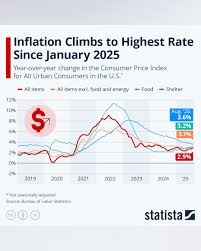
The US inflation picked up to 3% in September 2025, signaling that price pressures are proving more stubborn than expected. While the increase is modest compared to the highs of 2022, it has renewed debate over the Federal Reserve’s next steps, household budgets, and the broader direction of the U.S. economy.
The new inflation figure comes after months of gradual cooling, with economists watching closely to see if the 3% mark represents a temporary uptick or the start of a new plateau. For millions of Americans, however, the number translates into something simpler — higher everyday costs.
Table of Contents
Breaking Down the 3% Inflation Rate
According to the latest Consumer Price Index (CPI) report, overall prices rose 3.0% year-over-year, slightly up from August’s 2.9%. Month-over-month, prices climbed by 0.3%, showing continued upward momentum.
The main drivers behind this latest increase include:
- Energy prices: Gasoline prices surged more than 4% in September, reversing declines seen earlier in the year.
- Food costs: Grocery prices rose modestly, but restaurant and takeout meals saw sharper increases, adding to consumer spending strain.
- Housing and rent: Although housing inflation has slowed compared to 2023, shelter costs still account for nearly a third of total CPI weighting and continue to climb.
- Healthcare and insurance: Health-related costs ticked up again, with higher premiums and hospital service costs offsetting small declines in prescription drug prices.
The core inflation rate, which excludes volatile food and energy prices, also stood at 3%, showing that underlying price pressures remain stable but above the Federal Reserve’s target of 2%.
Why Prices Are Still Rising
The reasons behind this renewed rise in inflation are complex and interconnected.
Energy and global markets: Oil and natural gas prices have inched up globally, largely due to tightening supply and geopolitical tensions. That has translated into higher fuel and shipping costs domestically, which ripple through nearly every sector of the economy.
Persistent demand: Despite higher interest rates, American consumers continue to spend strongly. Retail sales and travel activity remain robust, giving businesses leeway to maintain elevated prices.
Housing market pressures: The shortage of affordable homes continues to push rent and mortgage costs upward, especially in large metro areas. The lack of new housing supply has kept shelter inflation stubbornly high, contributing to overall CPI growth.
Labor and wage costs: With the U.S. unemployment rate still hovering near 4%, wage growth has remained solid. While that’s good news for workers, it also contributes to higher operating costs for businesses — costs that are often passed on to consumers.
How Inflation at 3% Affects American Families
Even a modest uptick in inflation can have meaningful effects on household finances. Here’s what it means for average consumers:
- Reduced purchasing power: A 3% rise in inflation means that goods and services cost roughly $3 more for every $100 spent compared to last year.
- Higher borrowing costs: Mortgage, auto, and credit card rates remain elevated as the Fed continues to maintain tight monetary policy.
- Savings erosion: Unless savings accounts and investments earn interest above 3%, the real value of money saved decreases slightly.
- Rising household bills: From groceries to utilities, many families are reporting monthly expenses rising by $100–$300 compared to 2024.
While inflation isn’t surging as it did during the 2021–2022 period, it still adds strain to budgets, especially for middle- and lower-income households.
The Federal Reserve’s Dilemma
The fact that US inflation picked up to 3% puts the Federal Reserve in a difficult position. After over a year of high interest rates aimed at cooling the economy, the Fed now faces a delicate balancing act.
- If the Fed cuts rates too soon, inflation could reaccelerate, undermining recent progress.
- If it holds rates too high for too long, borrowing costs could stifle consumer spending and slow job growth.
Recent statements from Fed officials suggest a cautious tone. Policymakers are waiting to see if inflation drifts lower again before considering rate cuts later in the year. The goal remains to bring inflation closer to 2% without triggering a recession.
How This Compares to Recent Years
To put the current 3% figure in perspective:
| Year | Inflation Rate | Economic Conditions |
|---|---|---|
| 2022 | 9.1% peak | Highest in four decades |
| 2023 | 4.0–4.5% | Cooling but still high |
| 2024 | 2.9–3.1% | Near stabilization |
| 2025 | 3.0% (current) | Slight upward shift |
The latest number indicates the U.S. is far from the runaway inflation of 2022 but not yet back to the pre-pandemic normal of 1.8–2%.
Impact on Key Sectors
Housing: Rent and home prices continue to be the biggest contributors to inflation. With mortgage rates still above 6%, affordability remains a challenge, particularly for first-time buyers.
Energy: Oil prices near $90 per barrel have reignited fuel-related inflation. While alternative energy investments are expanding, they have not yet eased immediate consumer costs.
Transportation: Vehicle prices, especially for new models, remain above pre-pandemic levels, although used car prices have cooled.
Food and beverages: Restaurants continue to raise prices due to labor costs, even as grocery inflation moderates slightly.
Healthcare: Medical costs and insurance premiums are rising faster than the overall CPI, pressuring families and employers.
How Businesses Are Reacting
Businesses are adjusting pricing and cost strategies to navigate the 3% inflation environment.
- Retailers are offering more discounts and loyalty programs to sustain sales volumes.
- Manufacturers are focusing on efficiency and automation to reduce labor costs.
- Small businesses continue to face challenges as supply-chain costs fluctuate, forcing them to choose between absorbing losses or passing them to consumers.
While corporate profits have stabilized, the environment remains tight for smaller firms that rely on consumer spending power.
The Broader Economic Picture
Despite the inflation uptick, the U.S. economy continues to show resilience. Job creation remains steady, unemployment is near historic lows, and GDP growth for the third quarter is tracking above 2%. However, economists warn that sustained inflation around 3% could keep the economy in a “sticky price” zone—neither fully cooling nor overheating.
Some analysts believe this could represent the new equilibrium, with inflation hovering around 3% for an extended period as global cost structures and demographics shift.
What to Expect Going Forward
Looking ahead to late 2025 and 2026, inflation is expected to gradually ease if energy prices stabilize and wage growth slows slightly. However, volatility remains a risk: any surge in fuel, food, or housing costs could push inflation higher again.
Consumers should expect the following:
- Steady but slow declines in inflation over the next few quarters.
- A possible Federal Reserve rate cut in early 2026 if inflation continues to moderate.
- Continued price sensitivity among consumers, with spending focused on necessities rather than luxury goods.
In conclusion, the fact that US inflation picked up to 3% serves as a reminder that the fight against rising prices isn’t over yet. While the economy remains strong, households continue to feel the pressure of higher living costs. Whether inflation dips or sticks in the coming months will shape the country’s economic path — and the financial choices of millions of Americans.
How is inflation affecting your household or business? Share your thoughts below and stay updated on the latest economic trends.

