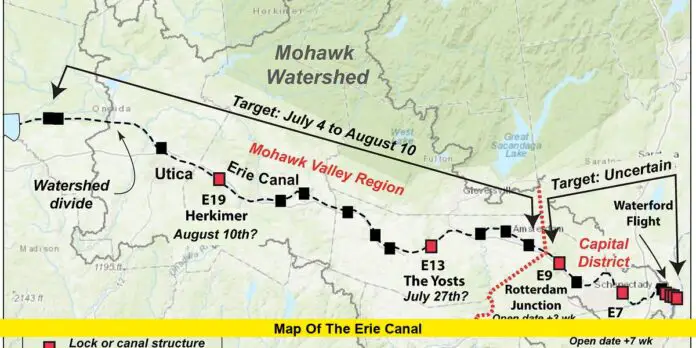
The map of the Erie Canal is more than a static image—it’s a dynamic, living resource reflecting current infrastructure, closures, trail access and navigation updates as of 2025. With this year marking the 200th anniversary of the original canal’s opening, the map carries renewed importance for boaters, trail-users and history enthusiasts alike.
Table of Contents
What the Map of the Erie Canal Covers
The map of the Erie Canal highlights a corridor that spans from the Hudson River near Waterford, New York, to Lake Erie near Buffalo. It displays key features including:
- Navigable waterway segments, locks, lift-bridges and guard gates.
- Adjacent trail systems and towpaths that follow the historic canal route.
- Tourist and recreational amenities—bike-launch points, public boat ramps, parking and visitor centers.
- Operational status indicators: closures, reduced widths, notices of maintenance and special events.
The canal today forms part of the larger New York State Canal System, and the map reflects that integration—showing how the historic Erie route connects with the Oswego, Cayuga-Seneca and Champlain canals.
Key Map Highlights for 2025
Here are some of the prominent features and updates you’ll see on the map of the Erie Canal this year:
- The canal system is operating under extended navigation hours—open through Monday, November 3, 2025. Standard hours run 8:00 a.m. to 6:00 p.m., with some locks and lift bridges available until 9:00 p.m. during peak season.
- One notable closure: The section between Lock E-16 (St. Johnsville) and Lock E-17 (Little Falls) remains closed as of spring 2025 for major repairs, impacting that stretch of the route.
- Trail-related map updates: Adjacent towpath/trail segments such as the main Canalway Trail sections show detours or temporary closures due to construction or bridge replacement work.
- The map includes overlay data for “Notice to Mariners” alerts—so users can see in real time which stretches are restricted for boater traffic because of debris, high water or inspection work.
- Historic-route features: On many map versions you’ll find notation of original canal alignments, “old Erie” segments, and historic lock sites that no longer serve navigation but remain visible landmarks.
Why This Map Matters Now
Here’s why paying attention to the map of the Erie Canal matters in 2025:
- Celebrating two centuries: The original Erie Canal opened in 1825. The map in 2025 is not just functional; it’s commemorative—guiding visitors along a corridor rich in heritage and community events.
- Recreational transformation: What was once a commercial freight waterway is now heavily used for boating, kayaking, cycling and hiking. The map underscores how the canal corridor has evolved and directs users to amenities that support modern recreation.
- Infrastructure resilience: Upgrades, repairs and modernizations are visible via the map’s current notices and closures. For example, the closure near the St. Johnsville-Little Falls area reflects weather-related damage and the state’s efforts to shore up the system.
- Tourism and community connection: Towns along the canal corridor use the map of the Erie Canal to market themselves, attract trail users and boaters, and anchor heritage festivals. The map helps plan those visits, showing access points and support infrastructure.
How to Use the Map of the Erie Canal Effectively
Whether you’re planning a water‐based trip, a bike tour or a heritage excursion, the map of the Erie Canal gives you actionable insights. Here are strategies:
For Boaters
- Check the map for current closures or restricted sections before launching. The section around Lock E-16 to Lock E-17 remains closed for the moment.
- Use the map’s symbol legend to identify lock size, lift-bridge openings, and navigation hazards.
- Know the extended season hours and plan arrival times accordingly—many locks require boats to arrive by 5:00 p.m. for full day transits.
- Review the trail vs water interface: boat ramps, marinas, and public moorings are often noted on the map.
For Cyclists and Hikers
- The canal’s map includes the adjacent Canalway Trail in many parts—this shows on-road detours or off-road segments.
- Note any trail closures or bridge replacements marked on the map—these may require alternate routing.
- Use the map to identify access and egress points near trail segments, and plan connections into nearby towns or heritage stops.
For Heritage and Tourism Visitors
- Look for historic features on the map: original canal alignments, old lock ruins, museum sites.
- Use the map to sequence your visits—towns and villages along the route often cluster.
- If you aim to ride or travel the full corridor, the map of the Erie Canal helps you segment your journey into manageable chunks, days, or themed stops.
Latest Operational & Seasonal Updates
Here are some of the important operational and seasonal notes that are reflected on the map of the Erie Canal for 2025:
- The navigation season has been extended this year: the canal system remains open through November 3, 2025. This provides extra flexibility for late-season boating.
- The system opened officially on May 16, 2025 (weather permitting) but with a phased opening due to storm-damage. As a result, some sections were delayed for safe reopening.
- An extended closure remains in place between Lock E-16 and Lock E-17 as crews repair a damaged movable dam and embankment. That will impact passage through that stretch until work is complete.
- Trail users should note that sections of the parallel Canalway Trail have short-term closures for construction or bridge replacement, e.g., in Niagara County near Lock 35.
- Maps now emphasize real-time “alerts” for boaters: reduced depths, debris removal, damaged lift-bridges, or low water levels.
Key Map Data at a Glance
Here’s a quick reference you can use when checking the map of the Erie Canal:
- Navigable length of the Erie Canal (modern system): ~338 miles
- Length of adjacent trail network (the Canalway Trail portion): ~365 miles
- Extended navigation season (2025): May 16 through November 3
- Closed section (spring/summer 2025): Lock E-16 to Lock E-17
Read Also-Erie Canal: How It Shaped Michigan 200 Years Later
What to Watch for on the Map Moving Forward
Here are some anticipated changes and what to pay attention to:
- Completion of repairs: Once the closed section between Lock E-16 and Lock E-17 reopens, the map will be updated and boaters should check for that reopening before planning.
- Trail expansions and detours: As segments of the trail get upgraded, new off-road sections may appear on the map and some on-road detours may be phased out.
- Event overlays: With the bicentennial year, special flotillas, heritage journeys (such as a replica boat retracing the original Erie Canal route) could appear as markings or notes on the map.
- Infrastructure resilience updates: Given recent weather events, map layers may increasingly show flood mitigation projects, raised banks or improved embankments along the corridor.
- Digital interactivity: More users are accessing the map via interactive web tools or mobile apps. The map of the Erie Canal may offer real-time layering of alerts, user-submissions of conditions, and GPS-enabled trail tracking.
Why It’s Worth Downloading or Keeping Handy
A few reasons why you should keep a current version of the map of the Erie Canal handy:
- It guides you through both remote and urban stretches—from the Waterford flight near Albany to the canal locks in Lockport and Buffalo.
- It supports multiple modes of travel: boat, bike, kayak or walk. The corridor is multi-modal and the map is built for that.
- It connects you to over 200 communities—each town along the corridor is a stop on the map, often with services, local culture and history.
- It’s a safety asset—knowing where alerts, closures, or detours exist means fewer surprises and better planning.
- It’s historical and practical—a tool for the present day and a portal to two centuries of transportation, engineering and recreation.
Final Note
The map of the Erie Canal has transformed from a utilitarian chart of locks and water to a full-featured guide blending history, recreation and infrastructure updates. Whether you’re charting a boating expedition, planning a trail ride or simply exploring one of America’s most iconic inland waterways, staying current with the map means smoother, safer, more fulfilling adventures.
We’d love to hear about your recent outings along the canal or how you use the map—drop a comment below or stay tuned for the next wave of updates!

