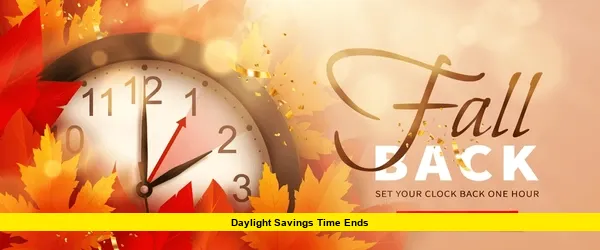
When daylight savings time ends on Sunday, November 2, 2025, at 2:00 a.m., clocks across most of the United States will turn back one hour to mark the return to standard time. This shift, often remembered with the phrase “fall back,” gives Americans an extra hour of sleep and signals shorter, darker evenings as winter approaches.
Table of Contents
Why Daylight Savings Time Ends Each Fall
Daylight saving time (DST) is designed to make better use of natural daylight during the longer days of spring and summer. When it ends each fall, the country reverts to standard time to align more closely with natural daylight hours.
This biannual clock change is observed in most U.S. states, except a few that opt out. The November adjustment officially ends the extended daylight hours introduced in March, and the next change won’t occur until March 8, 2026, when clocks will move forward again.
When to Set Your Clock Back
This year, the transition happens Sunday, November 2, 2025, at 2:00 a.m. local daylight time. At that moment, clocks are set back to 1:00 a.m. local standard time.
For most people, the easiest way to adjust is to set clocks back one hour before going to bed on Saturday night, November 1. While smartphones, computers, and other smart devices update automatically, analog clocks, ovens, microwaves, and vehicle clocks may still require manual adjustment.
Who Doesn’t Observe the Change
Not all areas in the U.S. follow daylight saving time. The following regions stay on standard time year-round:
- Hawaii
- Most of Arizona, except for the Navajo Nation
- Puerto Rico
- Guam
- American Samoa
- U.S. Virgin Islands
- Northern Mariana Islands
Residents in these areas will not need to adjust their clocks this November.
Practical Effects of the Time Change
When daylight savings time ends, it affects much more than just your schedule. Americans will notice:
- Brighter mornings: Sunrise will occur about an hour earlier than before the time change.
- Darker evenings: Sunset will arrive sooner, which can make evenings feel shorter and affect outdoor plans.
- A slight sleep adjustment: Most people enjoy the extra hour of rest, but your body may still need a day or two to adapt to the new schedule.
- Changes to energy use: The return to standard time often shifts energy consumption patterns, particularly for lighting and heating during evening hours.
Tips to Adjust Smoothly
While the “fall back” transition is generally easier than the springtime “spring forward” shift, it can still disrupt your body’s natural rhythm. Here are some ways to adjust smoothly:
- Gradually shift your bedtime a few days before the change to help your body adapt.
- Use the extra hour for rest instead of late-night activities, ensuring you stay refreshed.
- Take advantage of morning light—exposure to sunlight after waking helps reset your internal clock.
- Be cautious while driving—darker evenings can increase the risk of accidents, particularly in the week following the change.
- Check household safety devices such as smoke alarms and carbon monoxide detectors; many safety experts recommend using the time change as a reminder to replace batteries.
Why Some Americans Want to End the Time Change
Across the U.S., there’s growing debate over whether daylight saving time should continue. Several states have passed legislation to remain on daylight saving time year-round, but federal law currently prevents such changes without congressional approval.
Critics argue that the biannual clock shift disrupts sleep patterns and productivity. Others believe maintaining daylight saving time permanently would provide longer evening daylight year-round, reducing energy use and improving quality of life.
Despite the debate, the federal schedule remains in place: clocks move forward on the second Sunday in March and fall back on the first Sunday in November each year.
What Happens After the Change
Once daylight savings time ends on November 2, the U.S. will remain on standard time for the winter months. This means:
- Earlier sunsets: Expect darkness to fall before many people leave work, especially in northern states.
- Cooler mornings and shorter days: The shift aligns better with the lower sun angle during winter.
- The next transition: Daylight saving time will begin again on Sunday, March 8, 2026, when clocks will move forward by one hour.
If you travel internationally or between U.S. states, keep the change in mind — local time differences may vary slightly during this transition period.
Key Details at a Glance
| Event | Daylight Savings Time Ends |
|---|---|
| Date | Sunday, November 2, 2025 |
| Time | 2:00 a.m. local daylight time |
| Action | Set clocks back one hour |
| Effect | Gain one hour of sleep |
| Regions Not Affected | Hawaii, most of Arizona, U.S. territories |
| Next Change | Sunday, March 8, 2026 |
| Main Impact | Earlier sunsets, brighter mornings |
How It Affects Daily Life
For many Americans, the end of daylight saving time marks a seasonal transition. The earlier sunsets can influence everything from commute safety to evening routines. Retailers often adjust hours, and health professionals note that the shift can affect mood and energy levels, especially as the days continue to shorten through December.
Some employers recommend adjusting work and sleep routines gradually during the first week after the change. Parents, too, often notice children waking earlier as their internal clocks realign to the new daylight schedule.
Despite these adjustments, most people welcome the extra hour of rest and the cozy feeling that comes with earlier evenings and longer nights — a clear sign that the winter season is approaching.
As daylight savings time ends this November 2, take a moment to prepare your clocks, plan your schedule, and embrace the extra hour of rest. How do you feel about the biannual time change? Share your thoughts below and let’s keep the conversation going!

