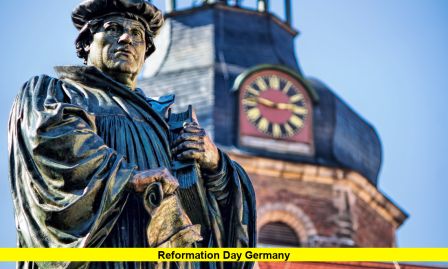
Every October 31, the observance of Reformation Day Germany honors a turning point that reshaped the religious and cultural fabric of Europe — and, by extension, the world. In 2025, the holiday falls on a Friday, giving Germans in certain regions a long weekend to commemorate a defining moment in their history.
For readers in the United States, this day offers far more than a note on the calendar. It’s an opportunity to understand how Germany remembers the birth of Protestantism, how it affects modern life and travel, and why it still resonates deeply across both sides of the Atlantic.
Table of Contents
Understanding Reformation Day Germany
Reformation Day Germany, known in German as Reformationstag, commemorates the events of October 31, 1517, when Martin Luther, a monk and theologian from Wittenberg, publicly challenged the Catholic Church’s practices.
According to historical tradition, Luther presented his Ninety-Five Theses, criticizing the sale of indulgences and calling for reform. His stand marked the beginning of the Protestant Reformation, a movement that fundamentally altered Christian theology, European politics, and education.
For modern Germans, the day isn’t just about religion — it’s about courage, freedom of belief, and the transformative power of ideas.
Reformation Day Germany 2025: Date and Observance
In 2025, Reformation Day Germany will be observed on Friday, October 31. The day is an official public holiday in several German states, primarily in regions with Protestant roots.
While it’s not a nationwide holiday, the observance carries significant local and cultural importance. In these states, schools, government offices, and many businesses close, allowing people to attend church services or community events.
German States Where It’s a Public Holiday
The following states in Germany will officially observe Reformation Day as a public holiday in 2025:
- Brandenburg
- Bremen
- Hamburg
- Lower Saxony
- Mecklenburg-Western Pomerania
- Saxony
- Saxony-Anhalt
- Schleswig-Holstein
- Thuringia
These regions are historically Protestant and continue to recognize the day as part of their cultural heritage. Other states — such as Bavaria, Baden-Württemberg, and North Rhine-Westphalia — do not have a public holiday on October 31, though churches may still hold services or educational events.
How Germans Celebrate Reformation Day
Reformation Day Germany is primarily a religious and cultural observance, not a commercial holiday. The tone of the day is reflective, centered around faith, history, and identity. Here’s how it is typically celebrated:
1. Church Services and Sermons
Protestant churches across the country host services that emphasize renewal, faith, and the teachings of Martin Luther. Sermons often revisit Luther’s core message — that faith and grace, not indulgences or wealth, define a person’s relationship with God.
2. Sacred Music and Hymns
Music is an integral part of the day. Luther was himself a composer, and his hymn A Mighty Fortress Is Our God (Ein feste Burg ist unser Gott) is sung widely during services. Choirs, organists, and orchestras perform works inspired by the Reformation, bringing centuries-old hymns to life.
3. Educational Events
Many schools, museums, and cultural institutions organize exhibitions or lectures about the Reformation’s influence on history, literature, and society. In some cities, students learn about how the Reformation shaped German identity, language, and politics.
4. Community Gatherings
Public celebrations often feature local fairs, open-air performances, or guided tours of historical sites related to Luther’s life. Wittenberg, the birthplace of the Reformation, becomes the focal point of national festivities each year.
Wittenberg: The Heart of the Reformation
No discussion of Reformation Day Germany is complete without mentioning Wittenberg — the small Saxon town where Luther’s actions ignited a global transformation.
Visitors can explore sites that still carry the spirit of the Reformation:
- All Saints’ Church (Schlosskirche): The church where Luther is said to have posted his Ninety-Five Theses. Its doors have become a global symbol of reform and freedom of belief.
- Lutherhaus: Once an Augustinian monastery, it now serves as a museum preserving Luther’s writings, artifacts, and personal belongings.
- Market Square: Statues of Martin Luther and fellow reformer Philip Melanchthon stand here, celebrating their enduring impact on faith and education.
Each year, Wittenberg hosts special church services, concerts, and reenactments, making it the epicenter of Reformation Day Germany celebrations.
Historical Impact of Reformation Day Germany
The events of 1517 didn’t just reshape the church — they changed the world. The Reformation sparked theological debate, encouraged literacy, and helped pave the way for individual rights and democratic ideals.
Its effects can be seen in many aspects of modern society:
- Religion: The Protestant Church became one of Christianity’s major branches.
- Education: Luther emphasized the importance of education for all, promoting widespread literacy.
- Politics: The movement encouraged critical thinking, autonomy, and the questioning of authority — principles that echo in modern democracies.
- Culture: The translation of the Bible into German standardized the language and inspired countless literary works.
For U.S. readers, the Reformation’s legacy lives on in the diversity of Protestant denominations found across America today.
Modern Meaning of Reformation Day Germany
In today’s Germany, the holiday blends spiritual reflection with cultural pride. While fewer people attend church regularly than in past centuries, many Germans still recognize the Reformation as a cornerstone of their identity.
The day reminds citizens of the importance of standing up for conviction, promoting education, and embracing dialogue — values that resonate far beyond religion.
Modern celebrations often highlight unity and coexistence among Christian denominations. In some regions, Protestant and Catholic congregations hold joint services as a gesture of reconciliation, showing how the conflicts of the past have evolved into cooperation in the present.
Reformation Day Germany and Halloween
Because Reformation Day and Halloween share the same date, it’s common for visitors to confuse the two. In Germany, however, the focus is entirely different.
While Halloween has grown in popularity in major cities, Reformation Day Germany remains a solemn and historical occasion in Protestant regions. Many communities prefer to maintain the religious observance rather than blend it with costume parties or trick-or-treating traditions.
Practical Information for U.S. Travelers
If you plan to visit Germany during Reformation Day 2025, keep these tips in mind:
- Expect closures in the states where the day is a public holiday. Government offices, banks, and many shops will not operate.
- Plan transportation ahead of time — train and bus schedules may be reduced.
- Explore heritage sites in Wittenberg, Eisenach, and Erfurt for historical tours tied to Luther’s life.
- Book accommodations early, as Wittenberg and nearby towns attract thousands of visitors during the week of Reformation Day.
- Join local services or concerts, which are open to the public and provide authentic cultural insight.
Reformation Day Germany vs. Other German Holidays
Reformation Day stands apart from other holidays in Germany because it celebrates a religious idea rather than a national event.
While holidays like German Unity Day (October 3) commemorate political milestones, Reformation Day centers on moral courage and intellectual freedom. It’s less about festivities and more about remembrance — a reminder of how one person’s ideas can transform the course of history.
Legacy That Connects Continents
For Americans, Reformation Day Germany serves as a reminder of shared values. Many early settlers in North America were Protestants who carried Luther’s ideals of conscience, education, and faith across the ocean. These values later influenced the foundations of religious liberty and personal responsibility that define American society today.
Understanding this connection helps bridge history and geography, showing how ideas born in a small German town continue to shape modern beliefs and freedoms.
Looking Ahead: Reformation Day Germany in 2025
The 2025 observance will likely blend centuries-old traditions with modern expressions of faith and history. Churches across Germany will hold commemorations, while museums and schools will revisit the Reformation’s role in shaping modern Europe.
For travelers, the day provides a unique opportunity to experience Germany’s spiritual and intellectual heritage firsthand — from Wittenberg’s cobblestone streets to the echoes of hymns that once stirred a continent.
Reformation Day Germany stands as a timeless reminder that one act of conscience can ignite centuries of change. Whether you see it through the lens of faith, history, or cultural curiosity, it continues to speak to the universal human desire for truth, reform, and renewal.
What does Reformation Day Germany mean to you? Share your thoughts or reflections below — we’d love to hear how this historic day resonates with modern readers.

