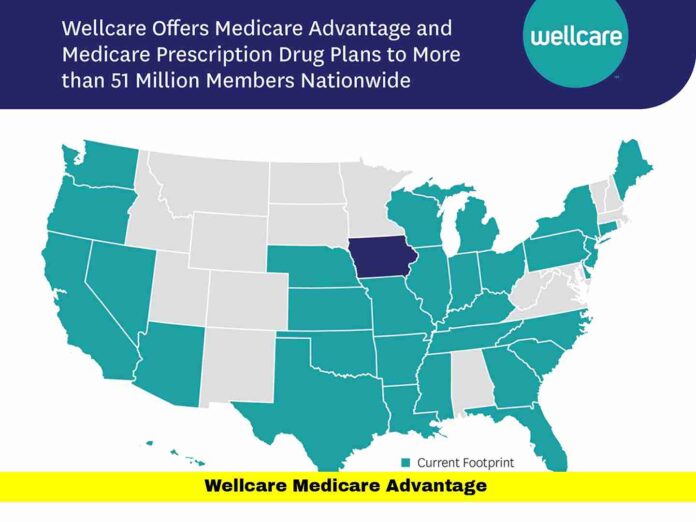
The Wellcare Medicare Advantage offerings are undergoing one of the most significant transformations in recent years, positioning the brand to reach over 51 million beneficiaries across 32 states by January 1, 2026. This expansion comes amid a shifting Medicare Advantage (MA) landscape, with new benefit features, provider implications, market pressures and important deadlines for enrolment.
Table of Contents
Key Points Summary
- Wellcare will offer Medicare Advantage (MA) plans in 32 states and in more than 1,850 counties by 2026.
- New enhancements include the Wellcare Spendables® card, $0 or low copays for primary care visits, insulin cost caps, and expanded telehealth/behavioral-health access.
- Wellcare is shifting its Medicare-Medicaid Plans (MMPs) to integrated Dual Eligible Special Needs Plans (D-SNPs) in selected states to better serve dual-eligible members.
- Providers must adapt to updated authorization policies and digital tools effective mid-2025.
- The Annual Enrollment Period (AEP) for 2026 coverage runs from October 15 to December 7, 2025 — decisions made then take effect January 1, 2026.
Major Expansion Strategy for 2026
Wellcare, as part of its parent company’s Medicare business, is moving aggressively into new markets. The expansion includes 51 new counties across eight states (California, Illinois, Iowa, Kansas, Michigan, Nevada, Texas and North Carolina). The move positions Wellcare to cover “more than 75% of eligible beneficiaries” in its service states.
The transition to integrated D-SNPs is especially noteworthy. Starting January 1, 2026, Wellcare will phase out certain MMP demonstration programs and deliver fully integrated plans for individuals eligible for both Medicare and Medicaid in states such as Arizona, Delaware, Illinois, Iowa, Michigan, Ohio, South Carolina and Texas. By doing so, the plan aims to streamline services and reduce fragmentation for the dual-eligible population—often among the most medically complex and cost-sensitive.
For members, this means broader access and benefit consistency. For brokers and providers, it opens new opportunities in rural and expansion markets. For the insurer, it aims to capture scale and coordinate care effectively.
Enhanced Member Benefits and Value Proposition
The 2026 offerings under Wellcare Medicare Advantage emphasize affordability, simplicity and meaningful supplemental benefits. Key benefit upgrades include:
- $0 or very low copays for primary care physician visits across plan options, elevating access to preventive services.
- Insulin cost caps – covered at either $35 per month or 25% of the negotiated price (whichever is lower). For members managing diabetes, this constitutes a major relief.
- Wellcare Spendables® card – a pre-loaded card usable at over 66,000 retailers for OTC health items, and in many plans, applied to dental, vision, hearing or home-safety supplies.
- 24/7 digital behavioral-health access – via a platform providing peer-to-peer support, self-guided programs and professional resources, helping address mental health and social-needs gaps.
- Preventive services with minimal or zero cost-sharing – e.g., routine physicals, kidney/A1c labs, mammograms, colonoscopies, eye exams for diabetics and Tier 6 adherence medications at preferred pharmacies.
Together, these features position Wellcare Medicare Advantage plans as strong contenders for beneficiaries who seek comprehensive plan value beyond basic coverage. It particularly appeals to those managing chronic conditions or needing predictable cost structure.
Provider Operational and Compliance Implications
Providers participating in Wellcare Medicare Advantage networks must prepare for several key changes coming into effect for the 2026 plan year, with many updates kicking off July 1, 2025. Critical adjustments include:
- Revised prior-authorization requirements – Certain services under MA plans will require new authorization protocols. Non-participating providers will need to verify eligibility and obtain approval for HMO services as defined.
- Updated medical-clinical policy bulletins – These guide medical necessity, referral criteria and claim submission standards. Providers must review the latest manuals to avoid service denials or delays.
- Digital tool enhancements – Wellcare is improving its provider portal, authorization lookup systems and provider directory accuracy. Ensuring staff are trained and accounts active will aid workflow continuity.
- Network adequacy and plan change alerts – As Wellcare expands into new counties and states, providers should check if their practice is “in-network” for 2026. Patient guidance will be crucial.
Providers who proactively engage with these changes will be better positioned to serve Wellcare MA members, reduce administrative burden and maintain patient satisfaction.
Market Context: Standing Out in a Challenged Environment
The broader Medicare Advantage market is experiencing notable turbulence. Several major insurers are scaling back offerings for 2026—exiting counties, reducing plan types and reevaluating regions for profitability. The resulting environment presents both challenges and opportunities for Wellcare Medicare Advantage.
On the one hand, Wellcare’s aggressive expansion signals confidence and strategic ambition; on the other, increased scale brings greater regulatory scrutiny, cost pressures and network adequacy demands. The 2026 CMS star ratings (released October 9, 2025) also underscore the stakes: A higher star rating leads to bonus payments and competitive differentiation. Wellcare’s leadership reported satisfaction with the progress but emphasized ongoing improvement.
For beneficiaries, this means choice may shift: in some regions, fewer plan options may exist, making the evaluation of Wellcare MA plans more important. For providers, network competition may intensify and contracting opportunities could arise in newly served counties.
Key Considerations for Beneficiaries
If you’re exploring Wellcare Medicare Advantage for 2026, here’s what you should focus on:
- Enrollment timing: The Annual Enrollment Period (AEP) runs October 15 to December 7, 2025. Any changes during this window take effect January 1, 2026.
- Plan comparison: Check premiums, out-of-pocket maximums, co-pays, drug formularies and whether your doctors/facilities are in-network.
- Supplemental benefits: See if the Spendables card, insulin cap, telehealth or wellness services align with your health needs.
- Provider network: Confirm your physician or preferred hospital appears in the 2026 provider directory. Expansion of service areas may alter network composition.
- Dual eligibility: If you’re eligible for both Medicare and Medicaid (a “dual”), the transition to integrated D-SNP models may change how your benefits are delivered—review the Annual Notice of Change (ANOC) carefully.
- Prior authorization: Understand how authorization rules may impact upcoming services—especially if you anticipate specialists, diagnostics or treatments.
Taking these steps will help you evaluate whether a Wellcare Medicare Advantage plan meets your healthcare needs for the upcoming year.
How Providers Should Prepare
For clinicians, hospitals, clinics and ancillary providers, the upcoming plan year invites strategic planning:
- Ensure contracting status is current with Wellcare Medicare Advantage for newly served regions.
- Train administrative staff on pre-authorization workflows, including lookup tools and required documentation.
- Update internal systems for claim submission, division codes and EHR integrations aligned with Wellcare’s policy updates.
- Inform patients about the upcoming changes: provider networks, benefit enhancements, and plan transition timelines.
- Maximize care-management programming: with expanded digital behavioral health and wellness benefits, providers can align care protocols with plan incentives.
Providers who integrate these steps will ensure smoother transitions and stronger member/provider satisfaction within the Wellcare Medicare Advantage ecosystem.
Regional Reach and Service Footprint
The expansion strategy of Wellcare Medicare Advantage includes both urban and rural areas, aiming to offer coverage in 1,850+ counties across the 32-state footprint. This move reflects a commitment to scale and accessibility:
- Large states like Texas, Michigan and California are gaining additional county coverage, giving residents more choice among regional MA plans.
- Expansion into rural counties creates new access for seniors who may have lacked local Medicare Advantage options.
- Local provider networks play a pivotal role—Wellcare is identifying partner organizations to support elevated plan offerings and member outreach in these new areas.
The geographic breadth helps Wellcare reach more vulnerable populations, including rural seniors and dual-eligible members, while improving access to preventive and value-based care.
Competitive Positioning and Value Strategy
In a market where cost pressures and reimbursement uncertainty loom large, Wellcare Medicare Advantage distinguishes itself by emphasizing value, coverage breadth and member-centric design. Key features of its competitive profile include:
- Diverse plan types (HMO, PPO, D-SNP) catering to varying beneficiary needs.
- Enhanced supplemental benefits that resonate with cost-sensitive and health-aware seniors.
- Transparent cost structures—highlighting $0 primary care copays, capped insulin costs and integrated benefits via the Spendables card.
- Digital innovation and wellness integration, aligning with a broader trend toward personalized health engagement.
By positioning around “affordable care with meaningful extras,” Wellcare taps into an audience segment increasingly seeking value-based choices rather than just brand recognition.
Challenges and Risks to Monitor
Despite positive momentum, Wellcare Medicare Advantage must navigate several potential headwinds:
- Star ratings sensitivity: Performance under the CMS five-star rating system influences bonus revenue and marketing appeal. Any decline could impact pricing or competitiveness.
- Market exit by competitors: While Wellcare expands, some insurers are pulling back, which may reshape regional dynamics and drive increased scrutiny of network adequacy or cost structures.
- Regulatory shifts: Changes to MA reimbursement or benefit requirements could affect plan design, necessitating agile response.
- Member confusion: Expansion, benefit changes and authorization updates may create enrollment complexity. Clear communication will be essential to avoid dissatisfaction or coverage disruption.
- Operational scale: As membership grows, ensuring provider network quality, customer service responsiveness and claims accuracy will test Wellcare’s management processes.
With the right execution, these risks can be mitigated; however, they highlight the need for ongoing vigilance by beneficiaries, brokers and providers alike.
Looking Beyond 2026
While the 2026 coverage year is key, the broader trajectory for Wellcare Medicare Advantage suggests additional developments ahead:
- Further rollout of integrated D-SNPs in more states and deeper service alignment for dual-eligible populations.
- Expansion of virtual care, remote monitoring and digital wellness programs to enhance value while managing cost.
- Strengthened data-analytics capabilities to improve care coordination, reduce hospital readmissions and enhance star ratings.
- Potential partnerships with community health organizations and regional systems to bolster rural access and network adequacy.
- Ongoing monitoring of congressional and CMS policy changes that could impact MA plan design, payment levels or enrollment regulations.
For brokers and providers, staying attuned to these evolving areas will ensure readiness for the years ahead.
Conclusion: What This Means for You
The Wellcare Medicare Advantage expansion and plan enhancements mark a pivotal moment. If you’re a beneficiary, this means more choices, better supplemental benefits and potentially lower costs. If you’re a provider, it means new enrollment opportunities and evolving operational requirements. If you’re a broker or advisor, it means you must stay informed and guide members through important deadlines and plan changes.
Ahead of the October 15–December 7, 2025 Annual Enrollment Period, take time to compare options, ask questions, review provider networks, and understand how the 2026 benefits align with your needs or your patients’ needs.
We’d love to hear your experiences: Are you considering a Wellcare Medicare Advantage plan for 2026? What benefits matter most to you? Share your thoughts below and stay engaged as the Medicare Advantage landscape evolves.
FAQ
Q1: When does the coverage for Wellcare Medicare Advantage’s 2026 plans begin?
A1: Coverage begins January 1, 2026 for plans selected during the Annual Enrollment Period (October 15–December 7, 2025).
Q2: What are the new benefit highlights for Wellcare MA plans in 2026?
A2: Noteworthy enhancements include zero or low copays for primary care visits, insulin cost caps, the Wellcare Spendables® card for OTC/dental/vision/hearing allowances, and expanded digital behavioral-health support.
Q3: As a provider, what key changes should I anticipate with Wellcare MA in 2026?
A3: Be prepared for updated prior-authorization rules effective mid-2025, revised clinical policy bulletins, enhanced provider portal tools for eligibility and claims submission, and review of your network status for newly served counties.
Disclaimer: This article is for informational purposes only and does not constitute legal, medical or financial advice. Consult a qualified professional before making healthcare decisions.

