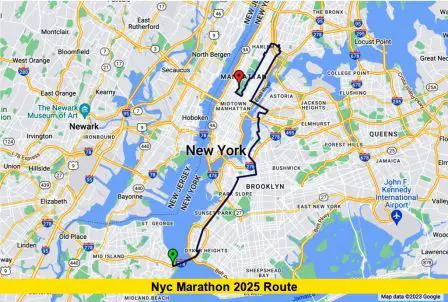
The NYC Marathon 2025 route is locked in for Sunday, November 2, and features a full sweep across New York City’s five boroughs — from the waterfront at Staten Island to the iconic finish in Central Park, Manhattan. Here’s a detailed breakdown of every segment of the course, key logistics, spectator info, and why this year’s route matters more than ever.
Table of Contents
What’s New for 2025
This year’s edition of the marathon maintains the celebrated five-borough layout, but comes with sharper logistics, updated spectator zones and fresh emphasis on crowd experience. The organizer projects around 55,000 runners will take on the 26.2 miles — elevating both the spectacle and the planning grid.
With the clocks falling back for Daylight Saving Time on race day, many runners benefit from an extra hour of rest before the start. Expect tighter city coordination, new digital maps showing course splits, and advanced tracking for runners and fans alike.
Overview of the Route
The journey begins on Staten Island and winds its way through Brooklyn, Queens, Manhattan, the Bronx, and back into Manhattan for the finish. The course hits key city landmarks, iconic bridges, and energetic crowd zones. Every borough brings its own flavor and its own challenge.
Start Location: Fort Wadsworth, Staten Island
Finish Location: Inside Central Park, Manhattan
Distance: 26.2 miles (42.195 km)
Elevation Gain (approx): 288 meters — expect rolling hills and a famous opening climb.
Wave Start Time for Mass Participants: ~9:10 a.m. ET (approx)
Elite and wheelchair start times: Earlier waves ahead of mass start.
Segment-by-Segment Breakdown
1. Staten Island – the Launch (Miles 0-2)
Runners set out from Fort Wadsworth on Staten Island, moving onto the western span of the Verrazzano‑Narrows Bridge. This early bridge climb is the first real test—short but steep—and sets the tone. With the sunrise behind you and the harbor rising below, it’s one of the most dramatic openings in marathon running.
Key tips for this segment:
- Momentum is key: use the downhill right after the bridge wisely without over-striding.
- Expect tight packing in the first miles, especially on the bridge itself.
- Hydration begins early: station spacing is tight as you leave Staten Island.
2. Brooklyn (early miles) – Setting the Rhythm (Miles 2-13)
After the bridge, the route rolls into Brooklyn neighborhoods including Bay Ridge and Sunset Park, before moving through Park Slope, Williamsburg and Greenpoint. This stretch is the longest borough block of the race and offers varied terrain, crowd density and atmosphere.
Highlights:
- Wide roads give space to settle into your pace after the initial surge.
- Fan energy builds: Williamsburg and Greenpoint are known for loud cheering.
- Mid-section gradients vary subtly — plan accordingly.
3. Queens – The Transitional Borough (Miles 13-15)
Runners cross into Queens via the Pulaski Bridge and travel through Long Island City. While brief compared to Brooklyn or Manhattan segments, this is a crucial pivot point, as it precedes the Queensboro Bridge climb into Manhattan.
What to expect:
- The halfway mark is nearby, so mental milestones matter.
- Crowding may ease as you transition into this section, giving a chance to reset.
- Be ready for the next big climb: the Queensboro Bridge.
4. Manhattan (East Side) – The Big Push (Miles 15-20)
Crossing the Queensboro Bridge brings you into Manhattan, on First Avenue for several miles. This segment is well known for its vibrant spectator presence and key mental challenge: miles 15–20 can test even experienced runners.
Features:
- Expect massive crowd noise—the walls of cheering on First Avenue help fuel the body.
- The terrain is easier here (flatter) after the bridge climb, but fatigue begins to set in.
- Hydration, gel intake and mental pacing are critical in this stretch.
5. Bronx Loop – “The Wall” Zone (Miles 20-21)
A short entry into the Bronx via the Willis Avenue Bridge marks one of the most intense sections of the race: roughly the 20-mile point — where many runners hit the wall. The course loops here and then returns to Manhattan via the Madison Avenue Bridge.
Why this matters:
- The “wall” is as much mental as physical; expect a surge of challengers here.
- Bridge crossings and narrowing roads can slow pace—stay mentally prepared.
- Crowd support is steady but not as thick as mid-Manhattan; your internal rhythm counts.
6. Final Leg & Finish in Central Park (Miles 21-26.2)
Returning to Manhattan, runners head down Fifth Avenue and turn into the lush finish zone inside Central Park. The final miles include rolling hills, the famous last turn near West 67th Street, and the finish line’s electric atmosphere.
Key considerations:
- Hills inside Central Park are not massive but cumulative fatigue makes them feel steeper.
- The finish chute: soak in the moment, but maintain form until you cross.
- Post-finish: plan your meeting spot ahead—crowds, security and chaos are all part of the fanfare.
Spectator & Travel Tips for the Route
- Choose a one-borough location for cheering to avoid transit stress.
- Use subway and ferry options; many roads on the route will close from early morning.
- Prime viewing zones: Brooklyn (Miles 2–4), Queensbridge & Pulaski (Midpoint), First Avenue (Manhattan mid-race), Central Park finish zone.
- Arrive early, bring layers (early November in NYC can vary), and stay mobile—crowd control zones shift as the race progresses.
Elevation and Pacing Strategy
- Opening climb: Verrazzano Bridge (~Miles 0-2) demands conservative effort.
- Brooklyn segment: mostly rolling but manageable – ideal for settling in.
- First Avenue: rhythm change; manage fatigue from previous miles.
- Bronx entry & Central Park: fatigue is real; staying mentally sharp matters.
- Finish: allow for fatigue but use the park’s scenery and supportive crowd to drive to the line.
Even though the route doesn’t include massive mountain-style hills, the total elevation gain (~288 meters) adds up when fatigue sets in. Smart pacing and energy management make a crucial difference.
Why the NYC Marathon 2025 Route Is Special
- Five boroughs in one race. Few marathons traverse as varied a cityscape as New York’s Staten Island → Brooklyn → Queens → Bronx → Manhattan loop.
- Bridge beginnings and park endings. The shift from a dramatic start on the Verrazzano Bridge to the leafy finish inside Central Park delivers a memorable narrative arc.
- Massive crowd energy. This route is tuned for spectators. The mid-Manhattan section, for example, places runners right in the heart of cheering zones.
- Global reach. With tens of thousands of runners from across the world and heavy media attention, the route itself becomes part of the story each November.
For Runners: Pre-Race Checklist
- Familiarize with the map. Know where the big climbs, bridges and fatigue zones are.
- Plan nutrition/hydration. Aid stations occur regularly, but personal gels/salts should be scheduled.
- Lay out transport. Especially for the Staten Island start — use official buses or ferry options as roads will be closed.
- Check finish logistics. Your finish in Central Park is unique—know where to meet your group afterward or how to exit the area.
- Mental preparation. Visualize the Bronx loop and Central Park hills; fatigue hits hard there.
- Gear for weather. Early November in NYC can be cool in the morning but warmer mid-day—layering is wise.
For Spectators: Best Practices
- Choose accessible spots. Spectator zones like First Avenue offer massive energy, but can get crowded—arrive early.
- Use public transit. Roads around the course will close; red-line subways and commuter ferries are best.
- Stay mobile. Getting from Brooklyn to Manhattan mid-race is tough—plan a single spot and stick to it.
- Weather awareness. Bring a portable charger, rain layer, and figure out crowd-flow exits in advance.
- Celebrate smartly. Spot your runner’s bib color/wave time ahead of time, and coordinate your cheer accordingly.
Final Word
The NYC Marathon 2025 route remains one of the most dynamic and iconic marathon courses in the world. From the sweep of the Verrazzano Bridge at the start, through Brooklyn’s neighborhoods, over to Queens and the Bronx, and finally into Central Park for the finish—every mile tells a story. Whether you’re toeing the start line or lining the curb to cheer, knowing this course is your insider key to experience the full thrill of a five-borough masterpiece.
We’d love to hear your thoughts—tell us where you’ll be on the course or how you’re preparing, and stay tuned for the latest updates as race day approaches.

