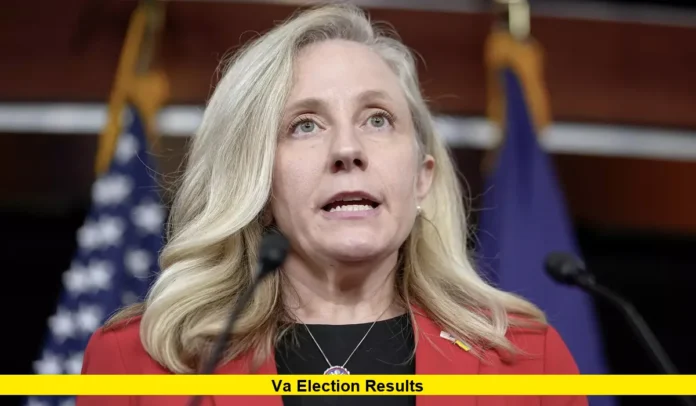
The VA election results from 2025 have transformed Virginia’s political map and captured national attention. With votes tallied across the Commonwealth, these results reflect a mix of historic milestones, tight races, and strong voter engagement. From the governor’s mansion to local delegate districts, Virginia’s political future is being reshaped before our eyes.
Table of Contents
Governor’s Race: Virginia Elects Its First Female Governor
The highlight of the VA election results is the groundbreaking victory in the governor’s race. Former congresswoman Abigail Spanberger, the Democratic nominee, secured a decisive lead over Republican challenger Winsome Earle-Sears, marking a historic moment for the Commonwealth.
For the first time in Virginia’s long political history, a woman has been elected governor—and regardless of party, that fact alone signals a new chapter in state politics. Spanberger’s campaign emphasized kitchen-table issues: reducing living costs, protecting abortion access, expanding broadband infrastructure, and ensuring bipartisan cooperation. Her pragmatic approach and moderate tone resonated deeply with suburban and independent voters, particularly in Northern Virginia and the Richmond suburbs.
Earle-Sears, Virginia’s outgoing lieutenant governor, campaigned on conservative values, focusing on parental rights, lower taxes, and stricter crime laws. Despite energizing the Republican base, her messaging struggled to win back moderate voters who were key to Glenn Youngkin’s victory in 2021.
With Spanberger’s win, Democrats now reclaim the governor’s office and strengthen their standing in a state that has steadily leaned blue over the past decade.
Lieutenant Governor Race: A Narrow but Symbolic Win
In the lieutenant governor race, Ghazala F. Hashmi emerged as the frontrunner, maintaining a small but steady lead over Republican contender John Reid as votes continued to be counted. Hashmi’s projected victory makes her the first Muslim and South Asian-American woman elected to statewide office in Virginia—a significant cultural and political milestone.
Hashmi’s campaign prioritized education funding, workforce development, and environmental sustainability. Her message of inclusivity and competence appealed to diverse communities, especially in urban and suburban regions.
John Reid, a well-known conservative media figure, campaigned heavily on tax reform and opposition to state energy mandates. However, demographic shifts and strong youth turnout appear to have favored Hashmi’s coalition.
If results hold, Virginia’s executive leadership will include the most diverse set of elected officials in state history.
Attorney General Race: Tight Margins, High Stakes
The attorney general’s race remains one of the most closely watched contests in the VA election results. Incumbent Jason Miyares (Republican) is locked in a near tie with challenger Jay Jones (Democrat), with final certification expected to confirm one of the narrowest statewide outcomes in years.
Miyares built his campaign around public safety, emphasizing crime prevention, retail theft prosecutions, and police support. His record as attorney general appealed to law-and-order voters, particularly in Virginia Beach, Chesterfield, and rural regions.
Jay Jones, a former state delegate, focused on expanding voting rights, police accountability, and defending reproductive freedom. His campaign gained traction among younger voters and minority communities, especially in Hampton Roads and Northern Virginia.
The race remains within recount range. Whichever candidate prevails will influence how Virginia enforces its laws and approaches key policy battles on civil rights, healthcare regulation, and education oversight.
House of Delegates: A Battle for Legislative Control
All 100 seats in the Virginia House of Delegates were on the ballot this year, making the VA election results pivotal for control of the legislature.
Heading into the election, Democrats held a narrow 51–49 majority. Early tallies suggest that Democrats are likely to retain control—but by the slimmest of margins. Several suburban districts flipped, while others saw razor-thin victories that may trigger recounts.
Key Trends Across the Commonwealth:
- Suburban Surge: Democrats performed well in densely populated areas like Loudoun, Fairfax, Henrico, and Chesapeake, buoyed by strong turnout among women and first-time voters.
- Rural Republican Strength: GOP candidates dominated in Southwest and Southside Virginia, maintaining overwhelming margins in traditional conservative areas.
- Independent Impact: A handful of independent candidates influenced several close contests, although none appear poised to win outright.
The narrow split in the House means that bipartisanship will be essential. With Spanberger in the governor’s office, expect a renewed focus on consensus-building rather than partisan gridlock.
Voter Turnout: Record Participation in an Off-Year Election
The 2025 VA election results reveal a major increase in civic engagement. Turnout surged past previous off-year benchmarks, driven by enthusiasm around the historic gubernatorial race and increased early voting options.
Turnout Highlights:
- Early voting exceeded 1.4 million ballots—an all-time record for a Virginia off-year election.
- Youth turnout (ages 18–29) rose notably, driven by college campus registration drives and social media campaigns.
- Suburban participation hit record highs, especially in Fairfax, Loudoun, and Chesterfield counties.
- Mail-in ballots made up a larger share of total votes compared to 2021, reflecting Virginia’s growing comfort with expanded voting access.
Analysts say this year’s engagement reflects not only the appeal of competitive races but also voter determination to influence issues like reproductive rights, economic stability, and democracy protection.
Key Issues That Defined the Election
The VA election results make it clear that voters weighed a wide range of issues when casting their ballots. Here are the themes that dominated conversations statewide:
1. Cost of Living & Economy
Rising housing costs, inflation, and wage growth were top concerns. Spanberger’s focus on small-business support and tax relief for middle-income families resonated widely.
2. Education
Disputes over curriculum, teacher pay, and parental rights drove passionate debate. Voters showed preference for balanced approaches rather than extreme partisan agendas.
3. Reproductive Rights
Abortion access was among the most decisive issues, particularly after national attention turned to restrictive legislation in nearby states. Virginia voters largely favored maintaining current protections.
4. Public Safety
Although crime rates remain relatively stable, candidates’ differing rhetoric about safety and policing had a notable impact. Miyares’ campaign emphasized law enforcement support, while Democrats pushed for balanced reform.
5. Climate and Energy
With Virginia’s coastal vulnerability, renewable energy policies and flood-prevention plans featured prominently. Spanberger and Hashmi advocated for sustainable investment, while Republicans warned against overregulation.
These policy divides illustrate a clear ideological split between urban and rural Virginians, echoing broader national trends.
The Bigger Picture: Virginia’s Political Future
The VA election results point to an increasingly competitive but Democratic-leaning state. The outcomes mirror broader national currents—where suburban voters continue to drive momentum for candidates focusing on moderation and competence.
Spanberger’s likely governorship signals a pragmatic approach to leadership, prioritizing bipartisan problem-solving over political theater. If Hashmi’s victory is confirmed, Virginia will also mark one of the most diverse executive teams in the country.
For Republicans, these results offer lessons in message recalibration. While the GOP remains strong in rural Virginia, its influence in suburban and metropolitan areas has declined. Winning back those regions will be key for future elections.
In the legislature, razor-thin margins mean compromise is not optional—it’s required. Expect both parties to seek common ground on pressing issues such as infrastructure, education reform, and workforce expansion.
Looking Ahead: What Comes Next
Election officials will finalize and certify the results over the next two weeks. Any recounts will follow shortly after, particularly in close statewide and House races.
Once certified, the new administration will prepare for inauguration in January 2026. Spanberger’s transition team is expected to focus on building a bipartisan cabinet and crafting a policy roadmap centered on economic growth and good governance.
Meanwhile, attention will shift to how Virginia’s political realignment might influence national strategies for the 2026 midterms. The Commonwealth once again demonstrates its role as a bellwether for America’s evolving political balance.
The VA election results of 2025 capture a state in motion—dynamic, diverse, and determined to shape its own destiny. From the first female governor to record-breaking turnout, Virginia’s voters have sent a clear message about the future they want to build.
What do you think these results mean for Virginia’s future? Share your thoughts and stay tuned as the final certifications come in!

