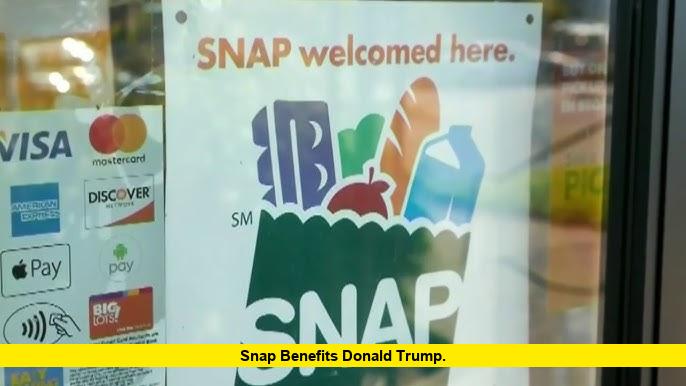
In early November 2025, snap benefits Donald Trump became one of the most discussed topics in the United States, as the Supplemental Nutrition Assistance Program (SNAP) faced major disruptions during the ongoing federal government shutdown. A federal judge ordered the Trump administration to fully fund SNAP benefits for November, reversing an earlier plan to issue only partial payments. This ruling marked a critical moment for millions of Americans who rely on the program to put food on the table.
Table of Contents
Latest Developments
As of November 6, 2025, the Trump administration has been instructed by a federal court to release full SNAP payments for November by the end of the week. The judge ruled that any delay or reduction in benefits would cause “irreparable harm” to households that depend on food assistance.
Originally, the administration announced that it could only distribute around 65 percent of the usual monthly benefit using emergency reserves. However, after the court’s decision, full benefits are now expected to reach recipients’ accounts. Several states have begun to confirm that benefit distributions are proceeding, offering some relief after weeks of uncertainty.
This legal decision came amid a prolonged government shutdown that entered its sixth week, leaving key social programs without proper funding. The conflict over SNAP funding has quickly become a focal point in debates surrounding the Trump administration’s handling of the shutdown and its impact on low-income families.
Why the SNAP Benefits Issue Matters
SNAP, often referred to as “food stamps,” provides essential food assistance to more than 42 million Americans. Many of these recipients are children, seniors, or people with disabilities. Even a short delay in funding can lead to food insecurity and force families to rely on food banks, which are already operating at capacity.
The recent funding turmoil has highlighted how deeply intertwined social safety net programs are with broader political and budgetary disputes. For millions of households, SNAP is not a luxury—it’s a lifeline. When political standoffs stall funding, those who suffer most are the families living paycheck to paycheck.
Timeline of Key Events
| Date | Event | Impact |
|---|---|---|
| October 27, 2025 | The U.S. Department of Agriculture (USDA) warns that funds for full November SNAP benefits may run short if the shutdown continues. | States begin to prepare for possible payment delays. |
| November 1, 2025 | The shutdown continues, and the administration signals potential cuts to food assistance. | SNAP recipients express growing concern about missing benefits. |
| November 4, 2025 | A statement from the administration suggests payments may not resume until the government reopens. | Confusion and public backlash increase nationwide. |
| November 5–6, 2025 | A federal judge orders the administration to fully fund November’s SNAP benefits. | State agencies begin reinstating full payments. |
| November 7, 2025 | States begin confirming that benefits are being distributed in full. | Millions of households finally receive clarity and relief. |
Impact on Households
For SNAP recipients, the uncertainty over benefits caused immediate stress. Reports emerged of families skipping meals, reducing grocery purchases, or turning to community food banks for support. Some families delayed rent or utility payments in order to afford food while waiting for government aid to resume.
The court’s order to fully fund benefits has provided temporary stability, but the episode has exposed how fragile food security remains when politics interfere with essential programs. Food banks in multiple states reported record demand in late October and early November, suggesting that even short disruptions have long-term consequences.
Impact on States
State agencies that manage SNAP distribution were left scrambling to adjust to changing federal guidance. Many had already begun reprogramming their systems to issue reduced payments based on earlier plans. Once the court order came through, they faced an urgent need to restore full funding, requiring technical and logistical changes on short notice.
Some states, like California and New York, quickly confirmed they would meet the full-payment deadline, while others reported that administrative delays could cause a lag of several days before households saw the restored benefits. The situation underscored the complexity of running national programs at the state level when federal policy shifts rapidly.
The Trump Administration’s Position
The Trump administration has defended its handling of the situation, arguing that it was acting within the financial limits imposed by the shutdown. Officials stated that the administration’s contingency funding plan was designed to extend assistance as far as possible without congressional approval for new spending.
However, critics argue that the administration’s approach created unnecessary confusion and hardship. The court’s intervention reflected a growing consensus that SNAP benefits should be protected from political brinkmanship, ensuring uninterrupted food aid regardless of budget negotiations.
The issue has quickly become a flashpoint in national debate, with both supporters and opponents of the administration weighing in. Supporters emphasize fiscal responsibility and the need for congressional action, while opponents highlight the moral and humanitarian obligation to prevent hunger.
Public Reaction
Public response to the crisis has been strong and emotional. Across social media, hashtags like #SNAPFunding and #FoodAidNow have trended as Americans shared stories of hardship and called for swift government action. Advocacy groups, faith organizations, and community leaders have organized food drives and urged lawmakers to prioritize social safety programs during shutdowns.
For many Americans, this episode has served as a reminder of how essential SNAP is to national stability. Beyond its economic role, the program symbolizes government accountability and compassion for its most vulnerable citizens.
Economic and Political Implications
Economists warn that disruptions to SNAP benefits can have a ripple effect throughout the economy. When millions of people lose or delay spending power on groceries, local retailers, farmers, and distributors all feel the impact. A temporary gap in benefits can cost the retail sector billions in lost sales.
Politically, the “snap benefits Donald Trump” issue could have long-term repercussions. Food security affects communities in every congressional district, and the administration’s management of this crisis is likely to become a major talking point in policy discussions and upcoming elections. The situation may also prompt renewed calls to classify food aid as an “essential service” exempt from shutdown-related funding interruptions.
What Comes Next
While the court order ensures full funding for November, uncertainty remains for December if the shutdown continues. Unless Congress approves a new budget or temporary funding measure, similar disputes could arise in the coming weeks.
State agencies are now urging federal authorities to provide clearer guidance for future months. Advocacy organizations are pushing for legislative reform to safeguard SNAP and other vital assistance programs during any future government shutdowns.
Meanwhile, the Trump administration faces mounting pressure to resolve the shutdown and restore confidence in federal food programs. Millions of families are watching closely to see whether this latest ruling will mark the beginning of lasting stability—or just a temporary reprieve.
Bottom Line
The snap benefits Donald Trump controversy has revealed the human cost of political gridlock. While the court’s intervention brought relief to millions, the larger question remains: should access to food ever be uncertain because of politics? The coming weeks will determine whether policymakers can balance fiscal disputes with the moral imperative to protect the nation’s most vulnerable.
As this story continues to unfold, share your thoughts below on how the SNAP funding crisis has affected your community or what changes you hope to see next.

