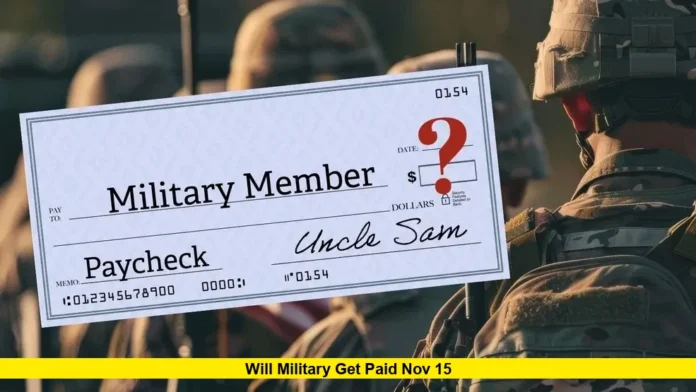
As the U.S. government shutdown continues into November 2025, one question weighs heavily on the minds of service members and their families: will military get paid Nov 15?
As of November 11, 2025, there is still no official confirmation that the Department of Defense will be able to issue mid-month paychecks on time. The uncertainty stems from the ongoing budget standoff in Congress, which has left critical federal funding frozen, including money for military payroll.
While troops were paid on October 15 and October 31, those payments were made possible through temporary measures that reallocated internal Defense Department funds. Those resources are now nearly exhausted, and without new appropriations, the mid-November pay cycle may face delays.
Table of Contents
The Current Situation: Pay Still Uncertain
At present, military members are still showing “scheduled” pay dates for November 14 or 15 in the Defense Finance and Accounting Service (DFAS) system. However, scheduled does not mean guaranteed. Without a funding bill passed and signed into law, the Pentagon will lack the legal authority to release payments.
Defense officials have reportedly stretched available funds to cover payroll through the end of October. They have also warned that if Congress does not approve a budget or continuing resolution before November 13—the payroll processing cutoff—the November 15 paycheck will likely be postponed until funding resumes.
This scenario would mark the first time in modern history that active-duty service members across all branches could collectively miss a paycheck due to a prolonged government shutdown.
Why Military Pay Depends on Congressional Action
When the government shuts down, it means that Congress has not passed — and the President has not signed — a spending bill authorizing federal departments to use funds. The Department of Defense, like all other federal agencies, relies on this authorization to pay its personnel.
Although military service members are considered “essential,” meaning they must continue to work even during a shutdown, their pay cannot legally be distributed without active funding approval. In previous shutdowns, Congress often passed a separate “military pay protection” bill to ensure uninterrupted pay for troops. However, no such measure has been approved this time.
Key Pay Dates and What’s at Risk
To understand the stakes, it’s helpful to look at the typical payroll schedule:
| Pay Cycle | Scheduled Date | Funding Status | Risk Level |
|---|---|---|---|
| Mid-Month Pay | November 14–15, 2025 | Not yet funded | High |
| End-of-Month Pay | December 1, 2025 | Dependent on resolution | Moderate |
| Last Paid | October 31, 2025 | Paid through reallocated funds | Completed |
The Department of Defense typically processes payments several days before the scheduled pay date. That means unless a deal is reached by midweek, the system will not have the authority to release mid-November paychecks.
Impact on Service Members and Families
For most service members, missing a paycheck isn’t just inconvenient—it’s destabilizing. Many live paycheck to paycheck, especially junior enlisted personnel. Delayed pay could mean missed rent, late utility payments, and challenges in meeting family needs.
Military spouses, who often manage household budgets and childcare, are expressing growing anxiety about whether funds will arrive on time. The emotional and financial strain is being felt across bases, particularly among families stationed abroad or in high-cost U.S. cities.
To mitigate the potential impact, several military-affiliated financial institutions have begun preparing contingency options, including:
- Zero-interest loans to bridge short-term gaps.
- Deferred payment programs for existing loans or credit cards.
- Emergency grants or assistance funds offered through service-specific relief organizations.
While these measures may provide temporary relief, they are not substitutes for consistent pay.
How the Pentagon Is Handling the Crisis
The Pentagon has been reallocating leftover budget funds from research and development programs to cover payroll since the shutdown began on October 1. These measures were never intended as long-term solutions. Officials have indicated that these accounts have now been nearly depleted.
Payroll processing for more than 2 million active-duty, reserve, and National Guard personnel requires billions of dollars in funding every two weeks. Without congressional approval, the Department of Defense cannot continue redirecting funds indefinitely. Officials inside the Pentagon have emphasized that, unless action is taken soon, they will be unable to authorize the next disbursement of pay.
Why November 15 Matters
The mid-month pay period holds symbolic and practical significance. Missing this date would be the first tangible sign to the military community that the shutdown is directly affecting them. It would also deepen the political pressure on lawmakers to reach a deal.
In previous years, when similar shutdowns loomed, Congress often rushed to pass stopgap measures just before major pay cycles to avoid public backlash. However, this year’s negotiations have been slower and more divisive, leaving little room for compromise as the deadline nears.
If Congress passes a temporary spending bill or continuing resolution before November 14, military pay will proceed as scheduled. If not, the Defense Department will delay payments until funds are restored.
What Service Members Can Do Now
Given the ongoing uncertainty, military members and their families can take a few proactive steps:
- Monitor official DFAS updates.
The Defense Finance and Accounting Service will issue notices if pay is delayed or partial. - Reach out to your chain of command.
Commands will have up-to-date information about contingency plans and financial resources. - Contact your bank or credit union.
Many institutions that serve the military community, such as USAA and Navy Federal Credit Union, are preparing assistance programs in case of pay delays. - Prioritize essential expenses.
Until funding is confirmed, it’s wise to limit non-essential spending and focus on core household needs. - Explore emergency assistance.
Relief organizations such as the Army Emergency Relief, Air Force Aid Society, and Navy-Marine Corps Relief Society can help cover basic expenses during financial hardship.
Political Developments in Washington
The government shutdown began on October 1 after Congress failed to pass a funding bill for the new fiscal year. Lawmakers have since engaged in intense negotiations but remain divided over spending levels and policy conditions. As of this week, there is still no finalized agreement to reopen the government.
While both major parties have publicly expressed support for ensuring military pay, legislative progress has been slow. Proposals to carve out military funding as an exception to the shutdown have been discussed but not enacted.
The political stalemate has turned the question of “will military get paid Nov 15” into both a human concern and a political talking point. Each passing day without resolution adds to the urgency and pressure on lawmakers.
The Human Side of the Shutdown
Beyond the headlines and policy debates, this situation directly impacts those who serve. From junior enlisted soldiers at Fort Bragg to sailors deployed overseas, many are worrying about how they will manage basic expenses if the November 15 paycheck doesn’t arrive.
Military families often plan their finances around fixed pay cycles. Rent, car payments, and childcare costs all rely on punctual pay. Even the hint of delay forces families to reconsider their budgets and, in some cases, take on short-term debt.
Base commanders and chaplains have reported a surge in inquiries from families seeking guidance on what to expect. While leadership continues to reassure personnel that back pay will be issued once the government reopens, the timing of that pay remains unclear.
Will Military Get Paid Nov 15? The Bottom Line
As of now, the answer is not guaranteed. Unless Congress passes a funding bill or temporary resolution by midweek, the Department of Defense will likely be unable to issue mid-November paychecks on schedule.
If a deal is reached, pay will go out as planned. If not, service members will continue to work without immediate pay until the government reopens, after which they will receive full back pay for the missed period.
The uncertainty surrounding will military get paid Nov 15 reflects the broader strain caused by the ongoing government shutdown—an issue that has now moved from political chambers to the homes of military families across the nation.
In the days ahead, service members and their families will be watching closely. Stay informed, stay prepared, and share your thoughts below on how this shutdown is affecting the military community.

