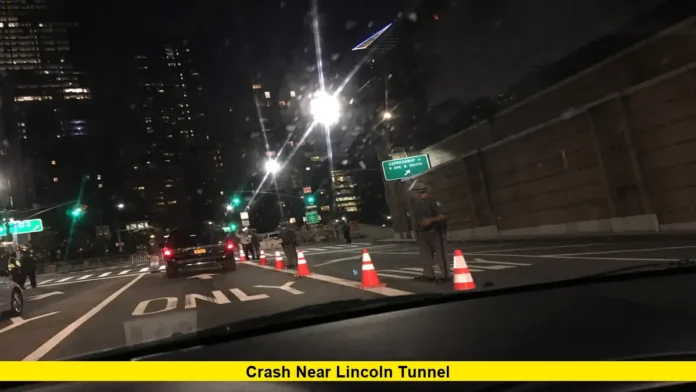
A devastating fatal pedestrian crash near the Lincoln Tunnel early Wednesday morning brought the morning rush hour to a standstill, causing widespread traffic delays and commuter frustration across Hudson County. Authorities confirmed that one person was struck and killed on westbound Route 495 at Kennedy Boulevard in Union City, New Jersey — just moments before the busy approach to the tunnel’s helix. The tragic crash triggered an extensive police investigation, the closure of major lanes, and ripple effects that extended for miles.
The Lincoln Tunnel is one of the busiest commuter routes connecting New Jersey to Manhattan, and any disruption — particularly during rush hour — has immediate and far-reaching consequences. Today’s crash was a stark reminder of the vulnerability of pedestrians in restricted highway zones and the fragility of one of the nation’s most vital commuter corridors.
Table of Contents
Where and How the Crash Happened
The fatal crash occurred in the early morning hours, shortly before sunrise, on westbound Route 495 near Kennedy Boulevard. This area marks one of the final stretches before vehicles merge into the Lincoln Tunnel approach — a section often described by commuters as a “pressure point” where heavy traffic from several New Jersey routes converges.
According to early police reports, a pedestrian entered the roadway for reasons still under investigation and was struck by a vehicle traveling toward the tunnel. Emergency responders, including Union City police, New Jersey State Police, and Port Authority officials, rushed to the scene within minutes. Despite efforts by paramedics, the pedestrian was pronounced dead at the scene.
Investigators closed multiple lanes as they documented the scene, reviewed nearby traffic cameras, and interviewed witnesses. While the victim’s identity has not been released pending family notification, police have confirmed that no additional injuries were reported.
Authorities are still piecing together how the pedestrian ended up on the restricted-access highway. The stretch of Route 495 near Kennedy Boulevard is designed strictly for vehicle use, with pedestrian crossings prohibited. The road is lined with barriers and lacks sidewalks, making it one of the least pedestrian-accessible areas in Hudson County.
Massive Traffic Disruptions Ripple Across the Region
The closure of the westbound lanes quickly caused an enormous backlog stretching well beyond Union City. By mid-morning, traffic congestion had spread to Route 3, the New Jersey Turnpike Extension, and even local surface streets in Weehawken and North Bergen.
Commuters heading into Manhattan through the Lincoln Tunnel faced delays of over 90 minutes, while those leaving the city toward New Jersey experienced similar gridlock. The Port Authority of New York and New Jersey issued multiple alerts urging drivers to avoid the tunnel if possible and to consider alternate routes such as the George Washington Bridge or the Holland Tunnel.
In addition to car traffic, bus commuters were heavily impacted. The Express Bus Lane (XBL), a dedicated lane for buses heading into the Lincoln Tunnel during morning peak hours, was closed during the investigation. NJ Transit buses and private commuter lines were forced to merge into general traffic lanes, extending delays across the entire region.
Key commuter impacts included:
- Express Bus Lane (XBL) closed for more than three hours.
- Inbound delays exceeding 90 minutes from Route 3 and the Meadowlands area.
- Outbound backups stretching into Manhattan’s west side as police redirected vehicles away from the tunnel exit.
- Widespread bus delays reported by NJ Transit, with some routes rerouted through the Holland Tunnel and George Washington Bridge.
For many commuters, the crash turned a routine 30-minute trip into a two-hour ordeal. Several frustrated travelers took to social media to report the standstill, describing the scene as “absolute gridlock” and “one of the worst mornings of the year.”
Why the Lincoln Tunnel Area Is So Vulnerable to Traffic Disruptions
The Lincoln Tunnel is one of only a handful of key connections between New Jersey and Manhattan, and it carries more than 100,000 vehicles and 1,800 buses each weekday. The tunnel’s Route 495 approach, which includes the curved elevated “Helix,” funnels traffic from multiple major arteries into three tunnel tubes.
This unique design makes the system efficient under normal conditions but extremely fragile when disruptions occur. A single stalled vehicle or crash can cause delays lasting hours — and a fatal pedestrian crash like this morning’s can paralyze traffic across several cities.
Several factors contribute to this vulnerability:
- Limited access points: Few alternate routes mean drivers have little flexibility when lanes close.
- High traffic density: At peak hours, vehicles move bumper-to-bumper, leaving no space for evasive action or emergency response.
- Restricted shoulders: Emergency vehicles often face difficulty reaching crash scenes.
- Mixed vehicle types: Buses, passenger cars, and trucks all compete for limited space in the approach lanes.
Today’s crash highlighted how quickly the system can collapse when something goes wrong. Even after lanes reopened, “residual delays” continued for several hours due to the sheer volume of vehicles backed up along the route.
Investigation Underway: What Authorities Know So Far
As of Wednesday afternoon, investigators were still examining the circumstances surrounding the crash. Authorities have not released details about the driver involved, nor have they commented on whether any charges are expected.
The Port Authority Police Department (PAPD), which oversees the Lincoln Tunnel, is leading the investigation, supported by New Jersey State Police. They are reviewing surveillance footage from tunnel cameras and nearby overpasses to determine how the pedestrian accessed the restricted highway zone.
Early theories suggest that the victim may have entered the roadway from a nearby overpass or local ramp. The area near Kennedy Boulevard has some pedestrian access points that, while fenced, have seen occasional breaches in the past. Officials are also exploring whether poor visibility or driver distraction played any role.
Safety Concerns and Infrastructure Challenges
Pedestrian fatalities on major highway approaches like the Lincoln Tunnel are rare but not unheard of. Despite extensive fencing, barriers, and signage, occasional breaches occur due to confusion, emergencies, or intentional acts.
This latest tragedy is prompting renewed discussions about the need for:
- Enhanced physical barriers to prevent unauthorized access.
- Improved surveillance coverage in high-traffic zones.
- Quicker communication systems for motorists when incidents occur.
- Dedicated pedestrian monitoring patrols in tunnel approach areas.
The Lincoln Tunnel’s infrastructure is more than 80 years old, and while it has undergone several upgrades, officials have long acknowledged the need for modernization — particularly in its access ramps and approach highways. This incident may reignite calls for accelerated improvements.
Voices from the Community
Residents and commuters expressed deep concern after learning about the crash. Many shared condolences for the victim while also calling for stronger safety measures.
Local drivers described the area as “confusing and dangerous,” noting that the rapid merge near the Kennedy Boulevard exit often causes unpredictable lane changes. “It’s already stressful driving near the tunnel,” one commuter said. “Add a crash, and everything shuts down completely.”
Transportation advocates pointed out that even though pedestrians are not supposed to be on Route 495, accidents like these emphasize the broader need for clearer signage and infrastructure that keeps people safely away from high-speed roads.
Economic and Logistical Implications
The Lincoln Tunnel serves not just private commuters but also thousands of commercial vehicles delivering goods between New Jersey and New York. Every hour of closure represents economic losses in the form of delivery delays, fuel waste, and reduced worker productivity.
Analysts estimate that a major disruption during rush hour can cost the region hundreds of thousands of dollars in lost time and operational costs. NJ Transit alone carries over 60,000 bus passengers through the Lincoln Tunnel daily, meaning even short-term lane closures have wide-reaching effects on businesses and workers alike.
What Drivers and Commuters Should Do Now
With the investigation ongoing, authorities are urging commuters to remain alert and patient during their travels. Here are a few key recommendations to manage similar situations in the future:
- Check live traffic updates before leaving home using official Port Authority or state transportation feeds.
- Use alternate crossings such as the George Washington Bridge or Holland Tunnel during extended closures.
- Allow extra travel time when passing through high-traffic corridors like Route 495.
- Avoid distractions while driving near tunnel approaches, as quick stops or merges can lead to chain-reaction collisions.
- Never attempt to walk or stop on restricted highways — the danger levels are extreme even for short distances.
Looking Ahead
As police continue to investigate, transportation agencies are reassessing how to better manage traffic and prevent similar tragedies near the Lincoln Tunnel. The Port Authority has been steadily implementing upgrades in lighting, surveillance, and lane control systems. This incident may accelerate those plans.
In the coming weeks, officials are expected to review the findings of the crash report and determine whether additional barriers or warning systems are warranted. Advocates hope the lessons learned will lead to enhanced safety protocols not only for motorists but also for pedestrians who might inadvertently find themselves in harm’s way.
Conclusion
The fatal pedestrian crash near the Lincoln Tunnel has once again revealed how a single tragic event can disrupt one of the nation’s busiest transit corridors. Beyond the immediate traffic delays, it has renewed conversations about safety, infrastructure, and emergency response in high-density commuter zones.
While investigators continue their work, the thoughts of many remain with the victim and their loved ones. For thousands of commuters, today’s delays serve as a reminder of how fragile the daily rhythm of urban life can be — and how essential continued investment in safety and modernization truly is.
If you witnessed this morning’s Lincoln Tunnel delays or were impacted by the closures, share your experience in the comments and stay tuned for further verified updates on this developing story.

