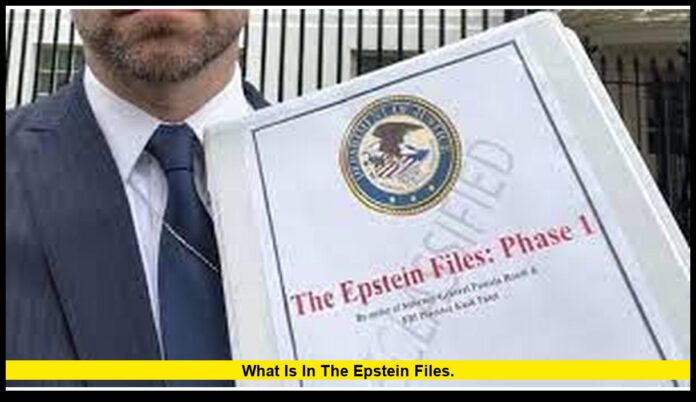
The long-awaited release of the Epstein files has reignited one of the most controversial and far-reaching scandals in modern history. As investigators continue to dig through thousands of documents, Americans are asking the same question: what is in the Epstein files—and what do they reveal about Jeffrey Epstein’s global network of power, money, and abuse?
The newly unveiled materials, obtained through court orders and congressional subpoenas, detail years of emails, flight logs, banking records, and communications involving some of the world’s most powerful individuals. These files expose how Epstein maintained influence across political, corporate, and international borders—even after his 2008 conviction for sex crimes.
Table of Contents
The Origins of the Epstein Files
The “Epstein files” refer to an enormous collection of records seized from Epstein’s properties following his 2019 arrest and subsequent death. They include thousands of pages of flight manifests, financial ledgers, personal correspondence, and court filings.
Federal authorities have compiled the files into a series of classified and unclassified documents, many of which are now being reviewed by Congress. The most recent disclosures were part of a growing transparency effort led by lawmakers, advocacy groups, and journalists determined to uncover the truth about Epstein’s operations.
The latest document batch—released this month—adds nearly 23,000 new pages of material, including correspondence between Epstein and several prominent individuals, detailed travel records, and handwritten notes outlining his business and social connections.
Key Revelations from the Epstein Files
1. Flight Logs Reveal Extensive Global Travel Network
Among the most scrutinized materials in the files are Epstein’s flight logs, detailing years of private jet trips around the world. These records include multiple routes connecting New York, Florida, Paris, London, and his infamous private island in the U.S. Virgin Islands.
Each entry lists passengers, crew members, and destinations. While some of the names are redacted, others correspond to previously known associates. The logs confirm that Epstein maintained a near-constant rotation of international travel, often accompanied by young women and high-profile guests.
Investigators are now cross-referencing these manifests with witness testimony and bank records to verify who traveled with Epstein and for what purpose.
2. Financial Documents Expose Hidden Accounts
Another major revelation from the Epstein files involves Epstein’s financial empire. The documents outline how he used a complex web of offshore accounts, shell corporations, and trusts to manage billions of dollars.
Ledgers show regular transfers between entities in the Cayman Islands, the Virgin Islands, and Switzerland. Several transactions are labeled “consulting,” “education,” or “grant funding,” categories that experts say were likely used to disguise payments for illicit activities or to protect wealthy clients.
Federal investigators are currently tracing these payments to determine whether any of Epstein’s associates received financial benefits in exchange for silence or cooperation.
3. Communications Reveal Access to Power
The emails and letters included in the files demonstrate Epstein’s extraordinary access to elite circles. Correspondence shows Epstein communicating regularly with world leaders, scientists, and financial executives.
Some of these exchanges were innocuous—discussions about philanthropy, science, or education—but others suggest that Epstein used his influence to broker introductions and facilitate private meetings between wealthy or politically connected individuals.
In several messages, Epstein’s staff referred to “arranging travel” or “preparing guests” for meetings at his Manhattan townhouse, a location long suspected of being used for illicit activity.
The tone of many emails suggests Epstein saw himself as a gatekeeper—a man who could connect the powerful and, in turn, leverage those connections for his own protection.
4. The Role of Ghislaine Maxwell
The Epstein files confirm that Ghislaine Maxwell played a central role in Epstein’s network. Her name appears in hundreds of emails, travel records, and handwritten notes, revealing that she managed both Epstein’s personal and professional affairs.
Maxwell handled flight schedules, arranged guest accommodations, and communicated directly with several of Epstein’s most high-profile contacts. The files also include references to “recruitment” and “training,” terms investigators believe relate to the grooming of victims.
While Maxwell is currently serving a 20-year prison sentence for her role in Epstein’s trafficking ring, these documents provide new evidence that her involvement was far deeper than previously understood.
5. “Birthday Book” and Contact List Raise Questions
One of the most disturbing discoveries in the Epstein files is the so-called “birthday book”—a 238-page collection containing handwritten messages, photos, and sketches from Epstein’s associates.
While some entries appear harmless, others feature cryptic notes, references to “arrangements,” and names that correspond to known victims. The book was reportedly kept at Epstein’s New York mansion and used to track personal relationships, birthdays, and contacts.
Investigators believe this record served as both a social diary and a form of leverage—a reminder of Epstein’s deep reach across powerful circles.
What the Files Do Not Reveal—Yet
Despite their depth, the Epstein files still leave many unanswered questions.
- No definitive client list: Despite speculation, there is no verified “list” of individuals who participated in Epstein’s illegal activities.
- Redacted sections remain: Many pages are blacked out to protect victims’ identities and ongoing investigations.
- Missing evidence: Certain hard drives and documents seized in 2019 remain sealed under court order.
Authorities emphasize that while the files offer significant insight, not all names appearing within them are linked to criminal conduct.
Impact on Ongoing Investigations
The newly revealed files are already shaping legal and political developments. Lawmakers have proposed new measures to increase transparency and prevent elite individuals from using influence to evade justice.
The Department of Justice is also reviewing potential misconduct in Epstein’s original 2008 plea deal, which many critics describe as a gross miscarriage of justice. Victim advocacy groups are pushing for all Epstein-related documents to be made public, including communications between Epstein and government officials.
Meanwhile, civil lawsuits continue to move through U.S. courts as victims seek damages from Epstein’s estate and its beneficiaries. The latest filings reference the recently unsealed materials, arguing they confirm a broader conspiracy to conceal Epstein’s crimes.
Public Outcry and Demand for Full Disclosure
Public reaction to the question of what is in the Epstein files has been fierce. Across the United States, social media is filled with demands for total transparency, as users call for every name and record to be made public.
Advocacy groups have organized campaigns urging Congress to pass legislation that would require the release of all Epstein-related materials. They argue that continued secrecy only benefits the powerful and delays justice for the victims.
Polls show that a majority of Americans believe more individuals connected to Epstein should face investigation. Many view the case as a symbol of how money and privilege can corrupt systems meant to ensure fairness and accountability.
Why the Epstein Files Matter
The Epstein files represent more than just a criminal investigation—they’re a window into how unchecked power can operate in plain sight.
For decades, Epstein cultivated relationships with some of the world’s most influential people, hiding his criminal behavior behind a façade of wealth, philanthropy, and intelligence. The files show how deeply interconnected that web truly was and how many institutions failed to stop him.
Their release is not only about uncovering Epstein’s crimes—it’s about understanding how systems of privilege allowed them to happen. The truth contained in these pages is essential to rebuilding public trust in justice and ensuring that no one, regardless of wealth or status, is ever above the law again.
Conclusion
The question of what is in the Epstein files has finally begun to be answered—but it’s clear that much remains hidden. The newly unsealed documents offer an unflinching glimpse into the scale of Epstein’s operations, his manipulation of the powerful, and the failures that allowed his crimes to continue for years.
As more evidence surfaces, one thing is certain: these files are not the end of the story—they are the beginning of full accountability.
What are your thoughts on the Epstein files? Should all remaining documents be released to the public? Share your view below and stay tuned for the latest updates.

