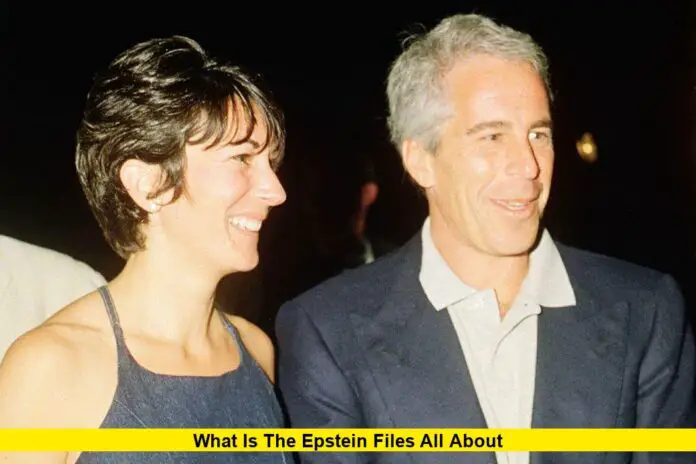
The term “Epstein Files” refers to a sprawling collection of documents tied to Jeffrey Epstein and his network—including internal emails, court records, financial disclosures and estate-materials. Recent developments show new emails released by the United States House Committee on Oversight and Reform implicate that Epstein claimed Donald Trump “knew about the girls” and had “spent hours” with a minor at Epstein’s property.
What Are the Epstein Files?
The Epstein Files encompass many types of records:
- Emails and correspondence between Epstein, his associates and estate.
- Court filings, grand-jury materials, investigative records from the United States Department of Justice (DOJ) and the Federal Bureau of Investigation (FBI).
- Financial and bank records showing Epstein’s transactions and relationships with major banks.
- Estate records and materials from Epstein’s posthumous legal and civil cases.
Recent Key Developments
- On November 12, 2025, the House Oversight Committee publicly released previously unseen emails from Epstein’s estate, in which Epstein wrote that Trump “knew about the girls” and that he had “spent hours” at his house with a victim.
- Earlier, in September 2025, more than 33,000 pages of documents from the DOJ relating to Epstein and the associate Ghislaine Maxwell were released, though watchdogs said most content duplicated what was already public.
- In July 2025, the DOJ and FBI issued a memo stating there was no evidence of a “client list” of powerful figures, and no credible evidence that Epstein engaged in blackmail of high-profile individuals.
- Separately, newly unsealed court filings revealed Epstein had accounts at major banks, including Goldman Sachs and HSBC, prompting questions about his financial reach and connections.
Why It Matters
- Epstein’s case involves trafficking of minors, elite social circles and what many believe to be systemic failures of accountability. The Files offer a potential window into those failures.
- Politically, the Files have become a flashpoint: members of Congress from both parties are demanding transparency, while the White House and DOJ face intense scrutiny for prior secrecy.
- For the public, these records are crucial to understanding how a wealthy, connected individual operated largely unchecked for years—what evidence existed, how it was handled, and who may have known what.
What’s In the Released Content So Far?
Here are major categories and what they reveal:
| Category | Contents revealed | Significance |
|---|---|---|
| Emails / Estate documents | Communications between Epstein, Maxwell and others; references to high-profile persons and meetings. | Raises new questions about who Epstein associated with and the nature of those relationships. |
| DOJ / FBI records | Thousands of pages of investigative material, though many redacted or previously public. | Shows the scale of the investigation and what remains hidden or delayed. |
| Financial / Bank records | Epstein reported to have had accounts with large global banks, per unsealed documents. | Suggests a financial infrastructure that supported Epstein’s operations and raises questions about oversight. |
| “Client list” question | Government memo states no client list found, no blackmail evidence of prominent people. | Central to public demands for accountability—if no list, many feel justice may not be fully served. |
Where Things Stand Now
- The House Oversight Committee is moving toward a vote to force full public disclosure of the Epstein Files.
- The DOJ continues to state that victim privacy and ongoing investigations limit what can yet be released.
- Critics argue that while large document drops occurred, significant redactions remain and key names and details are still withheld.
- On the political front, the Epstein Files remain a liability and bargaining chip: promises of full disclosure have undermined some public trust.
What to Watch Going Forward
- Will further document batches be released publicly, and will those contain new names or allegations?
- Will civil lawsuits or new criminal investigations stem from newly disclosed material?
- Will the political pressure translate into legislative or oversight action that forces the remaining Files into public view?
Conclusion
The Epstein Files represent one of the most significant yet opaque dossiers of recent U.S. history—covering sex trafficking, elite networks, financial secrecy and government oversight. Despite notable releases, much of the story remains untold. The latest emails deepen the intrigue while underscoring how much is still withheld. For many Americans, the Epstein Files embody both the promise of accountability and the very real limitations of transparency.

