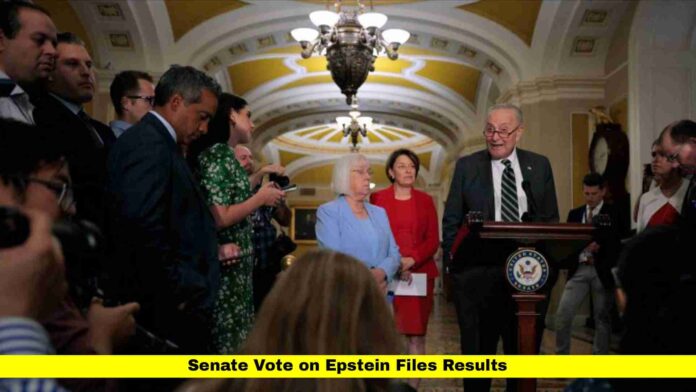
In a highly scrutinized move, the Senate vote on Epstein files results revealed a narrow yet decisive defeat for an amendment that aimed to mandate the public release of documents tied to Jeffrey Epstein’s investigation. After the motion came to a vote, the final tally was 51-49 against advancing the amendment, thereby halting its progress and disappointing transparency advocates who had pressed for full disclosure.
Table of Contents
What the Amendment Sought to Achieve
The amendment, proposed during the markup of the annual defense authorization bill, sought to direct the Department of Justice (DOJ) to publish all unclassified records, communications, and investigative files relating to Epstein’s network and prosecution. It included provisions requiring release of flight logs, travel records, communications with government officials, and documentation of individuals referenced in the company of Epstein or his associates. It permitted redactions only for victim identities or ongoing investigations. The measure’s defeat means the full corpus of files remains under tighter control rather than being made publicly searchable.
Breakdown of the Vote and Senate Dynamics
- The motion to table the amendment passed 51-49, effectively killing the effort.
- Two Republican senators, Josh Hawley (Missouri) and Rand Paul (Kentucky), defied their party and voted with Democrats, but that support wasn’t enough to succeed.
- The narrow margin underscores how closely divided the Senate remains on matters of disclosure and accountability.
- Despite public and bipartisan pressure, the Senate leadership opted to maintain the status quo rather than open the full Epstein-case files to public view.
Why the Outcome Matters
This vote is significant because it shapes what the public will be allowed to see— or not see—regarding Epstein’s operations and potential entanglements. Many survivors, journalists, and advocacy groups view the files as critical to understanding the breadth of Epstein’s network and possibly uncovering hidden foul play or complicity. The Senate’s rejection signals:
- A reluctance among many senators to push aggressive transparency reforms.
- That even narrowly lost amendments can stall major investigations.
- That procedural vehicles like defense bill amendments are being used as strategic tools for disclosure efforts.
- That the path to full disclosure now shifts to other legislative chambers or routes.
The Path Ahead in the House of Representatives
With the Senate vote concluded, attention turns to the United States House of Representatives, where a discharge petition has secured 218 signatures—enough to force a floor vote under House rules. Sponsored by Ro Khanna (D-California) and Thomas Massie (R-Kentucky), the so-called “Epstein Files Transparency Act” would require the DOJ to publish the unclassified documents within 30 days of enactment, with statutorily mandated reporting on what was released and redacted. If passed by the House, the bill still must clear the Senate and receive the President’s signature to become law—making the earlier Senate vote a warning sign about the uphill climb ahead.
What the Files Potentially Contain
While complete access remains blocked, available summaries and leaks suggest the files could include:
- Epstein’s flight logs and “visitor” lists to his private properties.
- Communications between Epstein and high-profile figures, including government or business leaders.
- Investigative reports, non-prosecution agreements, and sealed court transcripts.
- Financial transaction records, offshore banking activity, and network ties linking Epstein to associates or co-conspirators.
- Internal DOJ and FBI documents on how investigations were handled, and what material may have been suppressed or withheld.
For advocates, these materials represent the “smoking gun” against potential cover-ups or powerful actors benefiting from Epstein’s network. That makes the Senate’s decision all the more consequential: it determines whether public scrutiny will deepen or be stymied.
Public Reaction and Political Pressure
The narrow defeat has triggered a wave of criticism and mobilization. Epstein abuse survivors and activists accused the Senate of protecting elites instead of victims. Social-media campaigns erupted under hashtags calling for “Epstein justice now.” Meanwhile, supporters of the Senate’s decision argued that broad disclosure could endanger victim safety, national-security interests, or ongoing investigations.
Politically, the vote raises red flags for both parties:
- Democrats view the loss as a galvanizing moment and now focus efforts on the House.
- Republicans face internal pressure from base voters who support more transparency and distrust elite networks.
- Some moderate senators who might be willing to support disclosure in future may now weigh political consequences sharper than ever.
Next Steps and Strategic Outlook
Given the circumstances, here is how things are likely to unfold:
- The House could vote on the transparency bill as early as next week, given the discharge petition is now valid.
- If the House approves the bill, it must be reconciled with Senate resistance (the Senate already rejected a similar amendment).
- If passed by both chambers and signed, the DOJ would be legally required to release the files.
- If the Senate holds firm and blocks the legislation, the fight likely shifts toward oversight and public pressure rather than new laws.
- Meanwhile, victims’ groups and media organisations will continue to demand voluntary release by the DOJ—even without new legislation—citing public interest and accountability.
Key Points Summary
- The Senate defeated the amendment by 51-49, blocking mandated release of Epstein-related files.
- Two Republicans joined Democrats in support, but not enough to sway the outcome.
- The House has launched a separate bill (Epstein Files Transparency Act) and triggered a floor vote via discharge petition.
- The files potentially contain high-profile communications, financial records, investigation documents and more.
- Public pressure is increasing, but actual disclosure remains uncertain until legislative or executive action occurs.
Conclusion
The “Senate vote on Epstein files results” marks a pivotal juncture in the ongoing saga of Epstein’s criminal network and questions of governmental transparency. While the Senate’s decision puts a temporary barrier between the public and the full truth, the momentum in the House and among advocacy groups suggests the fight is far from over. The question now shifts: Will Congress or the executive branch open the door to these files, or will they remain locked away despite mounting demands?
I’d love to hear your thoughts—what do you believe should happen next? Comment with your view and stay tuned for the next chapter in this unfolding story.

