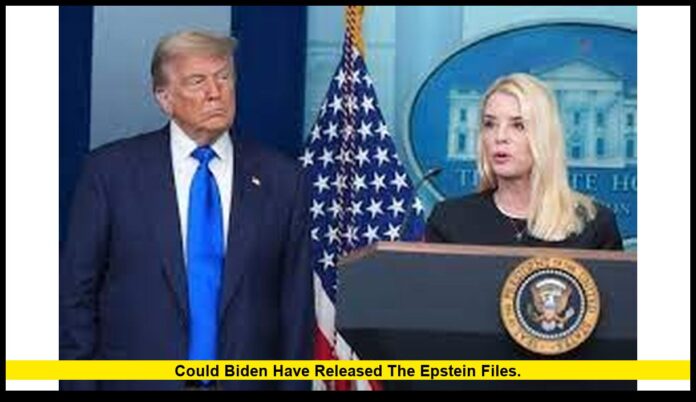
The question could Biden have released the Epstein files has become one of the most widely debated issues surrounding government transparency, presidential authority, and high-profile criminal investigations. With renewed public pressure, congressional action, and fresh demands for disclosure, more Americans than ever are asking whether President Joe Biden had the legal power—or political will—to make all Epstein-related documents public during his administration.
As of today, portions of the Epstein files have been released through Congress and the Department of Justice, but the full set of records remains sealed or restricted. The Biden administration did not order a complete declassification or public release. Understanding why requires looking deeply into the legal framework, the categories of documents involved, and the procedural limitations that shape what any president can or cannot disclose.
This article breaks down the latest developments, the legal realities, and the political considerations that define the ongoing debate.
Table of Contents
What Has Already Been Released Under the Biden Administration
Over the past months, several major developments unfolded regarding the Epstein files. These updates are essential for understanding what was possible and what was not.
- Thousands of pages of Epstein-related documents were transferred by the Department of Justice to a House committee after congressional demands.
- A massive batch of more than 33,000 pages of Epstein-related materials—including court filings, police reports, and video logs—was publicly released by a congressional committee.
- The Department of Justice stated that no additional releases were planned and that certain materials could not be disclosed due to legal restrictions, privacy protections, and court-ordered seals.
- Officials clarified that “no formal Epstein client list” exists within DOJ custody, challenging public expectations about what these files might contain.
These actions show movement toward transparency but also highlight the structural barriers that exist beyond presidential discretion.
Why the Question “Could Biden Have Released the Epstein Files” Is So Complex
At first glance, many Americans assume that a president has sweeping authority to declassify or release anything. While the president does have enormous power over classified executive-branch documents, the Epstein files involve a tangled mix of legal categories, each governed by different laws.
Here’s why the answer isn’t simply yes or no.
1. Not All Epstein-Related Records Are Classified Executive Documents
Many of the Epstein files fall into categories that the president cannot simply declassify or publish, including:
- Grand jury materials, protected under Rule 6(e)
- Sealed court documents, which require a judge’s approval for release
- Civil case filings under protective order
- Victim and minor-identifying information protected by federal privacy law
- Evidence from ongoing or unresolved investigative leads
Unlike national-security documents, these materials are controlled by court systems, not the White House.
This means even if the president wanted full transparency, he could not override a court seal or violate victim-privacy statutes.
2. The DOJ Controls Investigative Files, Not the White House Directly
The Department of Justice operates with a degree of independence. This independence exists to prevent political influence in criminal investigations.
The Biden administration consistently deferred to DOJ judgment regarding:
- What records could be safely released
- What needed redactions
- What remained legally protected
So while Biden could apply pressure or issue directives encouraging transparency, he could not legally force the DOJ to expose specific investigatory documents that fall under restricted categories.
3. Congress, Not the President, Has the Broadest Power to Mandate Release
Congress has authority to pass disclosure laws that override existing secrecy rules—something the Epstein Files Transparency Act attempts to do.
Key points about this legislation include:
- It was introduced with bipartisan sponsorship.
- A discharge petition in the House reached the necessary signature count, forcing a future vote.
- The legislation would require the attorney general to release Epstein-related materials while protecting victim identities.
If passed, the law would mandate actions that the president alone cannot take. This shows that full disclosure is a multi-branch process, not a one-office decision.
4. Political Risk and Institutional Hesitation Played a Role
Even if Biden had significant influence, releasing files tied to a high-profile sex-trafficking operation with connections to powerful people across several industries carries political consequences.
Considerations likely included:
- The need to protect victims from re-traumatization
- Avoiding the release of unverified names that could lead to wrongful accusations
- Preventing interference in ongoing legal matters
- Avoiding the perception of political weaponization of sensitive documents
These political and ethical calculations shape how aggressively an administration pursues disclosure.
What the Biden Administration Actually Did
To answer “could Biden have released the Epstein files,” it’s important to evaluate his administration’s track record:
Actions Taken
- Cooperated with congressional subpoenas for documents
- Provided thousands of pages to the oversight committee
- Supported certain transparency efforts publicly
- Released limited sets of DOJ-controlled documents
Actions Not Taken
- Did not order full unilateral declassification
- Did not instruct agencies to publish all remaining records
- Did not push for expedited court review to unseal materials
- Did not override internal DOJ objections
So yes, Biden could have pushed harder. But no, he could not have legally forced an absolute full release without navigating institutional constraints.
What Remains Hidden and Why
A major part of the public frustration stems from the fact that even after large document releases, many files remain sealed or withheld.
Categories still restricted:
- Grand jury transcripts
- Evidence involving minors
- Names of individuals not charged with crimes
- Investigative leads still classified as sensitive
- Cooperation agreements between the DOJ and witnesses
- Sealed civil lawsuits tied to victim confidentiality
These categories are protected by law, not executive discretion.
Legal Protections That Limit Presidential Action
To understand why Biden couldn’t simply order a full release, consider the laws governing these materials:
1. Victims’ Rights and Protection of Minors
Federal law mandates redaction of identifiable information involving:
- Sex trafficking victims
- Minors
- Individuals who reported abuse
2. Court-Sealed Materials
Judges—not presidents—decide whether to unseal:
- Depositions
- Testimony
- Sealed settlements
- Certain investigative files
3. Grand Jury Secrecy (Rule 6(e))
This is one of the strongest secrecy protections in American law. Only a judge or Congress can order release.
4. Privacy Act and FOIA Exemptions
Some records are protected by statute to prevent harm to individuals or investigations.
These restrictions exist regardless of who occupies the White House.
Could Biden Have Released the Epstein Files? A Balanced Evaluation
After analyzing all available information, the most accurate answer is:
Yes—Biden could have pushed for broader releases, directed agencies to accelerate review processes, or supported transparency legislation more aggressively.
But at the same time:
No—the president could not legally unseal grand jury materials, override court orders, or release victim-protected information, nor could he publicly disclose DOJ documents that fall outside executive declassification authority.
Most importantly, much of the Epstein file universe exists outside presidential control entirely, making a unilateral release impossible.
The Public Demands Far More Transparency
The debate continues because millions of Americans feel:
- High-profile individuals may have been shielded
- Institutions have not fully revealed what they know
- Justice requires full transparency
- Survivors deserve closure
Public pressure remains intense, and polls consistently show overwhelming support for releasing as many files as legally possible.
This pressure has driven congressional action and forced the administration—past and present—to address the issue more directly.
What Happens Next: Four Paths Forward
Looking ahead, four major scenarios could shape the fate of the remaining Epstein documents.
1. Congress Passes the Epstein Files Transparency Act
This is the most likely route to full disclosure. If passed and signed:
- The DOJ must declassify and release materials
- Victims’ identities must remain protected
- Exceptions will be narrow and clearly defined
This would answer the debate by legally compelling action.
2. Courts Rule on Sealed Documents
Victims, media organizations, and advocacy groups continue to petition courts for:
- Unsealing depositions
- Releasing evidence
- Publishing restricted civil case files
Judges could order incremental transparency.
3. A Future Administration Could Take a Stronger Stance
Even if Biden did not fully release the files, a future president could:
- Push the DOJ to expand disclosures
- Support Congress in compelling transparency
- Issue executive directives prioritizing public release
4. The Status Quo Continues
If congressional legislation does not move forward and courts proceed slowly, the existing partial-release model may remain in place.
Frequently Asked Questions (FAQ)
Q1: Could Biden have released all the Epstein files on his own?
No. He could push for greater transparency, but he cannot unseal court documents, violate privacy laws, or release grand jury materials.
Q2: Why are so many Epstein files still sealed?
Because they include grand jury records, court-ordered seals, minor-victim information, and sensitive investigative materials protected by law.
Q3: Will the remaining files eventually be released?
They may be released through congressional legislation, court orders, or future administrative decisions, but there is no guaranteed timeline.
Disclaimer:
This article is for informational purposes only. It summarizes current public information and does not provide legal advice, predictions, or representations regarding ongoing investigations or future government actions.

