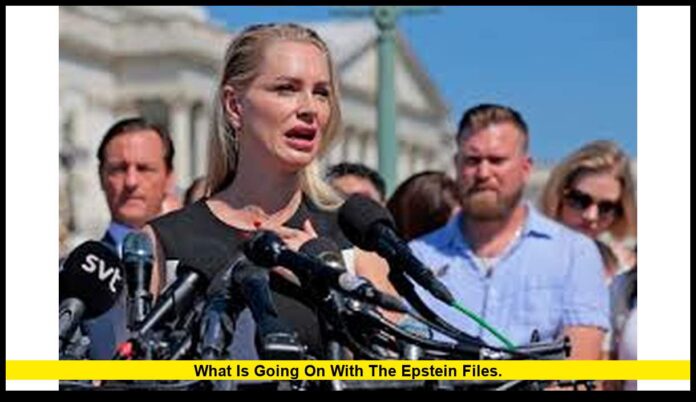
The question what is going on with the Epstein files has become one of the most urgent topics in U.S. political and legal news as new congressional action pushes the long-sealed federal records tied to Jeffrey Epstein closer than ever to public release. Over the past several weeks, a bipartisan movement in the House of Representatives has accelerated efforts to force the Department of Justice (DOJ) to publish thousands of pages of Epstein-related documents. With a House floor vote now guaranteed, the debate over secrecy, accountability, and transparency has reached its most critical point since Epstein’s arrest and death.
Table of Contents
Why the Epstein Files Are Back in the National Spotlight
The renewed focus centers on a procedural breakthrough that removed months of congressional gridlock. A discharge petition—an infrequent but powerful legislative tool—gained the required number of signatures to bypass committee stalls and force a vote on releasing unclassified DOJ records involving Epstein, Ghislaine Maxwell, and any potential co-conspirators.
This unexpectedly swift bipartisan support has sparked a nationwide question: what is going on with the Epstein files, and why now?
Key developments fueling the renewed interest include:
- A bipartisan coalition of House lawmakers unified to demand transparency.
- The discharge petition surpassed the 218-signature threshold, making a floor vote mandatory.
- Public pressure from survivors, advocacy groups, and the general public has surged.
- Newly released summaries and partial documents have drawn scrutiny about what remains withheld.
With these forces aligning, the Epstein files—once locked behind layers of government secrecy—are now positioned at the center of a major congressional decision.
What the Pending Legislation Would Require
The bill tied to the Epstein files is designed to compel the DOJ to release all unclassified federal documents relating to:
- Epstein’s criminal activity
- Co-conspirators and enablers
- Investigative steps and prosecutorial decisions
- Internal communications within the DOJ and FBI
- Epstein’s incarceration and death in federal custody
The bill includes essential protections to ensure:
- Victim identities remain confidential
- Sensitive or classified material is properly redacted
- Any ongoing investigations are not compromised
- Graphic or illicit materials are never made public
This framework aims to balance transparency with privacy and legal safeguards, responding directly to survivor concerns and public calls for accountability.
Understanding the Discharge Petition and Why It Matters
A discharge petition is one of the rarest congressional maneuvers, used only when leadership blocks a bill from moving forward. When lawmakers reached the required signature threshold, they gained the procedural authority to force action regardless of political leadership.
This move matters because:
- It demonstrates strong bipartisan demand for transparency.
- It ensures the bill cannot be ignored or indefinitely delayed.
- It reflects growing dissatisfaction with the DOJ’s limited disclosures.
- It reveals that a majority of House members believe more information must be released.
For many Americans asking what is going on with the Epstein files, this procedural milestone marks the biggest step toward full disclosure to date.
What the House Vote Could Mean
With a vote now required, two possible paths exist:
- Simple Majority Vote
The bill is debated and passed with a standard majority. - Vote Under Suspension of the Rules
Requires a higher threshold but speeds up the process.
Based on public statements from lawmakers, both parties include members likely to vote for transparency. This means the bill has a realistic opportunity to pass and move to the Senate.
If approved by both chambers and signed into law, the DOJ would be legally obligated to publish the materials within a defined timeframe.
Why the Files Matter to Survivors and the Public
The Epstein case is unlike most federal cases because of its:
- Political implications
- Wealth-based influence networks
- Cross-border elements
- History of unusual prosecutorial decisions
- Mysterious circumstances surrounding Epstein’s death
Survivors have consistently pushed for the release of files to:
- Identify those who enabled or participated in trafficking
- Expose institutional failures
- Hold accountable any individuals who benefited from Epstein’s protection
For the public, the Epstein case has long symbolized concerns about powerful individuals escaping scrutiny. The question what is going on with the Epstein files reflects the broader demand for clarity and justice.
What Could Be Released If the Bill Passes
If the DOJ is compelled to publish unclassified documents, some of the materials that could become public may include:
- FBI interview summaries
- Internal DOJ memos
- Communication logs between prosecutors and federal agencies
- Visitor logs and transportation records
- Non-prosecution agreement details
- Redacted witness and victim testimonies
- Records of individuals investigated but not charged
All such documents would undergo mandatory review to protect survivors and ongoing cases.
Common Concerns About Releasing the Files
While public interest is high, several concerns have been raised:
- Privacy risks: Even redacted documents may inadvertently reveal identifying details.
- Ongoing legal cases: Some investigations may still be active.
- Misinterpretation: Raw investigative material may be taken out of context.
- National security: Some material may involve sensitive intelligence.
These concerns are expected to be weighed carefully if the bill advances.
What Happens Next
Americans following the story should expect:
- A formal House floor vote
- Public debate on the bill’s scope
- A Senate decision on whether to take up the companion legislation
- Statements from the DOJ outlining their stance
- A possible presidential response depending on the bill’s outcome
The next several weeks are critical in shaping the future of Epstein file disclosure.
With public interest surging and Congress preparing to vote, now is the time to stay informed and share your thoughts on whether full transparency is overdue or if certain records should remain protected.

