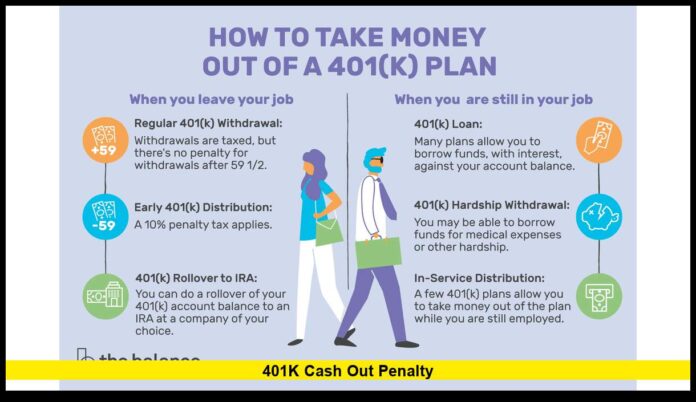
The 401k cash out penalty remains one of the most significant financial consequences facing Americans who withdraw retirement funds early, and interest in the rules has grown sharply in 2025 as more workers evaluate their savings amid economic uncertainty. With updated provisions now in effect and new exceptions introduced over the past year, understanding how the penalty works—and who can avoid it—has become essential for anyone holding a workplace retirement account.
Table of Contents
Understanding the Current Penalty
A 401(k) is designed for long-term retirement savings, so federal rules impose strict consequences for early withdrawals. If you take money out of your 401(k) before age 59½, the standard penalty still applies in 2025:
- A 10% early-withdrawal penalty
- Federal income tax on the amount withdrawn
- Possible state income tax, depending on your state
This means a $20,000 withdrawal can shrink dramatically after taxes and penalties. In addition to immediate costs, the loss of long-term compounding can significantly reduce future retirement security.
What’s New in 2025
Recent legislative changes, including provisions from the SECURE 2.0 Act now in effect, expand the list of situations where an early withdrawal may be exempt from the penalty. These updates do not eliminate the penalty for most cash-outs, but they provide new avenues for relief under very specific circumstances.
Key updates now in place:
- Emergency personal expense withdrawal: You can take one withdrawal of up to $1,000 per year without the 10% penalty. The amount is still taxable, and you must repay or wait three years before taking another emergency withdrawal if you do not replace the funds.
- Domestic abuse exception: Victims of domestic abuse may withdraw up to $10,000 or 50% of their vested balance—whichever is smaller—without the penalty.
- Disaster-related withdrawals: If you live in an area covered by a federal disaster declaration, penalty-free withdrawals up to a set limit are allowed.
- Changes to repayment rules: Repayments for certain penalty-free withdrawals, like those for domestic abuse or disasters, may be made over a designated multi-year window.
These provisions aim to give savers controlled access to funds during unexpected hardships without undermining the overall purpose of the retirement system.
Traditional Exceptions Still Apply
In addition to the new updates, several long-standing exceptions allow some individuals to withdraw money before age 59½ without the early-withdrawal penalty:
- The Rule of 55: If you leave your job during or after the year you turn 55, you may withdraw from that employer’s 401(k) without the penalty.
- Permanent disability: Individuals who become totally and permanently disabled qualify for penalty-free early withdrawal.
- Death of the plan holder: Beneficiaries can withdraw funds without the penalty.
- Medical expenses: If medical expenses exceed 7.5% of adjusted gross income, withdrawals used to pay those expenses may avoid the penalty.
- Substantially Equal Periodic Payments (SEPP): You can take structured withdrawals on a strict schedule using IRS-approved methods to avoid the penalty.
- Court-ordered withdrawals: Certain withdrawals pursuant to a qualified domestic relations order may be exempt.
Each exception includes strict criteria and documentation requirements. While they allow penalty-free access, regular income tax often still applies.
How Much Could the Penalty Cost You?
Understanding the exact financial impact of a cash-out helps illustrate why the penalty is such a major deterrent. Consider the following potential factors:
- 10% penalty: Applied directly to the withdrawn amount.
- Federal income tax: Based on your annual income bracket.
- State income tax: Dependent on your state’s rules.
- Lost compounding: Funds withdrawn stop growing, which can significantly impact long-term balance projections.
For many workers, this combination can reduce the value of a cash-out by 25%–40% or more before accounting for lost investment growth.
How Plan Rules Influence Your Options
Not all 401(k) plans allow the same withdrawal options, even in situations where the IRS permits them. Employers determine whether a plan allows:
- In-service withdrawals
- Hardship withdrawals
- Loans
- Roth 401(k) distributions
- Partial distributions
Before making a decision, reviewing your specific plan documents or Summary Plan Description is essential. Some plans impose additional restrictions such as minimum withdrawal amounts, repayment rules, or limitations on hardship categories.
Alternatives to Cashing Out
Withdrawing from a 401(k) should generally be a last resort. Before taking a distribution, consider other approaches that protect long-term retirement savings:
- 401(k) loan: If your plan offers loans, you may be able to borrow against your balance and repay yourself with interest. These loans do not incur penalties if repaid on schedule.
- Emergency savings: Using existing liquid savings avoids tax consequences.
- Budget restructuring or debt relief options: In some cases, restructuring expenses may prevent the need to tap retirement funds.
- Personal loans: While these involve interest, they may still cost less than early-withdrawal penalties.
Every situation is different, but avoiding a full cash-out when possible can preserve retirement security.
Common Questions About the Penalty
Does the penalty apply to Roth 401(k)s?
The penalty applies to earnings withdrawn early. Contributions may be withdrawn tax-free, but employer matches and investment gains are still subject to withdrawal rules.
Does changing jobs allow penalty-free access?
Only if you left the employer in or after the year you turned 55.
Can you withdraw from an old 401(k) after you leave an employer?
Yes, but regular early-withdrawal rules apply unless you meet an exception.
Are partial withdrawals allowed?
Most plans allow them, but it depends on your employer’s specific rules.
Summary Table: Penalty Rules at a Glance
| Situation | Penalty Applies? | Notes |
|---|---|---|
| Under age 59½, standard withdrawal | Yes | Tax and penalty both apply |
| Age 59½ or older | No | Income tax may still apply |
| Rule of 55 | No | Applies only to the most recent employer’s plan |
| New $1,000 emergency withdrawal | No | Taxable, once per year |
| Domestic abuse exception | No | Up to $10,000 |
| Disability | No | Must meet IRS definition |
| Qualified disasters | No | Must meet federal criteria |
The Bottom Line
The 401k cash out penalty continues to play a major role in shaping retirement decisions. While recent policy updates create new exceptions, most early withdrawals still trigger the 10% penalty and income tax. For Americans weighing their options in 2025, understanding the rules—and the true cost of cashing out—is crucial before making any decision that could impact long-term financial health.
If you’re considering an early withdrawal, review every available option carefully and make the choice that best safeguards your future.

