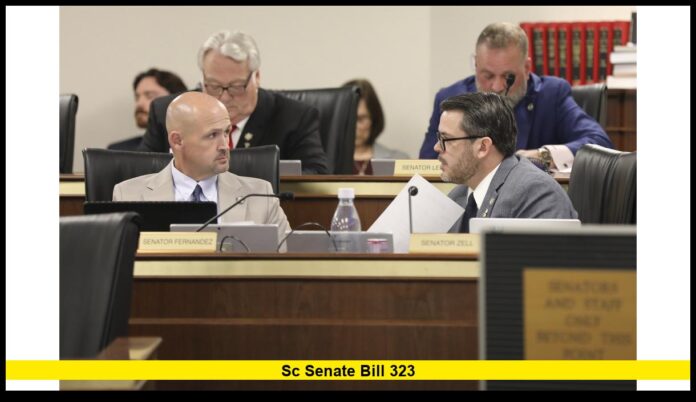
South Carolina Senate Bill 323 has been at the center of statewide attention, and the latest update confirms that the measure did not advance during its most recent review. The bill’s progress slowed significantly after a subcommittee vote in mid-November, making its future uncertain. The proposal has drawn strong reactions across the political spectrum, leading to one of the most closely followed legislative debates of the year.
Table of Contents
Overview of Senate Bill 323
Senate Bill 323, filed in February 2025, is formally titled the “Unborn Child Protection Act.” It seeks to introduce a near-total ban on abortion in South Carolina. The bill was introduced by Senator Richard Cash, with several Republican lawmakers signing on as co-sponsors.
The proposal aims to:
- Ban abortion in almost all circumstances.
- Remove exceptions for rape, incest, and fatal fetal anomalies.
- Impose criminal penalties on abortion providers.
- Include penalties that could apply to women who receive an abortion.
- Restrict reproductive-health services beyond abortion, including certain contraceptives and fertility procedures.
- Limit the ability of healthcare professionals to provide information on obtaining reproductive care outside the state.
Because of the bill’s scope, many saw it as the most restrictive piece of reproductive-health legislation proposed in the United States in 2025.
What Happened in the Subcommittee Vote
On November 18, 2025, Senate Bill 323 faced a critical step: review by a subcommittee of the Senate Medical Affairs Committee. The vote resulted in the bill failing to advance.
Here is how the subcommittee action unfolded:
- Two members voted in favor of moving the bill forward.
- Four Republican members abstained.
- All Democratic members voted against the bill.
This split clearly showed a divide not only between parties but also within the Republican majority. Although the bill did not advance, it was not formally defeated. It remains technically active in the legislative system, but without a successful committee vote, it cannot move to the Senate floor.
Why the Bill Stalled
The failure of the bill to move forward highlights several internal disputes and policy concerns:
1. Severity of Restrictions
Senate Bill 323 seeks to eliminate nearly all exceptions for abortion, including cases of rape and incest. For some Republican lawmakers, these elements went further than they were willing to support.
2. Criminal Penalties
The bill includes significant criminal consequences for providers and potentially for women who undergo an abortion. The scope of these penalties—described as among the harshest proposed nationally—led some lawmakers to question whether the public would support such measures.
3. Concerns About Contraception and IVF
Because of how the bill defines the beginning of life, several forms of reproductive care could be affected. This includes intrauterine devices (IUDs) and certain in-vitro fertilization procedures. Many legislators expressed concerns that the bill would unintentionally impact fertility treatments used by thousands across the state.
4. Republican Division
Despite having a strong majority, Republican senators were not unified on the bill. Several chose to abstain from voting, which was viewed as a clear signal of discomfort with the bill’s breadth and punitive elements.
5. Public Pushback
The bill attracted significant attention from medical organizations and advocacy groups. Some opposed the criminalization provisions, while others raised concerns about broader impacts on healthcare access.
What Current Law Looks Like in South Carolina
At the moment, South Carolina prohibits abortions after the detection of fetal cardiac activity, generally around six weeks into pregnancy. Exceptions currently exist for rape, incest up to twelve weeks, and cases involving serious medical emergencies.
If Senate Bill 323 were to pass in its current form, these exceptions would be removed. That change would represent one of the sharpest restrictions on reproductive rights in the country.
Timeline of Key Events
To understand how Senate Bill 323 reached this point, here’s a brief timeline:
| Date | Event |
|---|---|
| February 12, 2025 | Senate Bill 323 is introduced. |
| October 2025 | Public hearings and community discussions begin. |
| November 18, 2025 | Bill fails to advance in subcommittee vote. |
| Late 2025 | Senate leadership does not schedule further action. |
This timeline shows that although the bill has generated intense debate, its legislative progress has been slow.
Where the Bill Stands Now
Because the bill did not advance out of the subcommittee, it cannot proceed to the full committee or Senate floor without significant changes or renewed support. For now:
- The bill is still on file.
- Senate leadership has not indicated an intention to revive it during the current session.
- Lawmakers expect the issue to resurface during the 2026 legislative cycle.
While Senate Bill 323 has not moved forward, the broader conversation around reproductive health in South Carolina remains active. Both supporters and opponents of the bill have said they expect continued legislative efforts in the coming year.
What This Means for Residents
For South Carolina residents, the immediate impact is that current state abortion law remains unchanged. However, the conversation surrounding Senate Bill 323 signals that debates about reproductive rights, fertility treatments, and medical autonomy will continue into next year.
Key issues to watch include:
- Whether lawmakers revise the bill’s definitions and penalties.
- How reproductive-health providers interpret the language concerning services like IVF.
- Whether political pressure increases ahead of the next legislative session.
- How public opinion shapes future proposals.
Because the bill includes wide-reaching implications for healthcare, criminal law, and patient rights, many South Carolinians will remain alert to any new action on the bill.
Looking Ahead
Senate Bill 323 has created one of the most significant legislative divides in recent memory. The measure’s future may depend on political negotiations, potential amendments, and reconsideration from lawmakers who abstained during the vote. While it remains in legislative limbo, it continues to be a major point of discussion throughout the state.
As debates continue, residents will be watching closely to see whether the bill returns next session and what form it might take.
Feel free to share your thoughts or reactions in the comments below and stay connected for future updates.

