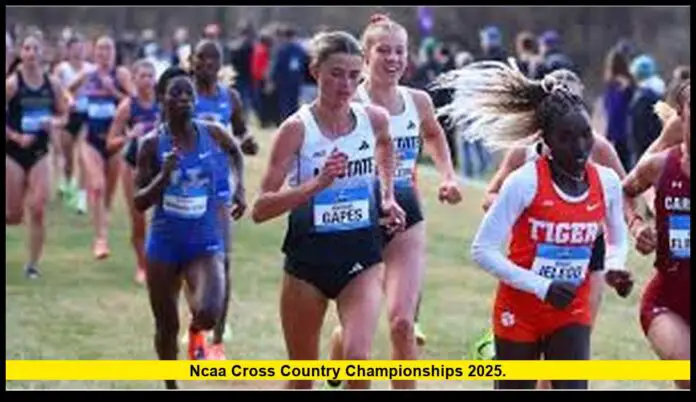
The NCAA Cross Country Championships 2025 delivered high drama and top-level depth on Nov. 22 at the Gans Creek Cross Country Course in Columbia, Missouri, where the women’s race produced a repeat individual champion and a familiar program reclaimed team gold. The championships brought together the nation’s best teams and individuals in theater-quiet, fog-draped conditions that tested tactics as much as speed.
Table of Contents
Championship snapshot
The Division I championship day unfolded on a chilly late-November morning. The women ran a 6K championship race that crowned a repeat individual winner and saw North Carolina State secure its fourth team title in five years. The men’s 10K championship followed later in the schedule on the same course, closing out a national day of cross-country competition that also included Division II and III finals hosted at separate sites.
Women’s race — repeat champion and team depth
The standout story of the championships was the women’s race. Alabama’s Doris Lemngole crossed the line to claim the individual title for the second consecutive year, cementing her status as the nation’s top collegiate distance runner. Lemngole’s win was a master class in race control: she ran with composure, timed her surges, and relied on both strength and tactical savvy to pull ahead in the closing kilometers.
At the team level, North Carolina State produced a balanced scoring performance to win the team championship — the program’s fourth title in five seasons. NC State’s depth was the deciding factor; several runners finished inside the top positions to deliver the points that win national team championships. The combination of individual top-10 placements and a tight scoring pack underscored why NC State remains a dynastic force on the women’s side.
Notable individual performances
Beyond the champion, the top finishers included a mix of accomplished veterans and rising freshmen who pushed the pace early and refused to let the race settle. BYU produced a strong showing with a freshman among the leaders, and a number of programs earned All-American finishes through gritty, tactical racing on a course that rewards pack running and efficient line choice.
Course and conditions
Gans Creek’s rolling grass and technical turns challenged athletes across both races. Fog and cool temperatures on race morning created slick patches and a premium on traction. The course rewards teams that run as a unit; programs that execute pack strategies and trust their pacing plans gained measurable advantages. The championship setup emphasized clean, hard running and punished tactical mistakes, turning the meet into both a physical and cerebral contest.
Why the results matter
Lemngole’s back-to-back individual titles place her alongside a selective group of repeat NCAA champions, a rare achievement that highlights dominance and consistency. For NC State, the team victory reinforces a sustained recruiting and development model that continues to produce national contenders. Programs that finished near the podium signaled the depth of the current NCAA distance scene and set the stage for renewed rivalries next season.
How teams earned their berths
Thirty-one teams and top individual qualifiers reached the national championship after last weekend’s regional meets. Automatic qualifying bids were handed to regional runners-up and champions, while at-large selections filled the field with squads and individuals that posted the season’s strongest marks. Those regional battles are often as intense as the nationals themselves, and the mix of automatic qualifiers plus at-large teams created a deep, competitive field at Gans Creek.
Broadcast and viewing notes
The championship event was carried on national college-sports coverage, with live timing and television windows set for the women’s 6K followed by the men’s 10K. Fans at home and on mobile streamed the day’s action, while on-site spectators experienced close racing and the atmosphere unique to cross-country nationals.
Coaching and program implications
The outcomes will shape recruiting narratives and offseason priorities. Programs that reached the top 10 can use those results as momentum in recruiting cycles and championship planning. Coaches will analyze course tape and splits to identify where gains were made or lost; for many programs, the offseason will be about building pack cohesion, improving turn and hill mechanics, and sharpening mid-race surge readiness.
Key takeaways for fans and athletes
- Depth wins championships: Team scoring shows why a fifth-through-seventh finisher matters as much as a podium runner.
- Course knowledge helps: Familiarity with Gans Creek’s idiosyncrasies paid dividends.
- Tactics beat raw speed at times: Smart surges and positioning proved decisive in tight packs.
- Breakout performances emerge each year: Freshmen and transfers can change program trajectories overnight.
What to watch next
With the national meet concluded, attention turns to indoor track buildup and winter training programs. Individual champions and All-Americans will translate cross-country fitness into indoor seasons, while teams will begin recruiting and fall planning. Look for follow-ups on athlete decisions, coaching stays or moves, and how programs use the offseason to bridge the gap to next year’s championship course.
Final thoughts
The NCAA Cross Country Championships 2025 reinforced distance running’s blend of individual brilliance and team strategy. Repeat champions and perennial programs stood tall, while several teams and athletes announced themselves as new contenders. The sport’s grassroots energy—coaches, parents, campus communities and teammates—was on full display, and the national stage at Gans Creek delivered a championship day worthy of celebration.
Share your thoughts on the races or tell us which performance surprised you most — we’ll keep covering developments as athletes return to training and teams prepare for next season.

