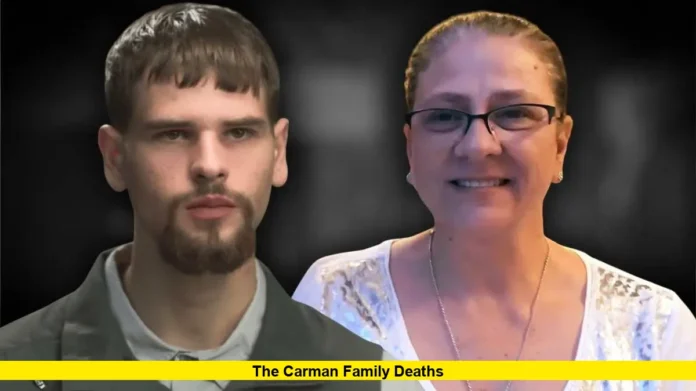
The Carman family deaths remain a tragic and perplexing saga, and the latest developments show just how many questions remain unanswered. The story centres on the disappearance of Linda Carman during a 2016 fishing trip and the earlier fatal shooting of her father, John Chakalos, with her son, Nathan Carman, at the heart of both cases.
Table of Contents
Background of the Case
On September 17, 2016, 54-year-old Linda Carman set off on an overnight fishing trip off the coast of Rhode Island with her 22-year-old son Nathan aboard his 32-foot vessel Chicken Pox. Eight days later, Nathan was found adrift in a life raft about 100 nautical miles south of Martha’s Vineyard; Linda’s body has never been recovered.
Earlier, on December 20, 2013, John Chakalos — a wealthy Connecticut real-estate developer and Linda’s father — was found shot to death in his Windsor, Connecticut home.
Legal Developments and Latest Updates
In May 2022 a Vermont grand jury indicted Nathan for the first-degree murder of his mother, alongside multiple counts of mail and wire fraud relating to estate matters and his grandfather’s death; he pleaded not guilty.
But in June 2023, Nathan died by suicide while in a New Hampshire jail cell awaiting trial. With his death, prosecutors dismissed the criminal charges, and the case stalled without a verdict.
As of today, both deaths remain unresolved: Linda is legally presumed dead, her body still missing; John’s murder remains an open homicide investigation with no charged suspect.
Key Points of Contention
- Investigators express serious doubts about Nathan’s survival story: experts questioned how a man boasting about surviving eight days at sea looked apparently well-nourished, unburned, and not visibly suffering exposure.
- Overlapping with the disappearance case, decades-long inheritance and trust-estate issues form a backdrop: John left a multi-million-dollar estate, and Nathan was the favored grandson in letters and trust documents, which prosecutors say supplied motive.
- Nathan’s autism diagnosis entered public discussion: defenders argue his neurodivergence led to law-enforcement mis-reading of his behaviour; others say the diagnosis complicated his public image.
- Insurance and maritime claims added further heat: after the fishing-boat sinking, an insurance company denied Nathan’s claim and tied it to boat modifications and repairs, which law enforcement later used as part of their interest in him.
Timeline Snapshot
| Date | Event |
|---|---|
| Dec 20 2013 | John Chakalos found shot dead in his home. |
| Sept 17 2016 | Nathan and Linda depart on fishing trip. |
| Sept 25, 2016 | Nathan rescued; Linda missing. |
| May 2, 2022 | Grand jury indicts Nathan for murder/fraud. |
| June 2023 | Nathan dies in jail; charges dismissed. |
Why the Carman Family Deaths Matter
The story resonates on multiple levels for a U.S. audience:
- Mental-health and neurodiversity issues — Nathan’s autism diagnosis became both defence and suspected motive in how people interpreted his actions.
- Wealth, inheritance and family tension — a large estate, generational dynamics and intra-family distrust all feed into the broader narrative.
- True-crime and unresolved justice — the fact that the core deaths remain legally unresolved, despite high suspicion, shocks and fascinates.
- Media and documentary impact — the recent release of a documentary on the case has refocused public attention, generating new interviews, archived material and renewed discussion.
What Remains Unresolved
- Linda Carman’s body has never been recovered; no definitive cause of her death has been legally established.
- John Chakalos’s murder case remains open; although Nathan was heavily suspected, he was never formally charged in that case.
- Because Nathan died before trial, he never had his day in court, and no criminal findings were made on the central allegations.
- Some family-members and legal experts believe investigative bias (notably around autism) may have influenced the case trajectory; others believe motive and behaviour pointed strongly toward guilt.
Takeaways for Readers
- Not every high-profile true-crime story ends in a conviction; the Carman family deaths show how even with arrests, indictments and media attention, cases can remain legally open.
- Documentary coverage can re-ignite interest, spur new evidence or public scrutiny even when the formal justice process is stalled.
- Families with significant wealth and complex internal dynamics often face heightened risk of tragedy, suspicion and long-lasting fallout.
Conclusion
The Carman family deaths remain a web of tragedy, survival and unanswered questions. With Nathan Carman’s death, the criminal chapter has closed without resolution — but the emotional and factual threads still run deep.
We’d love to hear your thoughts — what do you think happened and why?

