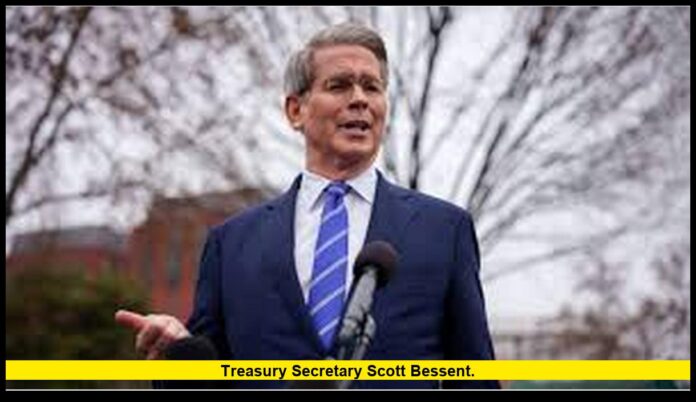
Treasury Secretary Scott Bessent began making headlines today by announcing that the U.S. Treasury Department will take a more measured approach to its debt-issuance strategy, while also rolling out plans to increase take-home pay for many Americans. Bessent emphasized both stability in the Treasury markets and direct benefits for workers as central pillars of his current agenda.
In a speech at a Treasury markets conference in New York, Bessent stated that coupon debt auctions will be “regular and predictable”, but that future changes will be made gradually to avoid market disruption. He noted that strong demand from money-market funds, stable-coin issuers and bank portfolios gives the Treasury flexibility in its near-term plans. He reiterated that no immediate large-scale changes to issuance volumes are anticipated in the coming quarters.
At the same event, Bessent tied the debt-issuance strategy to his worker-income agenda. He confirmed that beginning January 1, 2026, many Americans will reset their tax-withholding levels, which he said will result in substantial real-income gains for working households. He encouraged workers to review and update their withholding forms now so that the benefit is fully realized when the change takes effect.
Table of Contents
What’s driving the shift in issuance strategy?
- Bessent said the current auction sizes already provide adequate financing capacity thanks to both healthy demand and a modest decline in the federal deficit.
- He observed that the Treasury market remains a crucial benchmark for global finance, and therefore stability of issuance protocols is a priority.
- By signalling that changes will be incremental, the Treasury seeks to avoid surprises in the bond market and prevent abrupt shifts in yields.
- The increased presence of non-traditional buyers (e.g., banks, stable-coin issuers) gives the Department room to adjust issuance over time rather than being forced into abrupt expansions.
This more cautious posture contrasts with previous periods of rapid issuer growth and signals a maturation of the strategy under Bessent’s leadership.
How will workers benefit from the withholding changes?
Bessent clarified that the withholding reset isn’t a direct raise in wages—but rather an adjustment intended to increase take-home pay by reducing over-withholding. Highlights include:
- Workers who have been withholding at older levels may find their net paychecks increase.
- The change takes effect only at the start of 2026 but payroll systems and employers are preparing now.
- It’s positioned as part of the Treasury’s broader commitment to improving “real incomes” without relying solely on wage inflation or new tax legislation.
For households, this means a potential boost to disposable income—especially for those who previously over-withheld.
Why these dual moves matter
These two initiatives—debt-issuance protocol and worker take-home pay—may at first appear unrelated, but they reflect a coordinated policy approach:
- By maintaining orderly issuance, the Treasury strengthens market confidence and keeps borrowing costs in check, which supports broader economic stability.
- Improved take-home pay helps bolster consumer spending and may ease wage pressures.
- Together, they signal that Bessent is focused both on high-finance issues (markets, debt) and everyday earning power for Americans.
- The combination also supports the Administration’s narrative of growth without instability.
In short, Bessent’s message is: “We will manage our debt responsibly—and we also intend to help Americans earn more of their paycheck.”
Potential challenges ahead
While the strategy is clear, there are risks and unknowns:
- If economic or geopolitical shocks occur, the Treasury may still have to adjust issuance more aggressively—this would test the “gradual change” commitment.
- The withholding changes depend on employer systems and taxpayer behavior—some workers may not update in time, reducing the intended benefit or causing confusion.
- Consumer spending could pick up if take-home pay rises, which may introduce inflation pressures—something the Treasury must monitor carefully.
- Markets may interpret the withholding boost as a stimulus impulse; if not calibrated, it could provoke bond-market or inflation anxieties.
Thus, execution and messaging will be critical to making these initiatives successful and sustainable.
What to watch next
Here are key developments to follow:
- Treasury’s next debt-issuance calendar: will future auctions mirror the current size, or just how gradually will increases occur?
- Data on workforce withholding: payroll system updates, employer guidance, and actual impact on net paychecks as the change nears.
- Consumer spending and inflation indicators: if take-home pay rises materially, how will consumers respond—and will that trigger inflation concerns?
- Treasury commentary and market reactions: whether the bond market remains calm, or whether any ripple effects emerge due to the shifts.
Bottom line
Treasury Secretary Scott Bessent is signalling a shift in tone for U.S. fiscal policy under his leadership. By prioritising orderly debt issuance and boosting take-home pay, he is aiming to strike a balance between macro-financial stability and everyday economic benefit. His strategy appears to hinge on maintaining investor confidence while delivering tangible gains for households.
If executed cleanly, this could enhance both economic growth and market stability. If not, it may invite scrutiny from investors, taxpayers and economists alike.
We will continue to monitor the moves under Bessent and how they play out across markets and the economy. Please share your thoughts or questions below — I’d love to hear what you’re watching.
DISCLAIMER: This blog is for informational purposes only and does not provide financial, tax or legal advice. Please consult a qualified professional before making decisions based on this content.
FAQs
Q1: What exactly will change with my withholding?
Starting January 1, 2026, payroll withholding levels will be updated so many workers will see higher take-home pay by reducing over-withholding. It’s not a raise, but a shift in how taxes are withheld.
Q2: Does this mean the Treasury is borrowing less?
Not necessarily. The Treasury is keeping current auction sizes for now. It is signalling that any increase in issuance will be gradual and tied to market demand and debt conditions.
Q3: How does the debt issuance change affect me as an investor or taxpayer?
If the Treasury issues debt more predictably and steadily, it helps maintain market stability and lower borrowing costs. That can indirectly help interest rates, government finances and potentially taxpayer burden over time.
DISCLAIMER:
The information provided in this article is for general informational purposes only. It should not be interpreted as financial, legal, tax, or investment advice. All readers are encouraged to verify details independently and consult qualified professionals before making any decisions based on the content shared here.

