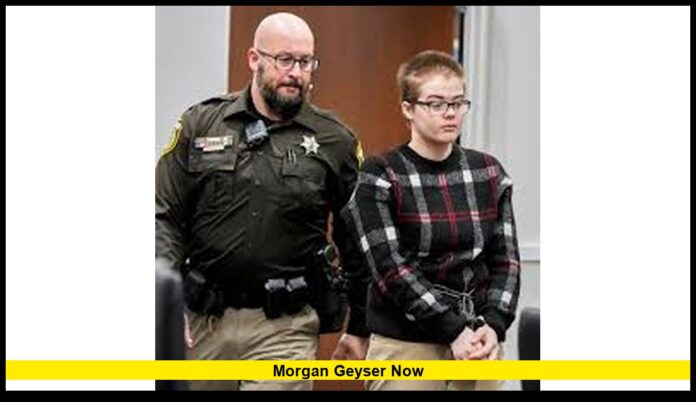
Morgan Geyser now remains under close supervision at a Wisconsin state mental health facility, more than a decade after the crime that shocked the nation. Her case — known widely as the “Slender Man stabbing” — continues to raise questions about mental illness, juvenile justice, and rehabilitation.
As of late 2025, new details have emerged about Geyser’s current condition, treatment progress, and legal status.
Table of Contents
The Case That Stunned America
In May 2014, then-12-year-old Morgan Geyser and her classmate Anissa Weier lured their friend Payton Leutner into a wooded area in Waukesha, Wisconsin. What began as a sleepover turned horrific when Geyser stabbed Leutner 19 times, while Weier encouraged the act.
The motive, investigators later learned, was an obsession with the online horror figure “Slender Man.” Both girls believed the fictional creature demanded the attack as proof of loyalty.
Leutner survived the assault and managed to crawl to safety, leading to the arrest of Geyser and Weier within hours. The case made national headlines for its chilling motive and the young age of those involved.
Legal Outcome and Mental Health Commitment
Geyser was diagnosed with early-onset schizophrenia and found not guilty by reason of mental disease or defect. In 2018, a Wisconsin judge ordered her committed to Winnebago Mental Health Institute for up to 40 years — the maximum allowed by law for her offense.
The sentence was not a traditional prison term but a long-term psychiatric commitment aimed at treatment and public safety.
Under Wisconsin law, individuals in her situation can petition the court for conditional release once they show sustained mental stability. Each petition requires approval from both medical experts and a circuit court judge.
Life Inside the Mental Health Facility
At the Winnebago Mental Health Institute in Oshkosh, Geyser receives ongoing psychiatric care, medication, and therapy. The facility is a secure hospital designed for individuals with severe mental illness who are involved in the criminal justice system.
Her Treatment Includes:
- Medication to control schizophrenia symptoms and prevent relapse.
- Individual and group therapy focusing on awareness, empathy, and coping skills.
- Behavioral evaluations that monitor progress and mental health stability.
Doctors review Geyser’s condition every six months and send reports to the court outlining her progress and treatment recommendations.
Staff members have described her as cooperative and responsive to therapy. However, her recovery is viewed as a long-term process that requires continuous structure and monitoring.
Her Current Legal Status
As of November 2025, Morgan Geyser remains committed to the Winnebago Mental Health Institute under state supervision.
Her most recent court activity occurred in September 2024, when she briefly sought conditional release. During the petition process, her treatment team raised concerns about whether she was ready for life outside the institution. Shortly after, Geyser withdrew her request, saying she needed more time to prepare for reentry into society.
Since then, no new petitions for release have been filed. She continues to receive treatment at the facility, with her next formal court review expected in early 2026.
Comparison With Anissa Weier’s Situation
Geyser’s co-defendant, Anissa Weier, was conditionally released in 2021 after serving nearly four years in a psychiatric facility.
Weier’s release came after multiple evaluations confirmed that she no longer posed a danger to herself or others. Today, she lives under strict supervision, including GPS monitoring, counseling sessions, and regular court check-ins.
Geyser’s case differs because her diagnosis — schizophrenia — is considered more severe and chronic, requiring a longer treatment period before any release can be safely approved.
While Weier is working toward full reintegration, Geyser remains in institutional care to ensure long-term stability and continued progress.
Her Progress and Treatment Outlook
Reports from recent evaluations show that Geyser is doing well with her medication and has become more self-aware about her illness. Medical experts say she demonstrates insight into her past actions and continues to engage in therapy programs.
Still, doctors stress that long-term management of schizophrenia can be unpredictable. Stability must be consistent over time before supervised release becomes an option.
Professionals working with Geyser have outlined several milestones that must be met before she can reenter society:
- Sustained remission from psychotic symptoms.
- Proven ability to manage medication independently.
- Demonstrated understanding of her mental illness and past behavior.
- Commitment to ongoing therapy outside of institutional care.
So far, Geyser appears to be on a positive path but remains in the early stages of meeting those requirements.
Public Reaction and Ongoing Interest
Public opinion about Geyser’s future remains deeply divided. Some believe she deserves the chance to rebuild her life, given her age at the time of the crime and her mental health condition. Others feel her release — even under supervision — would be unsafe and premature.
The case continues to be discussed widely online and in documentaries, podcasts, and legal forums. Many use it as an example of how complex the intersection of mental illness and criminal justice can be, especially when it involves juveniles.
Despite ongoing attention, victim Payton Leutner has chosen to live privately, focusing on recovery and maintaining peace. In past interviews, she expressed a desire for closure rather than publicity, asking that people remember her survival instead of the tragedy.
Impact on Law and Mental Health Awareness
The case has influenced both legal and medical discussions in Wisconsin and beyond. It highlighted the need for stronger systems to address juvenile mental illness, early intervention, and the responsibilities of online culture.
Mental health professionals point to the case as a reminder of how untreated psychosis in children can lead to catastrophic consequences. It also emphasized the importance of parental guidance and digital literacy in a world where children increasingly engage with online myths and communities.
The Wisconsin legal system has since improved cooperation between courts and mental health experts to ensure fair treatment while prioritizing public safety.
What Comes Next for Morgan Geyser
Looking ahead, Geyser’s situation will remain under the control of the Waukesha County Circuit Court. She can petition for conditional release every six months if supported by her treatment team.
Her next review is expected in early 2026, where the court will assess her medical records, progress, and recommendations from psychiatric staff.
If she eventually seeks release, the process would involve:
- A full court hearing with testimony from medical professionals.
- Risk assessments to determine her readiness for supervised freedom.
- A conditional plan outlining where she would live, how she would be monitored, and what treatment she would continue to receive.
Until that time, she will remain at the Winnebago Mental Health Institute, receiving structured therapy and psychiatric care.
More than a decade later, Morgan Geyser’s story continues to raise powerful questions about justice, accountability, and healing. What are your thoughts on her current situation and treatment progress? Share your views and join the conversation below.

