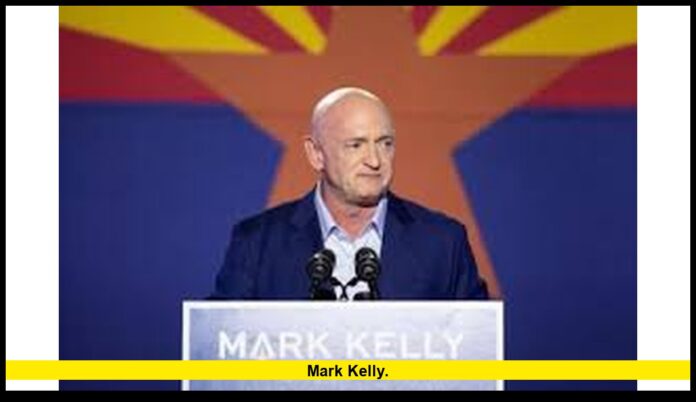
Sen. Mark Kelly is under Pentagon review after appearing in a widely circulated video that urged U.S. service members to refuse unlawful commands. Mark Kelly entered the spotlight when the message, recorded with several other lawmakers who previously served in uniform or intelligence roles, triggered significant concern within the Department of Defense about potential impacts on military discipline and readiness.
The video emphasized a long-standing principle in military law: no service member is obligated to follow an illegal order. While the concept itself is established and taught throughout the armed forces, the setting, timing, and political context of Kelly’s message prompted immediate debate and an unusually swift inquiry from defense officials. As this review unfolds, the situation has become one of the most closely watched civil-military stories of the year.
Table of Contents
Pentagon Launches a Rare Inquiry
The Pentagon confirmed that officials are evaluating whether the video may have crossed lines governing the conduct of retired military members. Although Kelly is now a U.S. senator, he remains a retired Navy captain and, like all military retirees, can be recalled to active duty under specific circumstances.
This potential recall authority exists to address misconduct that may fall under the Uniform Code of Military Justice (UCMJ). It is rarely invoked and even less commonly considered for someone serving in Congress. Yet the gravity of public messaging directed at active-duty forces—especially messaging that touches on obedience to command—prompted defense leaders to take a closer look.
The review is expected to involve legal assessments, interviews, and examination of the video’s distribution and intent. Pentagon officials have not indicated a timeline, but internal processes of this nature typically extend over several weeks.
What Triggered the Concern
Military officials reacted to three core elements in the video:
- Audience: The message targeted service members and intelligence personnel directly.
- Content: It reminded them they may refuse illegal orders, a true but sensitive topic when delivered by political figures.
- Context: The video came amid heightened national tensions, making the military’s apolitical stance a top concern.
Defense leaders seek to determine whether the message risked undermining the chain of command. Maintaining clear, stable authority structures is considered essential for military readiness, so any communication that might create doubt—even unintentionally—is treated seriously.
Where Kelly Stands
Kelly, a former Navy combat pilot and retired astronaut, has long been viewed as both a respected veteran and a prominent political figure. In the video, he framed his remarks as a reminder of the oath service members take to defend the Constitution. He and the other lawmakers described their message as protective, not disruptive, emphasizing that ethical obligations supersede any order that violates U.S. law.
Kelly has not walked back his comments. His office maintains that the video reflects standard military training and does not conflict with established legal principles. Supporters argue that reiterating constitutional responsibilities should never be seen as improper.
Political and Public Reactions Grow
The video’s release drew immediate attention across the political spectrum. Some lawmakers applauded the message as a necessary reaffirmation of legal and ethical standards. Others criticized it as a form of political pressure directed at the military.
Public reactions have ranged from strong approval to deep concern.
Key themes emerging from the debate include:
- Civil-military boundaries: How far can elected officials go when addressing active-duty troops?
- Retiree obligations: What limits apply to retired officers who hold political office?
- Free speech vs. discipline: Where is the line between personal expression and conduct that affects military order?
Veterans groups and legal scholars have weighed in as well, noting that while the content of the video is legally accurate, messaging to the force during politically tense periods can have unintended consequences.
Legal Background: A Closer Look
To understand why the Pentagon is examining Kelly’s participation, it helps to break down a few key legal points:
The UCMJ Still Applies to Retirees
Military retirees draw pay and remain subject to certain UCMJ provisions. This means that if a retiree’s conduct is viewed as potentially harmful to the service, they can be recalled for investigation or disciplinary action.
Illegal Orders Are Clearly Defined
Orders that violate the Constitution, military law, or rules of engagement are illegal. Service members are trained to question such orders and refuse them when necessary.
Political Influence Over the Military Is Restricted
Federal laws and long-standing norms discourage political actors from influencing military loyalty or command relationships. Even well-intentioned actions can create legal gray areas.
Because the message in the video touches on several of these points at once, Pentagon officials believe a review is necessary to confirm whether any boundary was crossed.
Potential Outcomes of the Review
While the Pentagon has not suggested an outcome, several possibilities exist:
- No action taken if the review finds the video did not violate any rules.
- An administrative recommendation, such as updated guidance for retired members serving in political roles.
- A formal warning to clarify norms and prevent similar issues.
- A recall to active duty, which would be extremely rare and would require high-level approval.
Most experts believe the more severe options are unlikely, but the fact that they are legally available is what makes the review so notable.
Why This Matters Nationally
The military is one of the most trusted institutions in the United States, and maintaining its nonpartisan posture is essential. Any situation that raises questions about political communication with the armed forces quickly becomes significant.
The ongoing review involving Kelly reflects a broader national focus on:
- Protecting the apolitical nature of the military
- Preserving trust between civilian leaders and military personnel
- Ensuring legal boundaries remain clear for retired officers in public office
This episode highlights how overlapping roles—military veteran, political leader, public communicator—can create complex situations that require careful oversight.
Looking Ahead
Pentagon officials will continue gathering details as they determine whether Kelly’s comments fall within acceptable norms. There is no timeline for a conclusion, but updates are expected once internal assessments advance.
As this high-profile review progresses, policymakers, service members, and citizens across the U.S. are watching closely. The outcome will likely shape conversations about civil-military relations, retiree obligations, and the role of public messaging during politically sensitive moments.
Share your thoughts below and let us know how you see this moment shaping the relationship between civilian leaders and the military.

