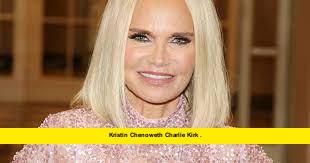
Kristin Chenoweth Charlie Kirk discussions have continued to draw attention as the Broadway star reflects on the reaction to her public message following Kirk’s death. Her comments, the backlash that followed, and her response afterward remain part of an ongoing cultural conversation that blends grief, politics, public identity, and community expectations.
Table of Contents
A Moment That Sparked a National Conversation
The situation began when Charlie Kirk, a well-known conservative political figure, died in September 2025 after an attack during a campus event. In the hours that followed, Kristin Chenoweth posted an emotional message expressing shock, sadness, and sympathy for his family. She wrote that she was upset, recognized his impact on many people, and believed he was now “in heaven.”
The post gained rapid attention. Within hours, long-time fans, LGBTQ+ supporters, and others online reacted strongly. Many expressed disappointment that Chenoweth, who has spent much of her career supporting LGBTQ+ rights, had spoken warmly about a figure whose political positions conflicted sharply with those values.
The intensity of the reaction placed Chenoweth at the center of a cultural flashpoint. What she intended as a moment of personal compassion became one of the most publicly discussed celebrity reactions of the year.
Chenoweth Addresses The Backlash
Months later, Chenoweth spoke openly about how deeply the reaction affected her. She described the experience as emotionally overwhelming and said the backlash “nearly broke” her. She emphasized that the original message came from a genuine emotional place and was not a sign of support for political positions she disagrees with.
She clarified several key points about her perspective:
- She had a human, instinctive reaction to the news of a death.
- She did not intend to signal agreement with Kirk’s political views.
- She recognizes that the message hurt members of communities she cares deeply about.
- She still identifies strongly as both a Christian and a supporter of LGBTQ+ rights.
- She considers the matter personally resolved and does not plan to revisit it in future interviews.
Her statements did not attempt to rewrite or defend her original post. Instead, they focused on acknowledging the emotional complexity of the moment and the impact it had on others.
Why the Reaction Was So Intense
Kristin Chenoweth has long been known for combining faith, compassion, and outspoken support for LGBTQ+ people. Many fans see her as a rare figure who bridges religious identity and progressive advocacy.
That dynamic made her reaction to Kirk’s death uniquely charged. Kirk had built a national platform criticizing LGBTQ+ policies, transgender rights, and other issues central to communities Chenoweth publicly supports. For many fans, her warm tone toward him felt painful or confusing.
The reaction reflected broader cultural tensions in the United States:
- The difficulty of expressing empathy toward a politically controversial figure
- The pressure on public figures to align every statement with community expectations
- A growing divide between personal grief and political identity
In Chenoweth’s case, her message revealed how quickly a public expression of sympathy can be interpreted through political lenses, even when the intention is purely human.
The Ongoing Impact on Chenoweth’s Public Image
Chenoweth remains widely admired for her Broadway career, her television work, and her warmth as a public figure. Yet the “Kristin Chenoweth Charlie Kirk” moment has become a distinct part of her public narrative.
Short-Term Impact:
- Strong emotional backlash from some fans
- National media attention on her initial post
- Renewed discussion of celebrities’ responsibilities when addressing political figures
Long-Term Effects:
- Her choice to acknowledge the hurt and then step back from the discussion may strengthen her reputation for sincerity and vulnerability.
- Her commitment to both her faith and LGBTQ+ advocacy demonstrates consistency, even in the face of criticism.
- Her boundary-setting — stating she will no longer answer questions about the topic — may help her regain control of the narrative.
Overall, the event has not overshadowed her professional work, but it has shaped public conversation about the intersections of identity, grief, and political controversies.
Why This Story Still Matters
The merging of Kristin Chenoweth and Charlie Kirk’s names symbolizes much more than a single social-media post. It represents a broader cultural question:
Can a public figure express human empathy for someone whose political positions they strongly oppose?
The incident highlights how audiences interpret celebrity statements today. It also raises questions about forgiveness, public expectations, and how digital reactions shape reputations.
The story remains relevant because it touches on:
- The speed of social-media judgment
- The pressure on celebrities to maintain perfect ideological alignment
- The tension between individual compassion and political identity
- The difficulty of navigating public grief in a polarized era
For many observers, Chenoweth’s experience is a reminder that celebrities are people first, with emotional reactions that do not always fit neatly into public expectations.
Where Things Stand Now
As of today, Kristin Chenoweth has moved forward. She has stated clearly that she will not continue discussing the situation, considering it personally resolved. She remains active in her career, including major Broadway engagements, and continues to express her long-held values publicly.
The discussion around the “Kristin Chenoweth Charlie Kirk” moment continues not because Chenoweth reopens it, but because it touches on issues that resonate nationally. The story sits at the intersection of politics, empathy, community loyalty, and the modern scrutiny of celebrity speech.
How audiences interpret the event now often reflects their own experiences and expectations rather than anything Chenoweth has said recently. Yet it remains one of the most talked-about celebrity-culture moments of the year due to its emotional and political complexity.
Final Thoughts
Kristin Chenoweth’s reaction to Charlie Kirk’s death became a national conversation not because of political alignment, but because it revealed the challenge of showing compassion during polarizing times. Her later reflection underscores how human emotion, public identity, and community expectations can collide in unpredictable ways.
If this story resonates with you, feel free to share your thoughts or continue following the conversation as it evolves.

