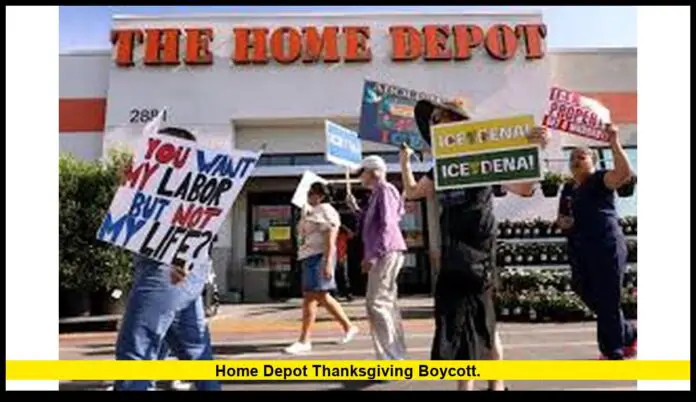
The nationwide conversation around home depot thanksgiving boycott has intensified heading into the 2025 holiday season, as activist groups across the United States have urged shoppers to avoid the retailer during the Thanksgiving-to-Cyber Monday shopping window. The coordinated campaign, promoted under the name “We Ain’t Buying It,” calls for a multi-day boycott of several major retailers, with Home Depot listed among the primary targets. The organizers argue that large chains hold significant cultural and economic influence, and they aim to use the peak shopping weekend to pressure corporations on political and social issues that have drawn national attention.
This article provides a detailed, fully factual, and expanded overview of the boycott: why it is happening, who is involved, what supporters are asking shoppers to do, how Home Depot has responded, and how the movement may influence this year’s holiday shopping season.
Table of Contents
What the Home Depot Thanksgiving Boycott Is Calling For
The “We Ain’t Buying It” campaign rolled out a structured five-day plan asking consumers to avoid spending at Home Depot beginning on Thanksgiving Day and continuing through Black Friday, Small Business Saturday, Sunday shopping hours, and Cyber Monday. Organizers encourage supporters to spend money only at local or community-focused businesses during that period.
The campaign’s messaging emphasizes several key actions:
- No spending at Home Depot during the entire Thanksgiving holiday weekend
- Focusing purchases on small, local, and minority-owned businesses on Small Business Saturday
- Limiting online consumer activity during Cyber Monday to reduce revenue for major retailers
- Posting on social media to raise awareness and share boycott participation updates
The structure is designed to reduce both in-store foot traffic and online sales for targeted companies during the busiest retail days of the year.
Why Home Depot Is Among the Targets
Supporters of the boycott have publicly stated that they chose Home Depot, along with other national chains, because of concerns related to immigration policies, corporate responsibility, worker treatment, and diversity-related decisions. Activist networks have cited these issues as contributing factors to their call for coordinated consumer pressure.
The goal is not for shoppers to avoid holiday spending altogether but rather to redirect spending power toward smaller community businesses while simultaneously sending a message to corporations they view as influential in shaping public policy and workplace culture.
How Home Depot Responded
Home Depot has addressed the public discussion by stating that it operates independently of immigration enforcement, that it complies with all legal requirements across its stores, and that it is not involved in political initiatives related to the concerns raised by activists. The company’s public posture highlights its desire to maintain normal operations during the holiday shopping season.
While Home Depot has not issued extensive new statements beyond reiterating its compliance with workplace laws, it has emphasized that it provides public information about its community initiatives, hiring practices, and support programs for workers.
Who Is Organizing the Boycott
The “We Ain’t Buying It” coalition includes community organizers, civic-engagement groups, and regional activists who have collaborated on past consumer boycotts and awareness campaigns. The coalition built its strategy around the high visibility and economic importance of Thanksgiving weekend, noting that even small disruptions during the holiday shopping period can attract national media attention and generate conversation about consumer-driven activism.
The campaign’s structure mirrors calls for economic activism seen in recent years, where groups target major sales events to maximize visibility.
Expected Impact on Holiday Shopping Trends
It is difficult to predict exact economic outcomes for a nationwide boycott, but several factors will influence its visibility:
- Public participation in local protests staged at selected Home Depot stores
- Social-media reach of campaign hashtags and posts
- Local business involvement, with some independent retailers promoting the boycott as a way to support neighborhood commerce
- Regional turnout, which may vary widely depending on community engagement
Historically, boycotts during major shopping weekends often make headlines but may not dramatically impact total sales for large retail chains. However, they can influence public sentiment, prompt discussions around corporate policy, and temporarily shift spending patterns toward small businesses.
How Shoppers Are Responding
Across online platforms, shoppers have expressed a wide range of reactions, from enthusiastic support to strong opposition. Some consumers say they plan to participate as a form of civic expression, while others argue that holiday shopping should remain separate from political and social movements.
Many shoppers express interest in supporting smaller businesses regardless of political alignment, making Small Business Saturday a natural focal point for both participants and those simply looking to diversify their spending.
Local Protests and Community Activism
Activist groups in several cities have organized events outside selected stores to draw attention to the boycott. These peaceful demonstrations combine community engagement with economic activism, aiming to spark conversation among passersby and encourage shoppers to reflect on where they spend their holiday dollars.
Participants often hand out flyers, hold signs, and direct consumers toward nearby local hardware stores or home-improvement retailers offering special weekend discounts.
What Home Depot Might Do Next
Large retailers often monitor consumer-sentiment trends closely during holiday periods, and Home Depot is likely assessing the boycott’s visibility and potential influence. Corporate responses can include:
- Additional public statements clarifying policies
- Increased emphasis on community giving or local partnerships
- Highlighting employee-support initiatives
- Adjusting marketing messages to reinforce trust among consumers
These responses do not necessarily indicate policy change but instead reflect how companies manage public perception during peak retail seasons.
A Look at How Boycotts Influence Consumer Behavior
Whether or not this boycott significantly affects Home Depot’s sales this weekend, the campaign highlights the growing role of consumer-driven activism in American retail culture. Boycotts give customers a way to publicly express values, and when they happen during major retail events, they draw widespread attention.
Trends that may arise this year include:
- Increased spending at independent hardware stores
- Local promotions designed to attract customers away from major chains
- Higher engagement across social platforms discussing corporate responsibility
- Greater public awareness of how holiday shopping choices can be used for activism
While sales figures will ultimately determine the measurable financial impact, social visibility often becomes the defining feature of politically motivated boycotts.
What Shoppers Can Do if They Want to Participate
Individuals who want to take part in the Home Depot Thanksgiving boycott can take several practical steps:
- Shop earlier in November to avoid needing last-minute hardware items
- Support small, local home-improvement stores, especially those owned by minority or immigrant families
- Avoid browsing or purchasing online from targeted chains during the boycott period
- Share information only if comfortable, using social platforms to amplify the message
- Encourage community spending, particularly on Small Business Saturday
These steps align with the organizers’ push to make Thanksgiving weekend a more intentional, community-focused shopping experience.
The Broader Significance of This Boycott
The movement reflects shifting cultural attitudes toward corporate accountability and consumer influence. As younger generations increasingly use spending decisions to express values, campaigns like this become more common—not necessarily because they dramatically alter corporate revenues overnight, but because they shape public conversation.
The Home Depot Thanksgiving boycott demonstrates how coordinated action during a peak shopping weekend can generate national attention and push issues of workplace policy, immigration, and corporate responsibility into broader discussions.
Whether you plan to join the boycott or continue your usual holiday shopping routine, feel free to share your thoughts in the comments and stay connected as this story develops.

