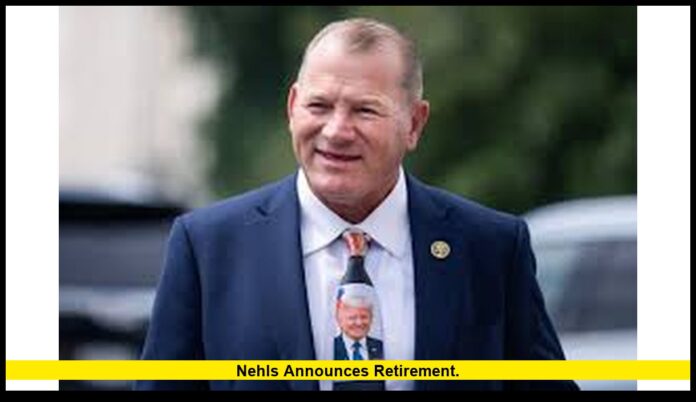
On November 29, 2025, U.S. Representative Troy Nehls shocked many when he publicly declared that he will not seek reelection — a move that adds a high-profile name to the growing list of departures from Congress. The announcement triggered immediate speculation about the future of his district and the broader political implications.
Table of Contents
Why Nehls made the decision
Troy Nehls said he reached his decision after a Thanksgiving conversation with his wife and daughters. He explained that, after over 30 years in law enforcement and military service, followed by six years representing Texas’ 22nd Congressional District, he wants to step away to spend more time with his family and “return home after this Congress.”
He emphasized that he informed Donald Trump personally before going public — a reflection of his long-standing alignment with the former president.
With the official deadline for candidates to enter the 2026 primary race fast approaching, Nehls’ exit leaves a narrow window for successors to declare.
What Nehls accomplished and what defined his tenure
Before Congress, Troy Nehls served in the U.S. Army Reserve and had a long career in law enforcement — as police officer, constable, and sheriff of Fort Bend County.
Since winning his first term in 2020, he has:
- Represented a district that covers parts of Houston’s southwestern suburbs, including Sugar Land, Pearland, and surrounding communities.
- Sat on influential panels such as the House Judiciary Committee and the Transportation & Infrastructure Committee.
- Adopted strong conservative stances, particularly on immigration and support for Trump-aligned policies.
But his career wasn’t free of controversy. He previously faced accusations related to “stolen valor” over disputed military service claims, which prompted him to stop wearing a service pin he once displayed.
Despite the ups and downs, Nehls has described his public service as the honor of his life, thanking constituents for their trust and pointing to the combination of his military, law enforcement, and congressional work as a commitment to his community.
Who may succeed him — and what’s at stake
Immediately after the retirement announcement, Nehls endorsed his identical twin brother, Trever Nehls, to run for the 22nd District seat. On social media, Trever declared his candidacy and pledged to continue his brother’s conservative agenda — including strong support for Trump and traditional border-security policies.
If Trever enters the race, it could effectively allow voters to choose a successor aligned with most of what Troy stood for — potentially keeping the district under similar representation.
That said, with the upcoming primaries and the fast-approaching December 8 candidate-filing deadline, a range of other candidates may file. This could create both intra-party competition and public scrutiny, especially if new entrants challenge the “twin-successor” idea.
Given how reliably Republican the 22nd District has been, many analysts think the seat will stay under GOP control — but with Nehls gone, the district may see a subtle shift in tone depending on who follows.
Bigger picture: What this means for Congress and the GOP
Troy Nehls’ retirement is part of a broader wave of departures across both parties. As of late November 2025, dozens of lawmakers have already announced they won’t run again.
For the GOP, departures like Nehls’ could reshape leadership dynamics as the party heads into the 2026 midterms. Losing a firmly aligned Trump supporter and veteran lawmaker may impact how certain bills — especially on immigration and national security — perform in committees and floor votes.
At the same time, fresh faces may bring new energy or different priorities. That could lead to shifts in legislative style even if the overall partisan balance remains.
For constituents in Texas’ 22nd District, the retirement means change — and a choice: whether to stay on the same path or pivot toward a new direction.
What voters in District 22 should watch
With the seat now open, local voters and political watchers should keep an eye on:
- Candidate filings by December 8, 2025 — That will show who’s stepping up for the GOP primary.
- Campaign messaging and platforms — Will challengers echo Nehls’ positions on immigration and Trump-era policies, or will they try to differentiate themselves?
- Fundraising and endorsements — Early financial support and backing from party leaders can shape who becomes the frontrunner.
- Voter sentiment — Even in safe districts, retirement of a long-time representative can shift community expectations, especially on key issues.
These signals will offer clues about whether the district’s political leanings remain stable — or begin to evolve.
What this may mean nationally
The exit of a vocal, experienced conservative lawmaker like Troy Nehls has national ripple effects:
- It reduces the number of staunch “Trump-loyal” voices in Congress.
- It opens space for internal debates within the GOP about priorities and representative types.
- It increases unpredictability for tight votes in committees where Nehls once had influence.
In the context of a potentially volatile 2026 election cycle, such retirements could shape the overall tone and power dynamics in Washington.
Final thoughts
Nehls announces retirement marks the end of a significant chapter for Texas’ 22nd District and for a lawmaker with a long career in service. Whether his successor will follow in his footsteps — or chart a different path — remains to be seen.
For constituents, party insiders and political watchers alike, now begins a race full of questions, strategy, and possibility. It’s shaping up to be one of the most watched vacancies in Texas this election cycle.
Feel free to leave your thoughts or track the upcoming candidate filings as the situation evolves.
FAQ
Q: Why is Troy Nehls retiring now?
A: He said he wants to return home and focus on family, after decades in law enforcement, military service, and six years in Congress.
Q: Who is expected to run for his seat?
A: His identical twin, Trever Nehls, has already declared his intention to run. Other candidates may still enter before the December 8 candidate-filing deadline.
Q: Will this retirement shift the balance of power in Congress?
A: Probably not dramatically — the district is strongly Republican. But losing a committed conservative lawmaker could impact internal dynamics, committee votes, and the tone of future legislation.
Disclaimer:
The information in this article reflects updates available at the time of writing. Political decisions, candidate filings, and legislative developments may change as new announcements emerge. This content is provided for general informational purposes only and should not be considered legal, financial, or political advice. Readers should verify important details through official sources and consult qualified professionals for guidance related to their individual situations.

