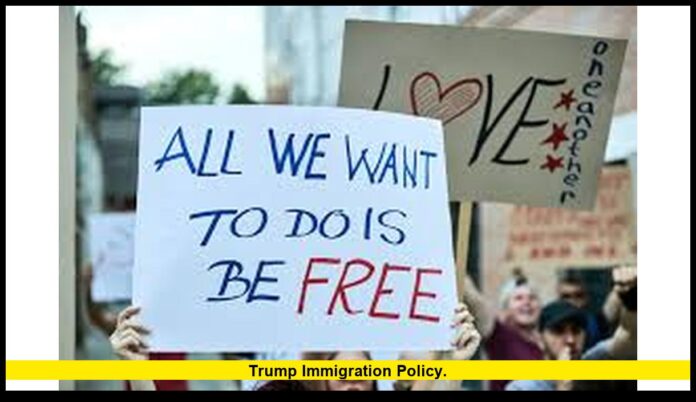
trump immigration policy is once again at the center of headlines — after sweeping new measures this week that pause Afghan immigration, suspend asylum decisions, and expand large-scale enforcement operations targeting undocumented immigrants nationwide. These developments mark one of the most aggressive shifts in U.S. immigration law enforcement in recent memory.
Within days of a violent attack on National Guard members in Washington, D.C., the administration ordered a broad review of legal immigration pathways and launched a nationwide crackdown on undocumented immigrants in urban centers. The aim, administration officials say, is to strengthen national security and reduce illegal immigration. For many immigrants, advocacy groups, and communities across the country, the new rules are causing urgent concern and widespread uncertainty.
Table of Contents
Recent Actions Under the New Immigration Strategy
• Pause on Afghan Visas and Asylum Decisions
Following the Washington, D.C. shooting involving an Afghan national, the administration announced a full halt to visa processing for Afghan passport holders — including those applying under the U.S. Special Immigrant Visa (SIV) program. All pending or upcoming Afghan immigrant and non-immigrant visa applications must now be denied or canceled. At the same time, the U.S. Citizenship and Immigration Services (USCIS) suspended all asylum decisions nationwide. The stated goal is to re-evaluate vetting procedures and ensure stricter security screening.
• “Migration Freeze” from Poorer Countries
The administration also declared a “permanent pause” on migration from what it termed “Third World Countries.” While the phrasing stirred controversy, the practical result is a moratorium on many new immigration and refugee admissions — effectively suspending many legal entry routes for nationals from dozens of countries. The freeze applies both to new asylum seekers and to immigrants seeking legal admission or refugee status.
• Nationwide Deportation and Enforcement Campaigns
In parallel to visa suspensions, federal agencies have ramped up enforcement. A new operation — focusing on major urban areas, including traditionally sanctuary-friendly cities — aims to deport undocumented immigrants, including long-term residents, regardless of criminal history. Law enforcement agencies have increased patrols and arrests, often using aggressive tactics. Reports indicate use of helicopters, pre-dawn raids, and mass detentions across several states.
• Legal Immigration and Benefit Restrictions
Under the new policy framework, many existing immigration pathways and benefit programs for immigrants have been curtailed. This includes tighter restrictions on work permits, family-based visas, refugee admissions, and temporary protected status (TPS) programs. The administration also intends to limit federal benefits for noncitizens, citing national security and budget concerns.
Why the Administration Says These Moves Are Necessary
Officials in the current administration argue that the policy overhaul is driven by urgent security and societal concerns. Their stated reasons include:
- National security risks — The recent shooting provided the catalyst for sweeping changes; officials argue lax vetting allowed potential threats inside the country.
- Border and migration control — They assert that prior administrations approved mass immigration indiscriminately. The new policy aims to reverse what the administration calls “unchecked admissions” and reassert control at entry points.
- Economic burdens and public benefits — With rising costs for social services and housing, the administration claims restricting immigration and benefits for immigrants helps alleviate pressure on taxpayers.
- Enforcement and deterrence — By increasing deportations and restricting visas, the government aims to deter future unauthorized migration and discourage fraudulent asylum claims or overstays.
Supporters view these measures as decisive and necessary to restore order and safeguard national sovereignty.
Immediate Impacts on Immigrants and Communities
For many immigrants — documented or undocumented — and their families, the impacts are swift and severe:
- Visa applicants from Afghanistan and other targeted countries found their hopes dashed overnight. Already scheduled appointments were canceled; new visa processing is frozen.
- Asylum seekers awaiting decisions — often after months or years in limbo — are now facing indefinite delays, while many see their cases effectively terminated.
- Undocumented immigrants living in major U.S. cities face renewed fear of arrest and deportation. Reports of mass raids, surprise arrests, and sweeping detentions have generated panic in immigrant communities.
- Families with mixed immigration status or those with immigrant children worry about sudden separation, loss of income, and inability to access community supports or legal protections.
- Legal immigrants and refugees who had anticipated a more secure status are now uncertain about long-term residency, benefit eligibility, and pathway to citizenship.
For many communities — especially urban, immigrant-heavy neighborhoods — the crackdown has triggered immediate hardship, loss of trust in institutions, and widespread anxiety.
Policy Shifts Compared to Previous Administration
Under the prior administration, U.S. immigration policy had moved slowly toward more restrictive stances, but maintained certain protections including asylum pathways, refugee resettlement, and ongoing visa processing for many nationalities. The current approach sharply reverses many of those policies:
- Instead of expanding refugee and asylum admissions, the government now halts all new visa and asylum processing for many nationalities.
- Deportation efforts once focused on individuals with criminal records; now enforcement appears broader, possibly targeting undocumented immigrants regardless of criminal status.
- Temporary protective status (TPS) programs — which provided legal stay for nationals from countries with crises — have faced suspension or termination under recent rules.
- Benefit access, work permits, and legal pathways to residency have been tightened or rescinded, creating uncertainty even for immigrants already in the legal system.
The scope and speed of these changes mark a distinct departure from prior U.S. policy toward migration and resettlement.
Social, Economic, and Humanitarian Consequences
Economic Impact on Labor-Dependent Industries
Many sectors — agriculture, construction, hospitality, healthcare — rely heavily on immigrant labor. The rapid deportations and visa suspensions could create labor shortages, slow down production, and raise costs for consumers. Farms in states like California and Florida may struggle to find workers for harvest seasons. Service industries in cities may see fewer workers available for critical roles like caregiving, food service, and maintenance.
Strain on Immigrant Families and Communities
With deportations taking place en masse, entire families may be torn apart. Children with U.S. citizenship may lose access to stable parental care if family members are detained or removed. Communities that once felt safe on the honor system may now avoid public spaces, work, or social services due to fear of enforcement raids.
Legal and Human Rights Concerns
Human rights advocates warn that sweeping detentions and deportations — especially without criminal records — can undermine due process. The halt to asylum processing puts thousands of refugees and asylum seekers at risk of returning to dangerous situations abroad. Immigration attorneys have already reported overwhelming demand and limited capacity to assist detained individuals.
Impact on U.S. Global Image and Innovation
The restrictive policies may deter skilled immigrants, international students, and refugees from choosing the U.S. as a destination. That could jeopardize sectors reliant on global talent, including tech, health care, and academia. The U.S. risks losing its long-standing reputation as a welcoming country for innovators, researchers, and skilled professionals.
Community Trust Erosion and Fear
In immigrant-heavy urban centers, fear and distrust are rising. Many residents — regardless of legal status — fear engaging with law enforcement, hospitals, schools, or even seeking community help. Local economies could suffer as consumer spending drops and neighborhoods become isolated.
Signs of Pushback and Legal Challenges
Several groups, including immigrant rights organizations, civil-liberties advocates, and local governments, have begun responding:
- Legal challenges to mass deportations and raids, citing violations of constitutional protections and due process rights.
- Lawsuits filed by immigrant support groups on behalf of detained individuals who had no criminal record. Critics argue the raids resemble indiscriminate roundups rather than targeted enforcement.
- Public protests and community pushback in cities affected by enforcement operations. Activists demand transparency, accountability, and preservation of asylum protections.
- Calls for Congressional intervention to pass updated immigration legislation that balances national security with humanitarian commitments.
These responses suggest the administration’s new policies may face substantial resistance — and possible legal or political obstacles — even over the near term.
Looking Ahead: What to Watch
- Whether visa suspensions and asylum freezes will remain indefinite or be subject to periodic review.
- The outcome of legal challenges and court rulings on deportations, mass detentions, and asylum bans.
- Economic impact on industries dependent on immigrant labor, especially agriculture, hospitality, and healthcare.
- Effects on international students, refugee applicants, and global talent considering relocation to the U.S.
- Social and humanitarian outcomes — particularly for families separated by deportation or facing uncertain legal status.
These developments could shape not only the immediate future for immigrants but also the long-term demographic, economic, and cultural landscape of the United States.
FAQ
Q: Does the new policy affect all immigrants, or only those from certain regions?
The current measures target immigrants from a broad list of countries — especially those labeled “Third World” or “countries of concern.” Afghan nationals are explicitly affected. However, legal immigration pathways for many nationalities may also be at risk, depending on future expansions of the policy.
Q: Are asylum seekers and refugees still eligible under current rules?
As of now, all asylum decisions are paused. Pending cases will not be processed until further notice — meaning many asylum seekers face indefinite delays or denial, even after undergoing lengthy vetting.
Q: Will documented residents or green-card holders be targeted?
The administration has signaled intention to review green cards issued to immigrants from certain countries. While the focus remains on new applications and visas, some long-term legal residents may face renewed scrutiny depending on their country of origin.
Disclaimer
This article is based on publicly available information and official announcements up to the date of writing. Immigration policies and enforcement actions can change rapidly. The content here is intended for informational purposes only and does not constitute legal advice. Readers should consult qualified immigration experts for personal concerns.

