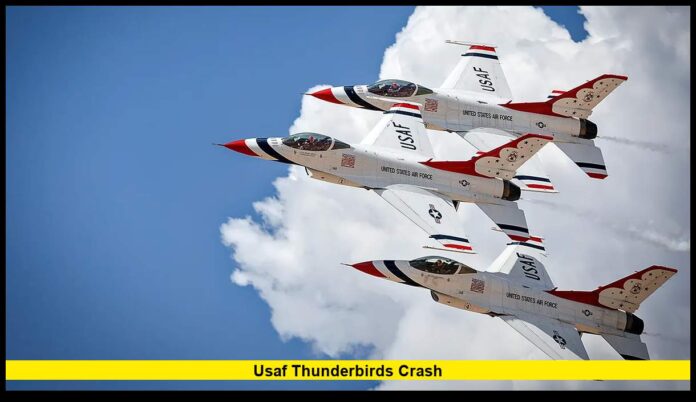
The USAF Thunderbirds crash has captured national attention after a Thunderbird F-16C Fighting Falcon went down on December 3, 2025, during a training mission in Southern California. The pilot ejected safely and is now in stable condition, marking the most significant update in this developing situation.
Table of Contents
What Happened During the Crash
The incident occurred at approximately 10:45 a.m. PST while the Thunderbirds were conducting a routine training flight. The aircraft was flying over controlled military airspace near Trona, a remote region in the Mojave Desert. The F-16C ultimately impacted a dry lake bed several miles south of Trona Airport.
Emergency crews from the surrounding region responded quickly. Firefighters focused on suppressing the blaze that erupted upon impact, while military personnel secured the area to prevent public access. The crash site is isolated and posed no immediate threat to nearby communities.
The pilot was the sole occupant of the aircraft. After ejecting successfully, they were transported to an area hospital. Medical teams later confirmed that the pilot’s injuries were not life-threatening.
Scene Description and Immediate Aftermath
A plume of smoke rising from the desert floor was visible for miles. Video shared across various platforms showed the fighter jet descending rapidly, followed by the unmistakable moment of ejection as a parachute deployed above the desert landscape.
The F-16C was destroyed upon impact. Environmental teams were dispatched to handle potential hazards, including remaining fuel and debris from the wreckage. Cleanup operations are ongoing, and the crash site remains secured while investigators assess the area.
Military officials have confirmed that the aircraft belonged to the Thunderbirds demonstration squadron based at Nellis Air Force Base in Nevada. The team has temporarily adjusted its training schedule pending initial findings from the investigation.
Investigation and Current Status
An official inquiry began shortly after the crash. The investigation is being led by the Air Force’s safety and operations divisions. Their work will determine what caused the incident, how the pilot responded, and whether environmental or mechanical factors contributed.
As of today, the following key details have been confirmed:
- The pilot is in stable condition and receiving medical care.
- No civilians were injured.
- The training flight involved only one aircraft.
- No hazardous materials have impacted nearby communities.
- There is no indication of foul play.
Investigators are expected to review aircraft maintenance logs, communications, flight data, and weather conditions at the time of the crash. A full report will take several weeks or months, with preliminary updates anticipated sooner.
About the Thunderbirds and Training Risks
The Thunderbirds are one of the most recognized aerial demonstration teams in the world. Their performances feature tight formations, rapid maneuvers, and high-G aerobatics that require precision and intense focus. These displays represent the professionalism and skill of the U.S. Air Force, but they also involve inherent risk.
Training flights are essential for maintaining readiness. Pilots routinely rehearse maneuvers at high speeds and low altitudes. Even under controlled conditions, mechanical failures and unexpected challenges can occur.
The F-16C Fighting Falcon, the aircraft used by the Thunderbirds, is a high-performance, single-engine fighter known for agility and speed. Although it is one of the most reliable jets in the Air Force fleet, no aircraft is immune to potential issues during demanding flight operations.
This crash serves as a reminder of the hazards aviators face during training. Despite advanced equipment and rigorous safety protocols, aerial performance preparation remains a high-risk activity requiring exceptional skill and quick decision-making.
Impact on the Thunderbirds’ Schedule
The Thunderbirds’ upcoming activities are expected to be evaluated as the investigation continues. While no long-term cancellations have been announced, training schedules will be adjusted to ensure safety and readiness.
When a crash occurs, the team typically pauses certain operations to review procedures, check aircraft, and provide support to personnel involved. These steps help maintain safety standards and ensure pilots are prepared for future flights.
Community and Aviation Response
News of the USAF Thunderbirds crash quickly spread across aviation communities. Many expressed relief that the pilot survived, as ejection from an F-16C requires perfect timing and flawless execution.
Military supporters, aviation enthusiasts, and local residents have expressed gratitude for the rapid response by emergency teams and the survival of the pilot. The Thunderbirds’ longstanding reputation for professionalism has contributed to significant public interest in updates related to the crash and investigation.
What Happens Next
As investigators continue their work, several key developments are expected:
- A preliminary statement identifying any early indicators.
- Possible recommendations for future training adjustments.
- Assessment of whether mechanical or environmental issues played a role.
- Final confirmation of the pilot’s clearance to return to active duty.
For now, officials have emphasized that all confirmed details have been shared and that unsupported speculation should be avoided. The focus remains on factual updates, the pilot’s recovery, and ongoing safety efforts.
The Importance of Accurate, Verified Updates
Events involving elite demonstration teams often attract widespread attention. While information spreads quickly, verified updates ensure accuracy and prevent confusion. All confirmed statements available today highlight a positive outcome amid a serious incident: the pilot’s life was saved, and no civilians were harmed.
This crash will likely shape discussions about training safety and operational readiness in the weeks ahead. It may also prompt renewed interest in how demonstration teams manage the balance between performance preparation and risk mitigation.
Have thoughts on this incident or questions about what comes next? Share your insights below and join the conversation.

