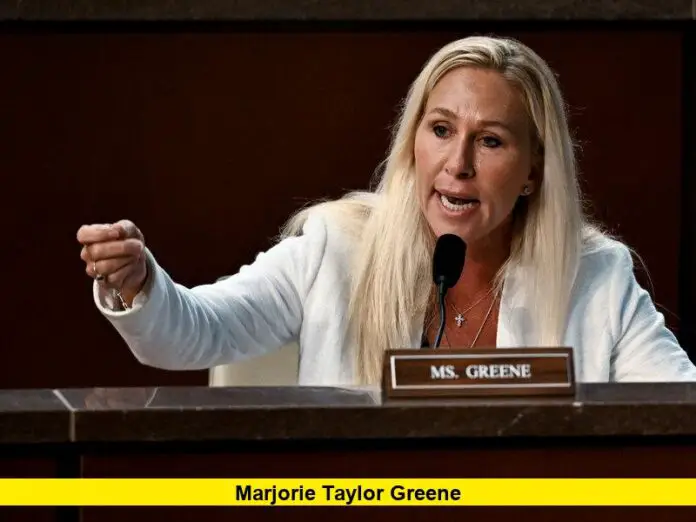
The political world is buzzing as Representative Marjorie Taylor Greene, once a high-profile firebrand in Congress, prepares to exit the House on January 5, 2026. Her resignation — and the drama surrounding it — marks a major turning point for Republicans ahead of the 2026 midterms.
WHAT HAPPENED: Greene Resigning, Seat Opens for Special Election
Last week, Marjorie Taylor Greene announced she would step down from the U.S. House of Representatives on January 5, 2026. Her decision ends a volatile chapter in the GOP’s recent history. Greene said she no longer wished to face a likely “Trump-backed” primary opponent — and she argued the constant partisan pressure was harming her home district more than helping.
With her seat vacant, the governor of Georgia must soon call a special election. The timeline under Georgia law gives the state a narrow window: the governor has 10 days to call the special election, and the election must occur no fewer than 30 days after that. That puts Georgia’s 14th congressional district — Greene’s seat — on track for a race in early 2026.
That vacancy will formally narrow the GOP’s slim majority in the House, shifting the fragile balance of power as legislators head into a critical election year.
HOW WE GOT HERE: Fallout from the Epstein Files Vote and Trump Break
Greene’s resignation follows a dramatic fallout between her and her former ally, former President Trump. The spark was her decision to join a push to force the release of files tied to sex offender Jeffrey Epstein — a move Trump opposed. Greene then publicly accused him of betrayal, saying she refused to remain a “battered wife” in politics.
She also diverged sharply from party orthodoxy on foreign policy. Amid the Gaza war, Greene controversially labeled Israeli actions as genocide — and said she has never accepted money from the powerful pro-Israel lobbying group AIPAC. That position put her at odds with many in her party, contributing to her break from GOP leadership.
Recent comments from Greene suggest deep frustration with congressional gridlock. She criticized lawmakers for failing to address rising costs, healthcare, and other economic pressures that ordinary Americans face.
WHAT THIS MEANS FOR THE GOP — AND THE HOUSE BALANCE
Greene’s exit could have ripple effects across the Republican Party and potentially reshape the 2026 midterm landscape.
- Narrower GOP majority: Her resignation will reduce the Republican advantage in the House by at least one seat — tightening an already slender margin over Democrats.
- Open seat competition: Georgia’s 14th district is now up for grabs. A special election could draw multiple GOP hopefuls — while Democrats might see this as a rare opportunity to flip a seat in a traditionally red district.
- Internal GOP tensions exposed: Greene’s departure underscores growing fractures within the party — between hard-line ideologues, mainstream conservatives, and those pushing for policy shifts on foreign affairs and internal reforms.
- Midterm impact: With control of the House hanging on a thread, Greene’s resignation may intensify the stakes for both parties heading into 2026.
GRENEE’S LATEST CONTROVERSIAL INVESTMENT — A BITCOIN ETF BUY
Adding another twist to Greene’s evolving public persona: in late November, she quietly purchased between $1,000 and $15,000 worth of shares in the iShares Bitcoin Trust (ETF: IBIT). This latest crypto investment comes amid a broader pattern of her buying into Bitcoin-related assets in 2025. While this detail may seem tangential, it further underscores how Greene continues to reshape her public identity even as she departs Congress.
WHAT COMES NEXT — WATCH FOR A CAMPAIGN SCRAMBLE IN GEORGIA
With Greene gone, attention shifts to Georgia’s 14th district. The special election will likely draw a crowded field, especially among Republicans seeking to claim a safe GOP seat. Observers will watch closely to see whether any surge of Democratic interest emerges — though historically the district leans heavily Republican.
Yet this moment could mark a broader realignment within the GOP: lawmakers and voters alike may reassess what “party loyalty” and “conservatism” now mean in a post-Greene, post-Trump divisor Congress.
CONCLUSION
The departure of Marjorie Taylor Greene — a polarizing, headline-grabbing figure — signals more than the end of one politician’s career. It reflects shifting alliances, mounting internal pressure, and a Republican Party in flux. As Georgia prepares for a special election and Congress braces for the midterms, Greene’s resignation is already reshaping political dynamics far beyond her home district.
What are your thoughts on Greene’s exit and what’s next for her seat? Share below and stay tuned for further developments.

