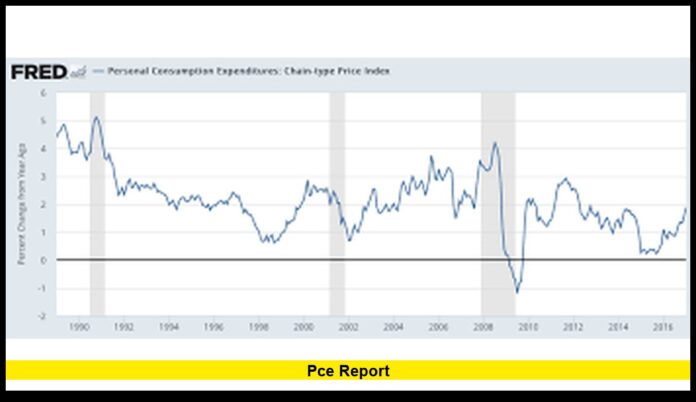
The latest PCE report is drawing nationwide attention as investors, households, and policymakers prepare for one of the most important inflation readings of the year. With the newest release arriving after a long delay caused by the extended government shutdown, the data is set to offer the first comprehensive look at pricing trends in months. The report’s contents will help clarify whether inflation is cooling, stabilizing, or beginning to reaccelerate as the country approaches a new economic year.
Table of Contents
Why the PCE Report Matters Right Now
The Personal Consumption Expenditures Price Index is the most closely watched inflation measure in the United States. It tracks what consumers pay for goods and services across the economy and captures shifts in spending behavior, giving a broader picture than other inflation indicators.
Because the PCE index is used as the primary guide for interest-rate policy, its latest numbers will carry significant weight. Both headline PCE, which includes all goods and services, and core PCE, which excludes food and energy, influence how decision-makers interpret the direction of prices.
The newest report is especially significant because it is the first major inflation update released after the lengthy government shutdown. Data releases were suspended for weeks, leaving analysts and households with few official indicators of economic health. The new PCE data provides the clarity many have been waiting for.
What the Most Recent Data Shows
Recent PCE data released prior to the shutdown showed price pressures that remained above long-term goals. The last available reading reflected inflation holding between the mid-2% and upper-2% range on a year-over-year basis, with core inflation staying firm during the late summer months. Monthly readings showed only modest progress toward cooling.
The new release will update the picture for the fall period, offering insight into whether inflation began easing, remained stable, or showed renewed strength.
Key points from the latest confirmed trends before the shutdown include:
- Headline inflation showed only mild improvement during late summer.
- Core inflation held firm and resisted moving closer to the targeted range.
- Price increases were broad across categories, signaling continued consumer pressure.
These trends frame today’s expectations but will be confirmed or challenged once the updated data becomes available.
What Analysts Expect in the New Report
Leading financial forecasters expect headline PCE to tick slightly higher or hold steady near late-summer levels. Core PCE is anticipated to show little movement, reflecting ongoing underlying price pressure.
Many forecasting groups anticipate that year-over-year headline inflation may hover near the upper-2% range, while month-over-month changes could remain moderate. The new numbers will help determine whether inflation is slowing at a meaningful pace or leveling off.
Financial markets have reacted cautiously ahead of the release. Investors have priced in a strong possibility of an upcoming interest-rate cut, but that expectation hinges on whether inflation appears to be easing. A softer-than-expected PCE report could lift markets, while a hotter-than-expected reading could weigh on stocks and delay hopes for rate relief.
Why This Release Is Especially Crucial
This PCE report arrives during a critical moment for economic evaluation:
- Government data releases were disrupted for more than a month.
- The delay limited access to official readings on household spending, inflation, and economic output.
- Several agencies are now working to restore normal schedules and distribute postponed reports.
Because this report provides updated inflation data for a previously unreported month, it carries extra weight. It will offer clarity after weeks of uncertainty over consumer price trends.
Key Questions the New Report Will Answer
- Is inflation continuing to cool, or has it leveled off?
The trend revealed today will shape expectations heading into the start of 2026. - Is core inflation finally drifting lower?
Core PCE is the most important gauge for long-term inflation momentum. - Will the data support an interest-rate cut?
Markets are watching closely. A soft reading strengthens the case. A hot reading weakens it. - How are consumer goods and services behaving?
Categories like housing, healthcare, and transportation play a large role in inflation staying elevated.
Possible Outcomes and Their Effects on Americans
A Softer PCE Reading
If the report shows a meaningful decline in price growth:
- Borrowing costs could move lower if policymakers feel confident enough to adjust interest rates.
- Household budgets may experience relief as inflation cools.
- Markets may react positively due to reduced inflation anxiety.
A Hotter PCE Reading
If inflation appears stronger than anticipated:
- Borrowing costs could remain elevated.
- Mortgage rates, credit-card interest, and auto-loan rates may stay high longer.
- Consumers may see slower relief from rising prices.
- Stocks could face short-term volatility.
A Mixed Reading
If headline inflation rises while core inflation cools — or vice versa — the response could be uneven. Such a result may cause financial markets and policymakers to interpret the data with caution.
Why the PCE Report Remains the Top Inflation Indicator
While other inflation measures exist, the PCE report is widely considered the most accurate reflection of American spending behavior. It adjusts for shifts in consumption trends and covers a broader mix of goods and services than many alternative measures.
This dynamic nature makes the PCE index more representative of real-world purchasing patterns, which is why it is used as the primary benchmark for national economic planning.
What It Means for U.S. Households
Inflation impacts Americans in everyday ways:
- High inflation keeps the cost of essentials elevated.
- Housing, transportation, groceries, and medical care remain significant economic burdens.
- Interest-rate decisions tied to inflation affect everything from mortgages to business loans.
- Consumer confidence can weaken when pricing trends remain uncertain.
The new PCE reading will influence both the financial mood of the country and the day-to-day economic reality for millions of households.
Looking Ahead
The PCE report will serve as a reset point after weeks without official data. It will help define the economic tone heading into the year’s end and set expectations for early 2026. Whether inflation is finally cooling or holding steady, the report will offer a clearer direction for interest rates, market sentiment, and household budgets.
Share your thoughts below — do you think the latest PCE report will show meaningful progress, or are prices still proving stubborn?

