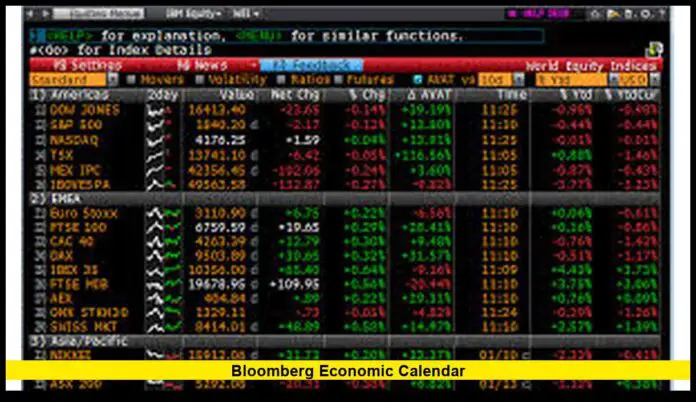
The bloomberg economic calendar is drawing significant attention today as traders, analysts, and financial institutions prepare for several major U.S. data releases that could influence market direction and shape expectations ahead of the upcoming Federal Reserve meeting. With updated reporting schedules now confirmed, this week’s economic indicators are positioned to play a critical role in understanding inflation trends, employment conditions, and broader economic momentum.
Table of Contents
Why the Bloomberg Economic Calendar Matters Right Now
The Bloomberg Economic Calendar provides a structured view of scheduled economic data, including inflation reports, labor-market indicators, manufacturing surveys, and central-bank announcements. It is widely used because it lists each release with timing, prior values, consensus forecasts, and expected market impact.
This week, the calendar has taken on heightened relevance. Several key U.S. indicators are set for release after recent reporting delays, creating a compressed window in which important data will arrive at once. Financial markets are already responding as investors brace for what may be a pivotal series of numbers affecting interest-rate expectations, bond yields, and equity sentiment.
Major U.S. Data Releases on the Calendar
Several closely watched economic indicators are confirmed for release over the next few days. These events are likely to guide market behavior and influence expectations heading into the final Federal Reserve meeting of the year.
1. Personal Consumption Expenditures (PCE) Price Index
The PCE Price Index, the inflation gauge most closely monitored by the Federal Reserve, is scheduled for release this week. Analysts expect the year-over-year reading to show a slight increase from the prior month. With inflation still above the central bank’s long-term target, even a small change in the data could affect the tone of policymaker discussions.
2. Employment Cost Index
Following earlier calendar adjustments, the next Employment Cost Index release is set for December 10. This indicator measures wage growth and employer-paid benefits. Slowing wage momentum has recently become a focal point for economists, as it may signal cooling labor demand and lower inflationary pressure.
3. Updated Labor-Market Readings
This week also includes updated private-sector employment data. The most recent national report showed a decline of more than thirty thousand jobs, with small businesses accounting for the majority of the reductions. This marked one of the weakest readings in months and raised fresh concerns that hiring could be losing strength more broadly.
4. Federal Reserve Meeting on December 9–10
The final Federal Open Market Committee meeting of the year arrives as markets weigh the possibility of another interest-rate cut. A series of economic readings, including inflation and labor-market data, will heavily influence expectations. Market participants remain divided, but weakening hiring trends and soft consumer indicators have increased speculation that policymakers may move toward additional easing.
Recent Economic Signals and What They Mean
While the U.S. economy has shown resilience through much of the year, several indicators now point to potential slowing:
- Private-sector job losses have risen.
- Wage data has moderated.
- Tax-withholding trends show softer payroll gains.
- Consumer-spending growth has cooled compared to earlier months.
These developments are being interpreted as early signs of economic deceleration. Investors will use the upcoming calendar entries to determine whether the slowdown is temporary or the start of a broader shift heading into the new year.
Some economists have also noted that even if rate cuts occur, the impact may not be as strong as in previous cycles. Higher consumer debt levels and reduced household savings could limit the stimulative effect typically associated with lower interest rates.
How the Bloomberg Economic Calendar Influences Market Behavior
Financial markets often move in anticipation of data featured on the Bloomberg Economic Calendar. Before major releases, investors reposition their portfolios, leading to changes in equity prices, bond yields, and currency markets. Even minor surprises in the numbers can create meaningful volatility.
Here’s how traders typically strategize around economic-calendar events:
- Before a release: Markets adjust based on forecasts and expectations.
- At the moment of release: Unexpected readings often trigger rapid moves.
- Immediately after: Analysts assess whether the new data changes the outlook for the Federal Reserve or overall economic momentum.
- Days following: Longer-term trends develop as additional data points confirm or contradict earlier signals.
Because the calendar consolidates all major economic events, it serves as both a planning tool and a volatility map for global and domestic markets.
This Week’s Most Important U.S. Events
| Date (ET) | Event | Significance |
|---|---|---|
| This Week | PCE Price Index | Key measure of inflation used by the Federal Reserve |
| This Week | Labor-Market Updates | Provides insight into job creation and wage trends |
| December 10 | Employment Cost Index | Critical for understanding wage pressure |
| December 9–10 | Federal Reserve Meeting | Could determine whether another rate cut is implemented |
With these events clustered closely together, analysts expect an active week in financial markets.
Why U.S. Investors Should Stay Alert
The data featured in the Bloomberg Economic Calendar has real-world effects on American households and businesses. Here’s how upcoming indicators may impact daily life:
- Borrowing costs: Mortgage rates, auto-loan rates, and credit-card APRs may shift if the Federal Reserve adjusts policy.
- Stock market performance: Earnings expectations and sector valuations can move sharply after key data releases.
- Dollar strength: Currency changes affect travel costs, import prices, and corporate profits.
- Economic confidence: Strong or weak readings can influence consumer behavior heading into the holiday shopping season and the start of 2026.
These connections make the calendar essential for anyone monitoring the direction of the U.S. economy.
The bloomberg economic calendar continues to be a central resource for understanding the flow of vital economic news. With major inflation data, labor-market indicators, and an important Federal Reserve meeting all scheduled in a tight window, this week offers valuable insight into where the U.S. economy may be headed as the year draws to a close.
Share your thoughts below on which upcoming indicator you believe will have the biggest impact on markets.

