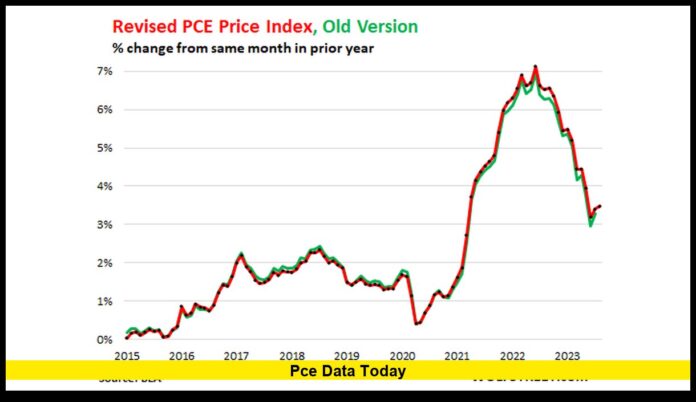
The latest PCE data today — referring to the U.S. Personal Consumption Expenditures Price Index — is set to be released, and all eyes are on what the numbers will reveal about inflation and how they might influence interest-rate decisions from the Federal Reserve (Fed).
Table of Contents
📌 Why This Release Matters
- The PCE price index is the broadest measure of consumer price inflation in the United States. It tracks the prices paid by households for goods and services — and is the Fed’s preferred gauge of inflation.
- The upcoming release is part of the monthly “Personal Income and Outlays” report from the Bureau of Economic Analysis (BEA). The new data, covering September 2025, will publish on December 5, 2025 at 10:00 a.m. ET.
- Markets have been on edge. Stocks opened Friday with tentative gains while trading turned cautious ahead of the report.
🔎 What the Most Recent PCE Data Shows (through August 2025)
Until the new release drops, the most recent confirmed data is for August 2025:
| Measure | August 2025 (YoY) | Monthly Change (Aug) |
|---|---|---|
| Headline PCE Price Index | + 2.7% | + 0.3% |
| Core PCE Price Index* (excludes food & energy) | + 2.9% | + 0.2% |
The core PCE removes volatile food and energy prices, giving a clearer sense of underlying inflation trends.
In August, consumer spending (in current dollars) rose 0.6%, reflecting a $129.2 billion increase. Services spending accounted for $77.2 billion, while goods added $52.0 billion.
Despite rising prices, real (inflation-adjusted) consumption also grew — a sign that households continued spending even as goods and services got pricier.
⚠️ What Markets Are Watching in the New Release
With today’s release coming just days before the Fed’s upcoming December 9–10 meeting, investors and policymakers are focused on:
- Any deviation from expectations. If inflation data comes in hotter than forecast (especially core inflation), markets may brace for fewer — or delayed — rate cuts.
- Trajectory of “sticky” inflation. Core PCE has hovered near 2.9% — well above the Fed’s 2% target. A persistently high reading could reinforce the view that price pressures remain entrenched.
- Impact on rate expectations. Before the data drops, markets were pricing in roughly an 87% probability of a 25-basis-point rate cut at the next Fed meeting. A surprise inflation print could change those odds sharply.
Additionally, economists consider “trimmed mean” and “median” versions of PCE inflation to get a sense of broad underlying price trends.
🧠 What Could Different PCE Outcomes Imply
If PCE Comes In Higher Than Expected
- Investors may dial back expectations for a near-term rate cut.
- Bond yields could rise, and the U.S. dollar might strengthen.
- Consumer borrowing costs could stay elevated — affecting mortgages, car loans, and credit cards.
If PCE is Softer Than Forecast
- Markets may resume pricing in a December rate cut.
- Lower yields and a weaker dollar could benefit equities and commodities.
- Households may breathe easier as real purchasing power improves slightly.
If Core PCE Holds Steady But Headline Pops Up (e.g. via food or energy costs)
- The Fed may interpret core stability as a signal to stay cautious — though volatile food/energy could still weigh on consumers.
- Markets will probably focus on underlying inflation (core) and factor out temporary swings.
📅 Historical Context & Recent Trends
- Before August 2025, the headline PCE year-over-year rate had hovered around 2.6%.
- The core PCE rate has remained remarkably stable at 2.9% since mid-2025.
- Economists at major institutions expected inflation to remain elevated through 2026 — suggesting that any signs of disinflation in today’s reading would attract strong attention.
🧾 What to Watch Immediately After Release
- Headline and core monthly and yearly PCE inflation numbers for September 2025.
- Any breakdowns by categories (services, goods, durable goods) that might highlight underlying pressures.
- Market reactions: U.S. equity futures, bond yields, dollar strength, and investor sentiment about rate cuts.
- Commentary from the Fed and economists — to gauge whether inflation is truly easing or just ebbing temporarily.
✅ Bottom Line
The PCE data today represents a pivotal moment in the economic calendar — the latest reading before the Fed meets later this month. It could influence investor expectations, shape borrowing costs, and affect how Americans feel about the cost of living heading into 2026.
Stay tuned: once the numbers drop, comparisons with prior months will show whether inflation is moderating — or still stubbornly high.
Let us know your view: do you expect PCE inflation to ease — or remain sticky? Share your thoughts below.

