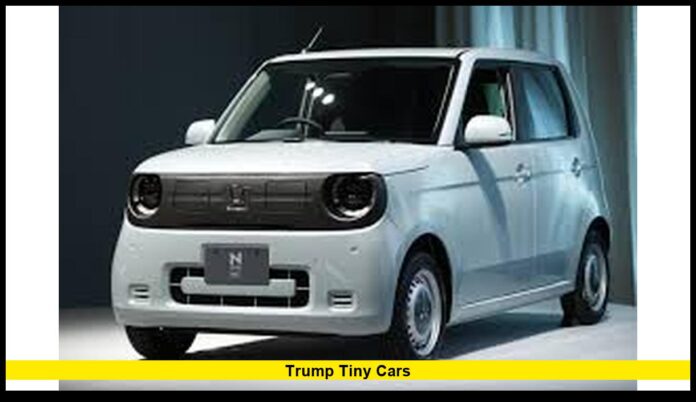
President Trump yesterday pushed a high-profile move to let trump tiny cars—small Japanese-style kei vehicles—be built and sold more widely in the United States. The announcement immediately sparked industry discussion, safety concerns, and regulatory questions.
The administration presented the move as part of a broader effort to lower vehicle costs and expand consumer choice. Officials linked the tiny-car push to a new regulatory initiative aimed at easing federal fuel-economy standards for automakers. The plan combines administrative changes and regulatory flexibility intended to clear pathways for lighter, lower-cost vehicles to reach U.S. buyers.
These developments mark one of the most visible federal efforts to revisit how small vehicles fit into the American automotive landscape.
Table of Contents
What Tiny Cars Are and Why They Matter
Tiny vehicles—often modeled after Japan’s kei cars—are compact, lightweight, and built with strict size and engine limits. They typically measure under roughly 11 feet long and rely on small engines or electric systems.
They are popular in Japan for:
- Low purchase prices
- Ease of parking
- Low taxes and insurance
- High efficiency
Some modern versions are hybrid or fully electric, making them appealing to urban drivers seeking an efficient alternative to larger U.S. vehicles.
Regulators Respond With Safety and Legal Questions
Transportation and safety officials noted immediate challenges. U.S. safety and emissions rules were written with larger vehicle footprints in mind. Allowing kei-style tiny cars on American highways would require:
- Updates to federal crash-test standards
- Adjustments to emissions and certification rules
- Reviews of structural and passenger-protection requirements
Several states have laws that restrict tiny-vehicle registration for full road use. Changing those rules requires legislative updates or administrative action.
Analysts warn that the regulatory process could take considerable time, even with federal support.
How the Auto Industry Is Reacting
Major automakers are evaluating whether kei-like vehicles could be viable in the U.S. market. Many questions remain:
- Would sales volume justify production costs?
- Are consumers ready for ultra-compact cars on American highways?
- How much modification would be required to meet U.S. safety standards?
Some companies already sell micro-electric vehicles in limited regions, but full national deployment would demand clearer regulatory guidance. Market watchers noted a brief uptick in interest surrounding small EV and micro-car manufacturers following the announcement.
Still, analysts believe any major shift from automakers will unfold slowly.
Fuel Economy Policies Connected to the Announcement
The administration unveiled its new automotive initiative—“Freedom Means Affordable Cars”—alongside the tiny-car push. The proposal seeks looser fuel-economy requirements in future model years.
Officials argue that lowering regulatory pressure will reduce sticker prices and create more consumer options. Critics say weaker standards could increase long-term fuel costs for drivers and slow the growth of electric vehicles.
This debate matters for tiny cars. Many kei-style models are being developed as electric or hybrid vehicles, making fuel-economy policy central to their potential success in the U.S.
State-Level Impacts and Legal Hurdles
Even with federal action, states hold authority over vehicle registration. Some states have previously declined to register kei vehicles for highway use citing safety concerns. Others allow them only in limited categories, such as low-speed neighborhood vehicles.
Expect differing responses across states, including:
- Temporary approvals
- Trial exemptions
- Local legislative updates
- Potential legal challenges
This patchwork could shape how widely the vehicles appear on U.S. roads.
What the Timeline Looks Like
Short Term (Weeks to Months)
Regulators will open review periods for fuel-economy changes and begin analyzing safety and emissions impacts. Small pilot programs or exemptions may appear.
Medium Term (Months to 1–2 Years)
Formal rulemaking or legislative proposals would be needed to alter safety and emissions requirements. Automakers will evaluate investment costs and engineering feasibility.
Long Term (2+ Years)
If rules evolve and automakers engage, small markets for micro-cars may develop in dense cities and commercial fleets. Nationwide adoption remains uncertain.
Consumer Considerations
Supporters say tiny cars could offer:
- Lower purchase prices
- High fuel efficiency
- Easier urban parking
- Lower operating costs
Opponents highlight:
- Limited crash protection on highways
- Smaller interior and cargo space
- Uncertain appeal among U.S. drivers accustomed to larger vehicles
Electric versions may lower operating expenses, but infrastructure and range remain key issues in many regions.
Interest From Enthusiasts and Importers
Small-vehicle enthusiasts are watching potential changes closely. Importers who currently bring tiny cars into niche markets hope for clearer nationwide guidelines. Urban drivers and EV hobbyists see potential in micro-vehicles for customization, commuting, and fleet use.
The regulatory outcome will determine whether this niche can grow into a broader consumer market.
Bottom Line
The announcement surrounding trump tiny cars has accelerated a national conversation about safety, affordability, and the future of urban transportation. Regulatory pathways remain complex, but the policy shift has opened a new debate about how small vehicles could fit into the American automotive ecosystem.
Further updates will depend on federal rulemaking, automaker commitments, and state-level decisions that shape what drivers can legally buy and register.
Share your thoughts below — would you drive a tiny kei-style car in your city?

