Frank Gehry, the world-renowned architect whose bold, sculptural designs transformed modern architecture, remains at the center of global conversation following his recent passing. Frank Gehry influenced skylines, cultural institutions, and creative thinking for more than six decades, and the latest updates continue to highlight his profound impact and the projects he leaves behind.
Frank Gehry passed away at age 96 in Santa Monica after a brief respiratory illness, marking the end of an extraordinary era in architecture. His death prompted tributes from artists, designers, city leaders, and institutions worldwide. In the opening days following this news, discussions across the U.S. have focused on his life, his artistic contributions, and the projects still unfolding from his studio.
Table of Contents
A Career That Redefined Contemporary Design
Frank Gehry’s influence stretched far beyond the buildings he created. Born in Toronto in 1929 and later relocating to the United States, he developed a style unlike anything seen in conventional architecture. Early in his career, he experimented with inexpensive, everyday materials such as corrugated metal and chain-link fencing, pushing boundaries in residential design and gaining early attention for his unconventional Santa Monica home.
His work evolved dramatically as his career expanded, eventually leading to some of the most recognizable buildings in the world. Gehry became known for his sweeping curves, titanium surfaces, bold asymmetry, and his ability to turn buildings into functional sculptures. Over the years, he earned countless awards, including architecture’s highest honor, the Pritzker Prize. His body of work stands today as one of the most diverse and influential of any architect in modern history.
Major Landmarks That Define His Legacy
Gehry’s structures are known globally, often becoming symbols of the cities in which they stand. His ability to merge creativity with engineering established new possibilities for architectural expression.
Walt Disney Concert Hall — Los Angeles
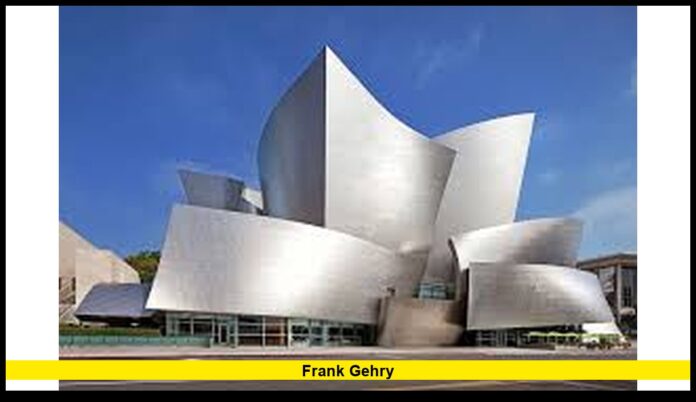
Completed in 2003, the Walt Disney Concert Hall is a cultural anchor in downtown Los Angeles. The building’s stainless-steel exterior forms a series of billowing, sail-like shapes that capture light throughout the day. Inside, its warm wood interior and vineyard-style seating create exceptional acoustics that have been praised by musicians and audiences worldwide. It remains one of Gehry’s most admired American achievements.
Guggenheim Museum Bilbao — Spain
Opened in 1997, the Guggenheim Museum Bilbao redefined global expectations for museums. Its shimmering titanium panels and fluid forms turned the building itself into a piece of contemporary art. The museum’s success helped ignite what became known as the “Bilbao effect,” in which bold architectural investment revitalizes entire cities. Today, the site continues to draw millions of visitors annually from around the world.
Other Key Works
Frank Gehry’s portfolio spans continents and includes cultural centers, museums, university buildings, and residential towers. Highlights include:
- His iconic Santa Monica residence.
- A prominent design museum in Germany known for its sculptural forms.
- Performance halls, private residences, and institutional structures that reflect his range and vision.
Projects Still Moving Forward After His Passing
Even into his 90s, Gehry remained active in the design world. Several major projects continue under construction or development, supported by teams who worked closely with him.
Colburn Center — Los Angeles
The Colburn Center, expected to open in 2027, is a major performing arts expansion in downtown Los Angeles. The project includes music education spaces, performance venues, and a bold architectural presence adjacent to the Walt Disney Concert Hall. Construction remained underway throughout 2025.
Forma Towers — Toronto
In his birthplace of Toronto, the Forma Towers represent Gehry’s ambitious return to residential high-rise design. The towers, planned at 73 and 84 stories, continue development and will stand among the tallest structures in the city. Their twisting, shimmering façades reflect Gehry’s signature style and mark a milestone in his contributions to Canadian architecture.
Guggenheim Abu Dhabi
Expected to be the largest of the Guggenheim museums, this long-anticipated project is slated for completion in 2026. Its vast scale and sculptural form align with Gehry’s vision for museum spaces that serve as immersive cultural destinations.
These ongoing projects demonstrate the enduring reach of Gehry’s ideas, even beyond his lifetime.
A Lasting Impact on Global Architecture
Frank Gehry was more than a designer of striking buildings. He reshaped the way people think about architectural possibility. His work challenged tradition, sparked debate, and inspired generations of architects. Some critics viewed his approach as too extravagant, while others praised the emotional and imaginative qualities of his designs. Regardless of perspective, Gehry pushed the profession into new territory and expanded its artistic potential.
His commitment to experimentation made architecture feel alive. He often described buildings as evolving works rather than static objects. This philosophy influenced not only his own studio but also countless others who studied, admired, or worked alongside him.
Honoring an Unmatched Legacy
Cities around the world continue to celebrate Frank Gehry’s contributions. His buildings attract visitors, stimulate cultural life, and stand as landmarks of creativity. Institutions with Gehry-designed spaces frequently credit his work with helping define their identities and elevate their presence in the global arts community.
Frank Gehry’s life demonstrates how one visionary can alter the course of an entire industry. His legacy continues through the structures he designed and the imagination he inspired in millions.
Share your thoughts below and tell us how Frank Gehry’s work has influenced your perspective on architecture.

