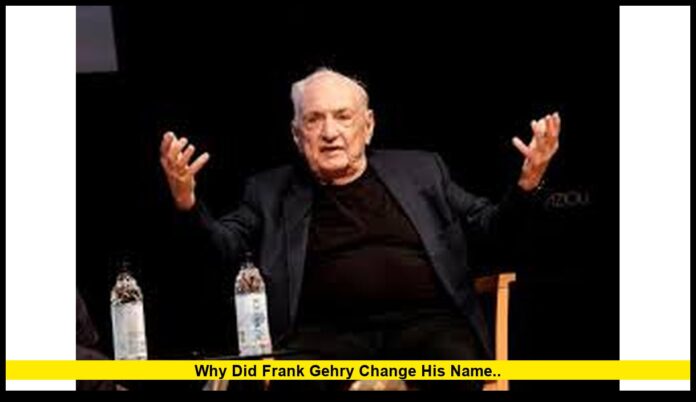
Frank Gehry, born Frank Owen Goldberg, made a significant personal decision early in his career that continues to prompt public curiosity: why did frank gehry change his name. The answer lies in the social climate of the 1950s and the concerns his first wife expressed about how an identifiably Jewish surname might affect his professional opportunities during a period when discrimination was still common.
Table of Contents
Early Life and His Birth Name
Frank Gehry was born in Toronto in 1929 and raised in a Jewish family. His childhood experiences, time spent with relatives, and early exposure to creative environments played a key role in shaping the imaginative thinking that later appeared in his architectural work. After moving to the United States as a teenager, Gehry pursued education and early employment that laid the foundation for his design career.
His birth surname, Goldberg, reflected his family’s heritage. But during the middle of the 20th century, Jewish professionals in various fields faced notable barriers, particularly in academia, architecture, and corporate environments. This context is important to understanding why his family name became a topic of concern as he stepped into the competitive world of design.
The Moment of Change and Its Motivation
The name change took place in the mid-1950s, when Gehry was completing his architectural studies and beginning to establish himself professionally. His first wife encouraged him to adopt a different surname because she feared that “Goldberg” would expose him to antisemitic prejudice in hiring and advancement. Gehry agreed, viewing the decision as a practical step during a sensitive stage of his early career.
The new surname, Gehry, became part of his public and professional identity as he transitioned into the architectural world. It marked a personal crossroads that reflected not only the social realities of the time but also the desire to protect his future prospects.
Professional Impact and Cultural Context
Changing a name during the 1950s was not uncommon for individuals seeking to navigate environments where bias could influence opportunities. Gehry’s shift from Goldberg to Gehry aligned with a broader pattern among professionals who sought to avoid being immediately categorized or dismissed due to ethnic or religious identifiers.
Despite the change, Gehry did not view the decision as a break from his background. His upbringing, cultural roots, and early family influences continued to shape his ideas, his creative intuition, and the architectural philosophy he later became known for worldwide.
How Gehry Described the Decision
Throughout his life, Gehry discussed the name change candidly, sometimes even humorously. He acknowledged that the decision stemmed from practical concerns during a time when discrimination could easily derail a young architect’s trajectory. He also noted that adopting a professional name was not unusual in creative fields. For Gehry, it became simply the name associated with his evolving identity as an artist and designer.
What the name change did not alter, however, was his connection to his heritage. His work — from early experimental models to internationally recognized landmarks — continued to reflect the imagination and resilience shaped by his upbringing.
The Name Within His Larger Legacy
As Frank Gehry rose to global prominence, his chosen surname became inseparable from architectural innovation. Iconic projects such as the Walt Disney Concert Hall in Los Angeles and his design for the Guggenheim Museum in Bilbao solidified the Gehry name as a symbol of creative daring and structural fluidity.
Yet the story behind the change still resonates today. It highlights the challenges that many artists and professionals faced in earlier generations and underscores how identity and opportunity were influenced by social pressures. Understanding this history provides deeper insight into Gehry’s personal journey and the context in which his legendary career began.
Summary of Verified Facts
- Frank Gehry was born Frank Owen Goldberg in 1929.
- He changed his surname in the mid-1950s.
- The motivation for the change centered on avoiding professional discrimination tied to antisemitism.
- The decision was encouraged by his first wife during his early career formation.
- His heritage and personal experiences remained central to his creative identity despite the name change.
The question of why did frank gehry change his name continues to surface because it represents more than a simple administrative decision. It reflects the social challenges of a particular era, the personal choices artists sometimes make to navigate their fields, and the complex relationship between identity and opportunity.

