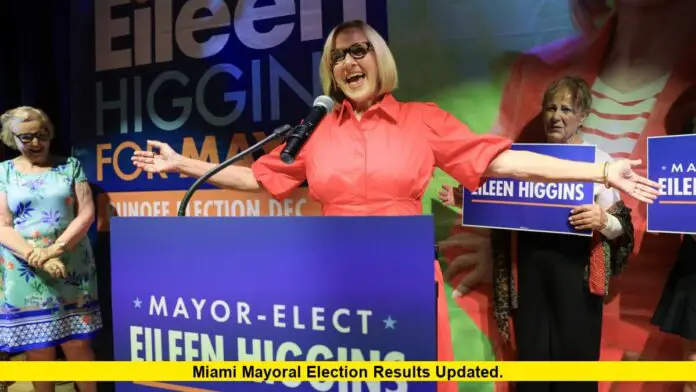
The miami mayoral election results Updated show a groundbreaking shift in the city’s political landscape, as Eileen Higgins won the 2025 mayoral race and became the first woman and the first Democrat in nearly three decades to lead Miami. Her decisive victory in the December run-off reshaped expectations for the city’s future and signaled a major turning point in local governance.
Higgins secured roughly 59% of the vote in the run-off, defeating her opponent, former city manager and retired military officer Emilio Gonzalez. The race followed a crowded general election on November 4, in which no candidate achieved a majority, forcing Miami’s first mayoral run-off in more than two decades.
Table of Contents
A Historic First for Miami
Eileen Higgins’ election marks a defining moment for Miami. For the first time since the 1990s, a Democrat will lead the city, ending a long period of Republican leadership. Her win also breaks a historical barrier, making her the first woman to assume the office.
During the general election, Higgins emerged as the clear frontrunner among 13 candidates, earning just under 36% of the vote. Gonzalez finished second with just under 20%. Both advanced to the run-off, setting up one of Miami’s most closely watched mayoral contests in years.
The final vote confirmed widespread support for Higgins across diverse communities, giving her a strong mandate as she prepares to take office.
A Campaign Rooted in Local Priorities
Higgins built her campaign around issues residents said mattered most: affordability, reliable public services, transparent city operations, and protection against climate-related risks. Her ability to stay focused on Miami’s day-to-day challenges helped her gain trust across neighborhoods and demographics.
Housing and Cost of Living
Miami’s rapid growth has pushed housing prices to all-time highs. Higgins pledged to expand affordable housing projects, use city-owned land strategically, and work with local stakeholders to ensure development aligns with community needs.
She emphasized that the city must balance economic expansion with livability, promising new initiatives aimed at preventing displacement and improving long-term affordability.
City Government Reform
Higgins called for major reforms inside City Hall. She promised to streamline the permitting process, improve oversight of public spending, and make city services more accessible for residents and small businesses.
Her focus on transparency resonated with voters frustrated by bureaucratic delays and inconsistent service delivery.
Climate Resilience and Infrastructure
Miami faces unique environmental challenges, including coastal flooding, extreme storms, and rising sea levels. Higgins made climate resilience a pillar of her platform.
She advocated for modernized drainage systems, strengthened infrastructure, expanded green spaces, and policies that prepare Miami for long-term environmental change.
Public Transit and Mobility
To reduce congestion and improve access across the city, Higgins outlined plans to enhance existing transit options, upgrade trolley services, and ensure better connectivity for underserved neighborhoods.
Her solutions targeted not only commuters but also seniors, students, and workers who rely on dependable transportation every day.
Why Gonzalez Fell Short
Emilio Gonzalez entered the race with extensive administrative experience and strong name recognition. He centered his platform on public safety, streamlined city processes, and proposals aimed at lowering tax burdens for residents.
Despite these priorities, he struggled to generate widespread enthusiasm. Many voters were seeking a candidate who directly addressed affordability and community inclusion—issues that dominated Higgins’ messaging.
Gonzalez’s promises of tax changes and increased police presence were not enough to overcome Higgins’ broader appeal across multiple voting blocs.
A Political Shift With National Implications
Although municipal races in Miami are officially nonpartisan, this election drew heightened attention due to the contrast in ideological direction. Higgins’ victory is widely seen as a significant signal in a state where recent elections have leaned heavily conservative.
Her win suggests growing concern among residents about housing costs, development patterns, and government accountability—issues often at the forefront of local decision-making.
Political analysts view the outcome as an early indicator of shifting attitudes among urban voters in Florida, especially as national elections approach.
What Miami Can Expect Under Higgins’ Leadership
Residents can expect immediate focus on the core areas she emphasized during her campaign:
Affordable Housing Projects
Higgins plans to accelerate affordable housing construction, particularly on city-owned property that has remained underutilized. She aims to work closely with developers but insists on prioritizing community needs.
Infrastructure Upgrades
Improvements to drainage, public roads, municipal buildings, and climate-resilient design are expected to be early priorities.
Government Efficiency
Streamlined operations, fewer delays in city services, and a renewed focus on customer service will be central to the administration’s early goals.
Inclusive Governance
Higgins stressed the importance of listening to all communities, including immigrant neighborhoods, working families, and longtime residents who often feel overlooked.
Her administration is expected to expand outreach efforts, ensuring citizens have more opportunities to voice concerns and shape future policies.
A New Chapter for City Hall
Higgins will replace outgoing mayor Francis Suarez, who completed his two allowable terms. Her entrance marks a new era in Miami politics—one shaped not only by policy changes but also by the historic weight of her leadership role.
The new mayor will take office alongside winners of other local races, including new city commission members who also secured runoff victories. Together, the incoming leadership team will guide Miami through a critical period of growth and transition.
How Voters Described Their Choices
Many residents said they voted for Higgins because she addressed the realities they face daily: rising costs, uncertain development plans, and the need for a city government that responds more effectively to its people.
Supporters expressed hope for a more inclusive approach to leadership—one that reflects Miami’s diverse identity and focuses on tangible improvements rather than political symbolism.
Even voters who did not support Higgins acknowledged the importance of addressing affordability and infrastructure, indicating a rare point of agreement on the city’s urgent priorities.
Challenges Ahead for the New Administration
While Higgins enters office with broad support, she faces substantial challenges:
- Managing fast-paced development while preserving neighborhood identity
- Enhancing climate protections in a vulnerable coastal city
- Expanding affordable housing without slowing economic growth
- Strengthening public services to keep up with Miami’s population demands
Success will depend on collaboration, careful planning, and sustained community engagement.
A Turning Point for Miami’s Future
Miami now steps into a new chapter defined by both opportunity and responsibility. With strong voter turnout and clear priorities expressed at the ballot box, residents have set the course for the years ahead. Higgins’ agenda reflects the challenges and hopes shared by many across the city—and her administration will shape how Miami responds to rapid growth, environmental pressures, and evolving local needs.
As the transition unfolds, the miami mayoral election results Updated stand as a reminder of how quickly political currents can shift when voters demand solutions rooted in everyday realities.
Miami begins a new era, and residents across the city will be watching closely as the next chapter unfolds—share your thoughts or reactions below as the story continues.

