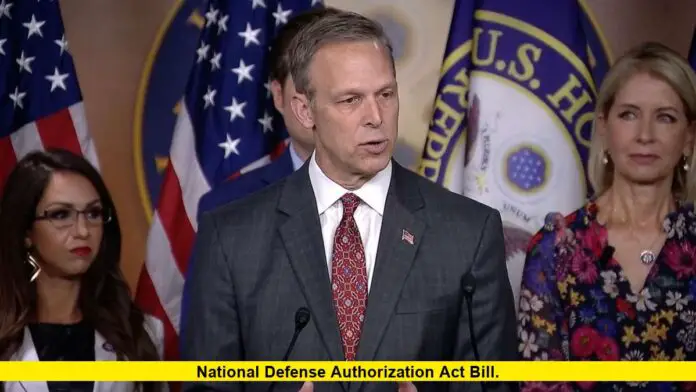
The national defense authorization act bill is once again at the center of national attention as the House of Representatives advances one of the most consequential defense measures in recent years. With overwhelming bipartisan support, the newly approved defense authorization sets the stage for sweeping military policy updates, major funding commitments, and significant structural changes to the nation’s defense posture for fiscal year 2026. This monumental step reflects Congress’s ongoing effort to reinforce national security, strengthen the armed forces, and respond to an increasingly complex global threat environment.
The bill now stands as one of the most influential pieces of defense legislation in decades, shaping everything from troop welfare and modernization priorities to foreign security assistance and supply chain independence. As the Senate prepares for its vote, the country is watching closely to see how the final law will refine America’s military direction for the year ahead.
Table of Contents
A Historic Year for Defense Authorization
Every year, Congress must pass a defense authorization act to guide funding and policy for the Department of Defense. Although it does not provide actual appropriations, the authorization defines the structure and legal parameters for how the military may use funds later allocated through appropriations bills. For more than six decades, Congress has never failed to pass this annual framework, and the 2026 version follows in that tradition.
What makes this year’s authorization extraordinary is both its scale and its comprehensive reach. The legislation touches nearly every corner of the defense establishment—modernization, personnel, global alliances, industrial supply chains, cyber strategy, and emerging technologies. Its expansive content illustrates the level of global complexity facing the United States and the bipartisan determination in Congress to maintain a decisive strategic edge.
House Approval Marks Major Bipartisan Agreement
The House of Representatives passed the legislation with a commanding bipartisan majority, signaling broad support for bolstering national defense in an increasingly volatile world. Lawmakers from both parties cited the importance of maintaining military readiness, supporting service members, and strengthening U.S. commitments to allies.
The vote also reaffirmed Congress’s recognition that defense policy cannot become gridlocked in partisan division. Despite ideological disagreements on certain provisions, lawmakers agreed that America’s security infrastructure must remain strong, adaptive, and properly resourced. The NDAA’s passage reflects a unified approach to countering threats, enhancing deterrence, and demonstrating continued global leadership.
Nearly $900 Billion in Defense Authorizations
One of the defining elements of this year’s NDAA is its scale—approximately $900.6 billion in authorized defense spending. This makes it one of the largest national defense authorization frameworks ever approved.
Key areas of authorized investment include:
- Personnel and troop support
Raising pay, improving living conditions, and supporting families remain core priorities. With growing competition for military recruitment and retention, Congress aims to strengthen benefits and quality-of-life initiatives. - Military readiness and operations
Funding is authorized to ensure that U.S. forces remain ready to respond to both traditional and emerging threats around the globe. - Modernization of weapons and defense systems
Advanced technologies, next-generation platforms, and defense innovation account for major portions of the authorization. - Industrial base and supply chain strengthening
Congress is intent on reducing America’s reliance on adversarial nations for critical technologies and components. - Overseas defense commitments
The authorization outlines continuing military cooperation and security assistance programs essential to U.S. strategic alliances.
This enormous framework serves as the blueprint for how the Pentagon will direct its priorities and long-term planning for fiscal year 2026.
A Significant Pay Raise for Service Members
Supporting the workforce behind America’s military capabilities remains central to the NDAA. This year’s measure includes a substantial pay increase of at least 3.8 percent for active-duty troops. Lawmakers have emphasized that improving financial stability and quality of life for service members is essential for retention, recruitment, and overall force morale.
The pay raise is part of a broader initiative to address growing living costs, enhance base housing, and strengthen support programs for military families. These initiatives are expected to have measurable effects on service member well-being and operational readiness.
Extensive Policy Changes Reshaping Defense Operations
This year’s authorization goes beyond funding and ventures deeply into structural and strategic reform. Among its most impactful sections are major policy updates designed to streamline Pentagon operations, enhance oversight, and sharpen America’s competitive stance globally.
Long-Term Support for Ukraine and Global Security
The NDAA includes multi-year military assistance to Ukraine, underscoring the United States’ commitment to helping partners preserve sovereignty in the face of external aggression. The authorization includes hundreds of millions of dollars per year dedicated to Ukraine-related defense cooperation, modernization support, and joint training operations.
This commitment aligns with a broader strategy to reinforce transatlantic alliances and ensure that America’s security network remains stable and effective.
Phasing Out Dependence on Adversary Technology
One of the most transformative sections of the NDAA mandates the Pentagon to eliminate reliance on foreign-made display technologies—especially those manufactured in adversarial nations—by the end of the decade. This requirement addresses longstanding concerns about vulnerabilities in the defense industrial supply chain.
The phase-out effort includes:
- Establishing secure domestic alternatives
- Strengthening U.S.-based manufacturing
- Enhancing reporting and accountability
- Reducing cybersecurity risks tied to foreign hardware
This marks a major turning point in how the military sources and deploys critical components.
Major Tribal Recognition Measures Included
The authorization act includes significant language granting federal recognition to the Lumbee Tribe of North Carolina—an effort that tribal leaders have pursued for decades. Recognition opens the door to expanded resources, governmental support, and access to federal programs. Including this provision in the NDAA reflects a bipartisan commitment to addressing long-standing recognition issues for Native communities.
Biosecurity Reform Through the BIOSECURE Framework
Another critical theme of the NDAA is expanding the nation’s biosecurity posture. The bill incorporates a refined version of the BIOSECURE framework, designed to strengthen federal oversight of biological research, enhance risk-mitigation protocols, and ensure long-term national preparedness.
The measure aims to prevent vulnerabilities in U.S. biological research infrastructure while promoting responsible innovation and international competitiveness.
Controversial Provisions Removed During Negotiations
The final version of the bill does not include several previously discussed provisions, many of which drew significant public attention.
IVF Coverage Expansion Removed
Proposals to expand fertility treatment coverage for service members and their families were ultimately removed. Advocacy groups continue to call for future legislation to support military families seeking fertility services.
Right-to-Repair Language Withdrawn
Provisions that would have expanded right-to-repair protections for defense technology were also cut. Supporters argued that the measures would have reduced maintenance costs and increased operational efficiency, but the language did not survive negotiations.
Afghan Relocation Office Measures Excluded
Efforts to restore funding and authority for federal programs supporting Afghan allies were removed, prompting renewed discussions about the United States’ obligation to individuals who assisted military operations.
These removals highlight the difficult compromises inherent to finalizing large-scale defense legislation.
What Comes Next for the NDAA
With the House passing the act, the national defense authorization act bill now moves to the Senate, where lawmakers are expected to review, debate, and vote on the measure. The Senate typically supports these annual bills, although amendments remain possible before the final vote.
If the Senate approves it, the legislation proceeds to the President for signature, at which point the authorization becomes law and lays the foundation for all military policy and spending decisions for fiscal year 2026.
Given its bipartisan support and long-standing tradition as a must-pass bill, the NDAA is widely expected to move forward without significant obstacles, although public and political scrutiny will remain intense.
Why This Year’s NDAA Matters More Than Ever
Defense experts and lawmakers alike view the 2026 authorization as one of the most consequential in recent memory.
It matters because:
- The global security landscape is shifting rapidly.
The United States faces increasing challenges from rival powers, rogue states, and non-state actors. - Technological competition is accelerating.
Military innovation and modernization have become essential to maintaining a competitive edge. - Service members require greater support.
Pay raises, housing improvements, and family services are essential to maintaining a strong, resilient force. - Supply chain independence is a national security imperative.
Reducing reliance on adversarial nations protects the integrity of critical systems. - Strategic alliances need reinforcement.
Continued assistance to Ukraine and other partners reflects America’s broader commitment to global stability.
The NDAA is more than a routine annual requirement—it’s a blueprint for how the U.S. intends to defend its interests and support its armed forces in the years ahead.
The Road Ahead for U.S. Defense
As global threats continue to evolve, the NDAA stands as a defining document shaping America’s approach to national security. Its priorities—from domestic manufacturing to troop support to international alliances—underscore the nation’s determination to adapt, strengthen, and modernize.
With the Senate now preparing for its next steps, attention turns to how the final version will refine these priorities even further. For Americans across the country, the NDAA reflects both the challenges and the commitments that define U.S. leadership on the global stage.
Share your thoughts below on how this year’s defense authorization could shape America’s future and what you believe Congress should prioritize next.

