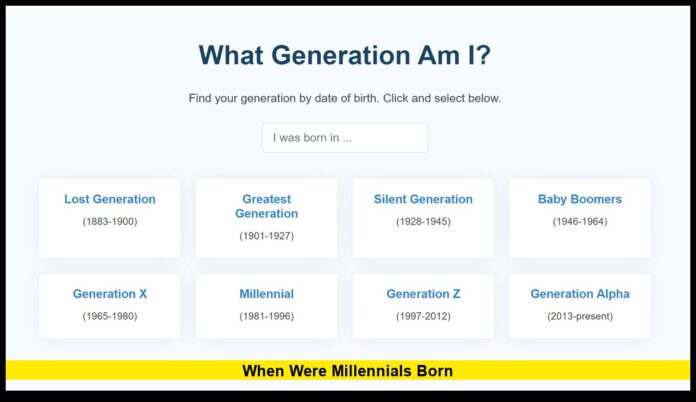
When were millennials born? As of December 2025, millennials — also known as Generation Y — were born between 1981 and 1996. That means the generation is currently between 29 and 44 years old.
This group bridges two very different worlds: life before the internet and the digital age we live in today. Millennials grew up with cassette tapes, dial-up connections, and flip phones — but they also helped shape streaming services, smartphones, and social media into what they are now.
In 2025, millennials remain one of the most talked-about and influential generations in the United States — changing how Americans work, spend, and think about the future.
Table of Contents
The Official Millennial Birth Years
There’s often debate about when millennials were born, but the Pew Research Center settled the question in its widely accepted definition.
| Generation | Birth Years | Current Age (2025) |
|---|---|---|
| Baby Boomers | 1946–1964 | 61–79 years old |
| Generation X | 1965–1980 | 45–60 years old |
| Millennials (Gen Y) | 1981–1996 | 29–44 years old |
| Generation Z | 1997–2012 | 13–28 years old |
| Generation Alpha | 2013–2025 | 0–12 years old |
Anyone born from 1981 to 1996 is considered a millennial — old enough to remember life before Wi-Fi but young enough to be fluent in today’s tech-driven world.
What Defines Millennials
Millennials grew up during a time of enormous change. They experienced life before smartphones, yet quickly adapted to them as adults. Their shared experiences — economic, cultural, and technological — make them one of the most distinct generations in history.
Defining Moments for Millennials
- The Internet Boom: They were the first generation to grow up using the internet, instant messaging, and early social media.
- 9/11 and Global Conflict: Many were in school or early adulthood during the September 11 attacks, shaping their global awareness.
- The Great Recession (2008): Entering the job market during an economic downturn affected their financial habits and outlook.
- Social Media Era: Platforms like Facebook, YouTube, and Instagram defined millennial communication and culture.
- Tech Revolution: From the iPod to the iPhone, millennials helped turn technology into a lifestyle.
These shared experiences explain why millennials are often described as tech-driven, adaptable, and socially conscious.
Millennial Characteristics and Traits
Millennials are now the largest living adult generation in the U.S., and their values are shaping nearly every industry. Below are some of the defining traits that set them apart.
1. Tech-Savvy Innovators
Millennials grew up alongside the internet — from AOL chat rooms to TikTok. They were the first to embrace smartphones, video streaming, and e-commerce. This comfort with technology has made them quick to adopt new digital tools, from smart homes to remote work apps.
2. Education-Focused
Millennials are one of the most educated generations in U.S. history. More than one-third hold a college degree, reflecting their belief in personal growth and opportunity through learning.
3. Experience Over Materialism
Rather than focusing on possessions, millennials value experiences — travel, food, music festivals, and memorable moments. They’ve shifted spending habits toward living life rather than owning things.
4. Social Awareness and Diversity
This generation champions equality, inclusion, and environmental responsibility. Millennials support sustainable brands and expect employers to reflect their social values.
5. Financial Realists
After graduating during the 2008 financial crisis, millennials learned to be cautious with money. Many delayed marriage, homeownership, and children — not out of disinterest, but because of economic challenges like student debt and rising housing costs.
Millennials at Work
In 2025, millennials make up nearly 40% of the U.S. workforce, and their influence has transformed how Americans work.
- Remote Work: They led the charge for flexible, remote, and hybrid work options.
- Work-Life Balance: Millennials prioritize mental health and wellness, challenging the “always-on” work culture.
- Entrepreneurship: Many millennials have built side hustles or full-time businesses, often using digital tools and social media.
- Values-Driven Careers: They prefer companies that prioritize ethics, sustainability, and inclusivity.
Workplaces that adapt to millennial values tend to attract more loyalty, creativity, and long-term engagement.
How Millennials Changed American Life
Millennials have shaped everything from shopping habits to social media. Their preferences continue to redefine industries across the U.S.
Technology and Communication
Millennials popularized texting, video calls, and social networking. They moved from MySpace to Facebook to Instagram and helped usher in today’s influencer economy.
Shopping and Consumer Habits
Online shopping became mainstream because of millennials. They prefer convenience, transparency, and fast delivery. Subscription boxes, online banking, and mobile payments — all rose to popularity with this generation.
Housing and Family Trends
Millennials tend to marry and buy homes later than previous generations, prioritizing financial security first. Many now focus on buying sustainable homes, living in urban areas, and raising families with modern values.
Pop Culture and Media
Millennials grew up with MTV, Harry Potter, and early streaming services like Netflix. Today, they consume more podcasts, short-form videos, and digital news than traditional TV.
Millennials vs. Gen Z: What’s the Difference?
Although millennials and Gen Z are often grouped together, their childhoods were very different. Millennials remember life before smartphones, while Gen Z was born into a world that’s always online.
| Category | Millennials (1981–1996) | Gen Z (1997–2012) |
|---|---|---|
| Internet | Discovered it during youth | Grew up with it from birth |
| Technology | Adapted to smartphones | Native digital users |
| Social Media | Facebook and Instagram | TikTok and Snapchat |
| Economy | Faced the 2008 recession | Entered workforce post-pandemic |
| Communication | Texts and memes | Videos and DMs |
Millennials tend to be idealistic and value-driven, while Gen Z leans more pragmatic and individualistic. Both generations, however, share progressive attitudes toward diversity, mental health, and sustainability.
Millennials in 2025: Where They Are Now
As of 2025, millennials are in a new life stage. The youngest are approaching their 30s, while the oldest are in their mid-40s — building careers, buying homes, and raising children.
They’re also influencing the next generation — Generation Alpha — teaching them about technology, empathy, and global awareness.
Millennials’ choices continue to drive trends in tech, housing, and finance. From remote work tools to online marketplaces, their impact can be seen in every corner of the modern economy.
Why Millennials Matter More Than Ever
Millennials are not just a generation; they are the foundation of today’s digital and social culture. Their adaptability and creativity have shaped the world we live in — from how people communicate to how businesses operate.
They’ve championed equality, sustainability, and innovation, creating a more connected and conscious society. As they move into positions of leadership, their influence will only continue to grow.
Key Takeaways
- Millennials were born between 1981 and 1996.
- In 2025, they range in age from 29 to 44 years old.
- They value experiences, equality, and technology.
- They are reshaping the workforce, economy, and culture.
- Millennials remain one of the most influential generations in the U.S.
In summary: If you’ve ever wondered “when were millennials born,” the answer is clear — between 1981 and 1996. They are the generation that witnessed the digital revolution, adapted to it, and turned it into a way of life. As they continue leading in business, innovation, and culture, their impact on the U.S. — and the world — remains stronger than ever.
What millennial trend do you think changed society the most? Share your thoughts in the comments below!

